Neil Gaiman
Sir Terence David John "Terry" Pratchett, OBE (born 28 April 1948) is an English novelist, known for his frequently comical work in the fantasy genre. He is best known for his popular and long-running Discworld series of comic fantasy novels. Pratchett's first novel, The Carpet People, was published in 1971, and since his first Discworld novel (The Colour of Magic) was published in 1983, he has written two books a year on average. His latest Discworld book, Snuff is the third-fastest-selling novel since records began in the United Kingdom selling 55,000 copies in the first three days.
Pratchett was the UK's best-selling author of the 1990s, and as of August 2010 had sold over 65 million books worldwide in thirty-seven languages. He is currently the second most-read writer in the UK, and seventh most-read non-US author in the US.
Pratchett was appointed Officer of the Order of the British Empire (OBE) "for services to literature" in 1998. In addition, he was knighted in the 2009 New Year Honours. In 2001 he won the Carnegie Medal for his young adult novel The Amazing Maurice and his Educated Rodents.
In December 2007, Pratchett publicly announced that he was suffering from early-onset Alzheimer's disease and, subsequently, made a substantial public donation to the Alzheimer's Research Trust, and filmed a programme chronicling his experiences with the disease for the BBC.
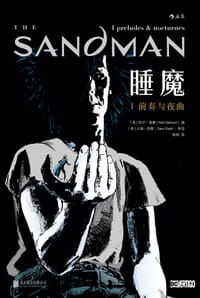
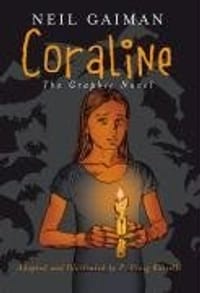
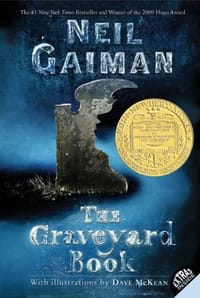
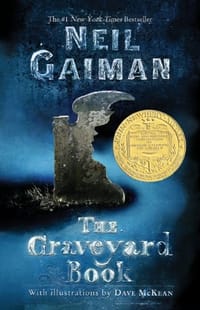
Neil Richard Gaiman ( /ˈɡeɪmən/; born 10 November 1960) is an English author of short fiction, novels, comic books, graphic novels, audio theatre and films. His notable works include the comic book series The Sandman and novels Stardust, American Gods, Coraline, and The Graveyard Book. Gaiman's writing has won numerous awards, including Hugo, Nebula, and Bram Stoker, as well as the 2009 Newbery Medal and 2010 Carnegie Medal in Literature. He is the first author to win both the Newbery and the Carnegie medals for the same work.
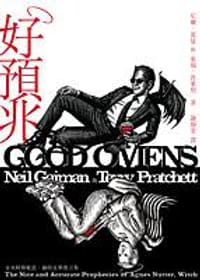
Gaiman and Pratchett had known each other since 1985 and it was their own idea, not that of their publisher, to collaborate on a novel.
Neil Gaiman has said:
We were both living in England when we wrote it. At an educated guess, although neither of us ever counted, Terry probably wrote around 60,000 "raw" and I wrote 45,000 "raw" words of Good Omens, with, on the whole, Terry taking more of the plot with Adam and the Them in, and me doing more of the stuff that was slightly more tangential to the story, except that broke down pretty quickly and when we got towards the end we swapped characters so that we'd both written everyone by the time it was done, but then we also rewrote and footnoted each others bits as we went along, and rolled up our sleeves to take the first draft to the second (quite a lot of words), and, by the end of it, neither of us was entirely certain who had written what. It was indeed plotted in long daily phone calls, and we would post floppy disks (and this was back in 1988 when floppy disks really were pretty darn floppy) back and forth.
while Terry Pratchett has said:
I think this is an honest account of the process of writing Good Omens. It was fairly easy to keep track of because of the way we sent discs to one another, and because I was Keeper of the Official Master Copy I can say that I wrote a bit over two thirds of Good Omens. However, we were on the phone to each other every day, at least once. If you have an idea during a brainstorming session with another guy, whose idea is it? One guy goes and writes 2,000 words after thirty minutes on the phone, what exactly is the process that's happening? I did most of the physical writing because:
I had to. Neil had to keep Sandman going – I could take time off from the DW;
One person has to be overall editor, and do all the stitching and filling and slicing and, as I've said before, it was me by agreement – if it had been a graphic novel, it would have been Neil taking the chair for exactly the same reasons it was me for a novel;
I'm a selfish bastard and tried to write ahead to get to the good bits before Neil.
Initially, I did most of Adam and the Them and Neil did most of the Four Horsemen, and everything else kind of got done by whoever – by the end, large sections were being done by a composite creature called Terryandneil, whoever was actually hitting the keys. By agreement, I am allowed to say that Agnes Nutter, her life and death, was completely and utterly mine. And Neil proudly claims responsibility for the maggots. Neil's had a major influence on the opening scenes, me on the ending. In the end, it was this book done by two guys, who shared the money equally and did it for fun and wouldn't do it again for a big clock."