

书籍介绍
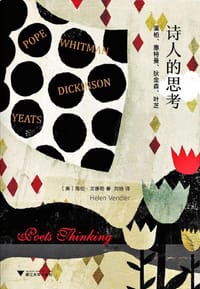
这不是一本教人如何欣赏诗歌的技巧手册,而是一次诗人以创作直面死亡的现场记录。海伦·文德勒选取史蒂文斯、普拉斯、洛威尔、毕肖普、梅里尔五位现代诗人最后一本诗集,追问一个尖锐的问题:当来生的信仰失效、大限已至,诗人必须发明一种新的风格,才能为生命退场。读者最难忘的,恰是这种
作者简介
【作者简介】
海伦·文德勒(Helen Vendler,1933—2024)
美国诗歌评论家,哈佛大学亚瑟·金斯利·波特校级教授。她关于诗人和诗歌的论著不胜枚举,所涉诗人广及莎士比亚、狄金森到希尼、毕肖普等,多获赞誉。代表作有《自然的部分,我们的部分》《约翰·济慈的颂歌》《打破风格》《诗人的成年》《看不见的倾听者》《花朵与漩涡》《大海,飞鸟和学者》等。
【译者简介】
李小均
深圳大学外国语学院教授。译作有《语言与沉默》《不负责任的自我》《捍卫想象》《村子里的陌生人》《记忆萦回》等。
AI导读
核心看点
- 细读五位美国诗人晚期风格
- 探讨生死等量齐观的文学表达
- 展现文学批评的美学与尊严
读者共识
- 洞见深刻,令人动容且敬佩
- 翻译质量争议较大,影响体验
- 普拉斯与洛威尔章节最震撼
精彩摘录
- "she practiced taking the last look from the time she began to write."
- "How was Plath—without ruining her poems—to retain authentic features of her imagination, such as the symbols of melodrama and violence absorbed from her childhood literary matrix of legends, fairy tales, and catastrophic myths from Bluebeard to Dracula? Plath’s later interesting revisions of these t"
- "As an artist, Plath explicitly desired four things: honesty of perception, clarity of analysis, discipline of expression, and moral strength."
- "The worst thing her early trauma did to the adult Plath was to deprive her of both past and future. She had no real past, in her view, because she had always (since coming to self-consciousness at the age of eight) been dead; and she had no real future because she foresaw only an unrelieved continua"
- "Plath’s stylistic response to Percy Key’s death, as I have said, is to invent an impersonal style. What does a piece of that style “feel like”? Not only has it put aside those piercing “I’s” in favor of objective description, it has also put aside (for the most part) the excitable questions and excl"
- "“What is the name of that color?” the speaker of “Berck-Plage” asks as she sees the earth into which Percy Key will be lowered. She answers herself in another succession of noun phrases, this time images of post-traumatic aftermath: “Old blood of caked walls the sun heals, / Old blood of limb stumps"
- "When in “Words” Plath represents the eye regarding the pool, it no longer views its narcissistic image, as in “Gigolo,” but rather perceives the ordaining conditions of fate. The objectivity of regard in “Words,” as in “Berck-Plage,” arises from Plath’s adoption of a view that is post-traumatic, eve"
- "If we ask ourselves how Plath found a style with which to gather death and life into a single binocular view, we can reply that for her the task became specialized, since death was always before her eyes. She needed to discover a way to restore life to the skull, to put blood into the face of death,"



求书
收藏