
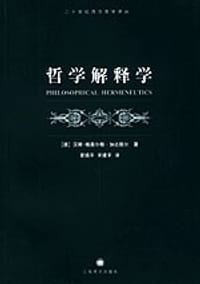
书籍介绍
这不是一本让你轻松翻完的书,却可能悄悄改变你看待世界的方式。加达默尔在这里抛出一个近乎冒犯的判断:偏见不是理解的障碍,而是理解得以发生的前提。我们总以为清除成见才能抵达真理,他却指出,人恰恰是活在偏见之中、并由此获得立足之地的。全书十三篇论文,既是《真理与方法》的续篇,也直面一个尖锐追问:当现代文明以科学与技术为傲时,是否遗忘了某种更根本的东西?有读者读后惊呼“居然看懂了”,也有人在深夜里与作者“对话”到油然生敬。它适合那些不满足于把哲学当作标签、愿意承认自身有限、并渴望在语言中重新认识自己的人。
AI导读
核心看点
- 阐述哲学解释学基本原理,补充发展《真理与方法》
- 探讨理解与语言的关系,揭示偏见的创造性价值
- 回应哈贝马斯批判,辨析传统与反思的辩证关系
读者共识
- 相比大部头著作,本书行文流畅,更易于入门阅读
- 翻译质量普遍获好评,但部分章节仍显晦涩难懂
- 对语言、游戏及艺术的分析极具启发性,值得细读
精彩摘录
- "从一种真正历史的观点看,20世纪当然不是指一个按年代顺序定义的时代——即从1900到2000年这么一个时代。正如19世纪事实上是以歌德和黑格尔的去世为起点而以第一次世界大战的爆发为终点,20世纪则是作为世界大战的时代而开始的。"
- "And yet, over against the whole of our civilization that is founded on modern science, we must ask repeatedly if something has not been omitted. If the presuppositions of these possibilities for knowing and making remain half in the dark, cannot the result be that the hand applying this knowledge wi"
- "The hermeneutical question ... is not restructed to the areas from which I began in my own investigations. My only concern there was to secure a theoretical basis that would enable us to deal with the basic factor of contemporary culture, namely, science and its industrial, technological untilizatio"
- "Understanding is language-bound. But this assertion does not lead us into any kind of linguistic relativism. ... While we live wholly within a language, the fact that we do so does not constitute linguistic relativism because there is absolutely no captivity within a language - not even within our n"
- "Precisely through our finitude, the particularity of our being, which is evident even in the variety of languages, the infinite dialogue is opened in the direction of the truth that we are."
- "Language occurs once again, in vocabulary and grammar as always, and never without the inner infinity of the dialogue that is in progress between every speaker and his partner. That is the fundamental dimension of hermeneutics."
- "Habermas ... asserts that if hermeneutical reflection were simply satisfied with general considerations, such as that nobody is able to reach beyond the limitedness of his own standpoint, then it would be ineffectual. ... What is the good, after all, Habermas asks, of knowing merely that a projected"
- "My thesis is ... that the thing which hermeneutics teaches us is to see through the dogmatism of asserting an opposition and separation between the ongoing, natural "tradition" and the reflective appropriation of it. For behind this assertion stands a dogmatic objectivism ... In this objectivism the"








下载
收藏