
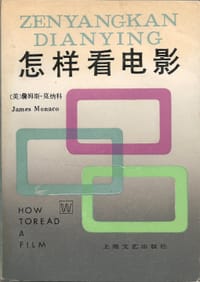
精彩摘录
- "Although some estheticians insist that the moving camera, because it calls attention to the filmmaker, is somehow less ethical than the stationary camera, this is as specious a differentiation as the earlier dichotomies between mise-en-scene and montage and between deep and shallow focus. A tracking"
- "What is the answer?"
- "What is the question!"
- "Expressionism is a more generalized, romantic conception of film as an expressive force. Formalism is more specific, more "scientific", and more concerned with the elements, the details that go to make up this force."
- "For Pudovkin, montage was "the method which controls the 'psychological guidance' of the spectator." In this respect, his theory was simply Expressionist - that is, mainly concerned with how the filmmaker can affect the observer. He identified five separate and distinct types of montage: contrast, p"
- "For Eisenstein, montage has as its aim the creation of ideas, of a new reality, rather than the support of narrative, the old reality of experience."
- "Pudovkin had seen the techniques of montage as an aid to narrative, Eisenstein reconstructed montage in opposition to straight narrative."
- "从现在开始,“film”(电影)仅仅是原材料,对于电影艺术家而言,它只是和光盘、磁带并列的一种可以使用的选择;“movies”(电影)现在是一个新的包含艺术、技术、工业的综合体,对此我们还没有一个名字,或许可以称之为“多媒体”(multimedia);那么“cinema”(电影)是什么呢?它是在长达九十年的时间里主宰我们看世界的一种绵长、激昂、浪漫、有益的生活方式一“cinema”将会被平稳地继续传承下去。p353"
用户评论
好象没有新版,在国家图书馆里翻着都怕弄坏了,不过真的是一本本好书,是我的理论启蒙书。
是“对内容和插图都作了较大删节”(译者前言)的删节本。
把电影的皮相与骨相都讲透了

收藏