
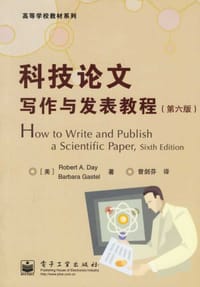
书籍介绍
这本书最打动人的,是它把'发表'当作科研的终点而非起点。作者反复强调:实验做得再漂亮,论文没人读懂,工作就等于白费——'声音没人听见就没有声音,文章没人理解就没有文章'。它不教你高深理论,而是把论文拆解成题目、摘要、方法、结果、讨论这些零件,告诉你每个零件该放什么、怎么摆放。IMRAD结构、可重复性、简洁清晰的原则,都是为'让读者看懂、让同行复现'服务。适合刚接触学术写作的学生和科研新人,也适合被退稿折磨、想系统梳理投稿流程的人。它像一本手边手册,写作前翻一翻,提醒你那些'心里明白却容易漏掉'的细节。
AI导读
核心看点
- 系统讲解IMRAD结构,明确引言、方法、结果与讨论的逻辑关系。
- 强调科学写作应追求简洁清晰,摒弃华丽辞藻,确保同行可复现。
- 涵盖从投稿、审稿到会议报告的全流程,含基金申请与简历撰写。
读者共识
- 入门经典教程,语言幽默通俗,适合写作门外汉快速建立框架。
- 内容基础但实用,能纠正盲目模仿的误区,强调带着目的写作。
- 虽部分技巧较浅,但对明确论文结构、提升写作效率有显著帮助。
精彩摘录
- "The logic of IMRAD can be defined in question from: what question was studied? The answer is the Introduction. How was the problem studied? The answer is the Methods. What were the findings? The answer is the Results. What do these findings mean? The answer is the Discussion."
- "The goal of scientific research is publication. A scientific experiment, no matter how spectacular the results, is not completed until the results are published. The scientist must not only "do" science but must "write" science. Certainly, many scientists do not like to write. As Charles Darwin said"
- "… must provide a written document showing what he or she did, why it was done(reason or significance of the research), how it was done(method), and what was learned from it(results and discussion)."
- "Like the Occam's razor, the spirit of scientific writing is also simpleness and clarity. State your facts as simply as possible, even boldly. No one wants flowers of eloquence or literary ornaments in a research article. — R. B. McKerrow Successful scientific experimentation is the result of a clear"
- "A scientific experiment is not complete until the results have been published and understood. Publication is no more than "pressure waves" unless the published paper is understood(声音没有被人听到就相当于没有,而文章没有被别人正确理解就相当于这篇文章没有写). Too many papers fall silently in the woods. A scientist will spend months or ye"
- "Especially because of the work of Louis Pasteur, who confirmed the germ theory of disease and who developed pure-culture methods of studying microorganisms, both science and the reporting of science made great advances. … Pasteur found it necessary to describe his experiments in exquisite detail. Be"
- "What question(problem) was studied? The answer is the Introduction. How was the problem studied? The answer is the Methods. What were the findings? The answer is the Results. What do these findings mean? The answer is the Discussion."
- "An acceptable primary scientific publication must be the first disclosure containing sufficient information to enable peers: 1. to assess observations 2. to repeat experiments 3. to evaluate intellectual processes moreover, it must be susceptible to sensory perception, essentially permanent, availab"
用户评论
扫盲但不高级
一个晚上看完 写作入门 IMRAD格式
作者将痛苦的科技论文撰写发表过程写的生动幽默,并归结为中外通用的体系方法(在中国发表中文论文不一定适用),常有画龙点睛之笔,此书翻译的还可以,闲时可以翻翻,供追求卓越的人分享。其中关于如何进行口头报告一节特别有趣,强烈推荐。
论文写作这条路大多数科研者是迷迷糊糊就上路了,模仿同行的论文格式与内容编排完成论文指标,于是我们很少思考我们究竟为什么要写论文,如何让论文的价值发挥出来。这本书从技巧上介绍比较浅,但不妨它能带来许多深入思考,以及一些被忽视的方法。带着目的写作才是最佳途径。
不错,能明确论文各部分的意义与写作结构,好的论文观点,也要有好的结构与修饰。阅读之后,对各种水平的人员都有不错的收获。
用简洁的语言表达至深的道理。前面讲的很好,后面涉及内容太多,不够深入。
提纲挈领。大提琴手的笑点没get到
电子工业出版社的其他书籍查看全部






下载
收藏