
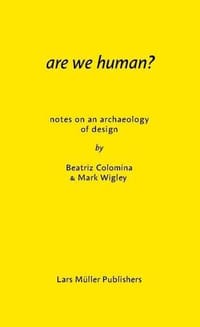
书籍介绍
当读者合上这本书,最常脱口而出的却是那句戏谑:'做个人吧,别做设计。'这恰恰点破了它的锋芒——它不赞美设计,而是质问设计。作者以考古学家般的耐心,从石器、珠宝一路掘到社交媒体、人造器官、医学影像与神经科学,揭示一个令人不安的命题:设计的真正野心从来不是'为人服务',而是'重新设计人类'。它一边以舒适麻痹我们的神经,一边悄悄重塑着我们何以为人的边界。这本书最富争议之处,正在于它拒绝将'人'视为设计的固定对象,而将其看作一个持续被技术、媒介与欲望共同制造、又始终充满不确定性的过程。它适合所有在设计、建筑、艺术中工作,却愿意被'好设计'冒犯到的人。
作者简介
Mark Wigley is Professor of Architecture and Dean Emeritus of Columbia University’s GSAPP.
Beatriz Colomina is an architecture theorist, curator and professor at the Princeton University School for Architecture. One of her research focuses is sexual fantasies in association with architecture.
AI导读
核心看点
- 设计旨在重塑人类,其历史即人类观念演变史。
- 从考古学视角审视设计如何渗透身体与大脑。
- 探讨设计、技术与人类身份之间复杂的共生关系。
读者共识
- 观点独特且发人深省,能引发对日常设计的深刻反思。
- 排版精美,视觉体验极佳,被誉为高颜值设计理论书。
- 理论密度适中,兼具学术深度与散文般的可读性。
精彩摘录
- "Design ... real ambition is to redesign the human. The history of design is therefore a history of evolving conceptions of the human. To talk about design is to talk about the state of our species."
- "The average day involves the experience of thousands of layers of design that reach deep into the ground and outer space but also deep into our bodies and brains. There is no longer an outside of the world of design. Design has become the world."
- "To think about design demands an archaelogical approach. You have to dig. ... digging ... into oursleves."
- "Archaeology ... is a kind of reverse engineering of design. It tries to recover possible pasts while design looks forward to possible futures. Design is a form of projection, to shape something rather that to find it, to invent something and think about the possible outcomes of that invention."
- "Design is the most human thing about us. Design is what makes the human. ... The human radiated design in all directions."
- "The huamn itself is now the overwhelming spectacle. ... Individual movements, purchases, and communications are continuously detected, recorded, and analyzed throughout the day and night, as if constituting a massive collective selfie."
- "Self-monitoring is a huge part of human activity - and is inseparable from design. Looking and grasping and reflecting is after all a key part of design. If design is basically a way of looking forward, this is not simply in the sense of inventing new artifacts. Artifacts become truly transformative"
- "The questions are we human? is from the beginning a hesitation about the relationaship between ourselves and everything around or inside us."
用户评论
在美院偶遇一位scholar 在读同一本书 。
记忆瞬间开启。。。
设计是一种矛盾的姿态,它为了保护人类而改变人类。#inspired by my dear eirunn kvalnes
Nothing new though
犀利
讀過的Beatrice Colomina的第二本書。我設計故我在,設計的能力和思考才是人類和其他物種的區別。人類一方面自大狂妄以為自我能控制和塑造周遭的一切,卻也被自己創造出來的設計徹底改造。
对应the shallows 和norman 的设计心理。但是 没机会读完后一半😅.....
求书
收藏