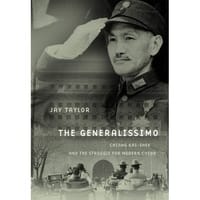
The Generalissimo

Jay Taylor

出版社

Belknap Press

出版时间

2009-01-01

ISBN

9780674033382

评分

★★★★★
书籍介绍
One of the most momentous stories of the last century is China’s rise from a self-satisfied, anti-modern, decaying society into a global power that promises to one day rival the United States. Chiang Kai-shek, an autocratic, larger-than-life figure, dominates this story. A modernist as well as a neo-Confucianist, Chiang was a man of war who led the most ancient and populous country in the world through a quarter century of bloody revolutions, civil conflict, and wars of resistance against Japanese aggression. In 1949, when he was defeated by Mao Zedong―his archrival for leadership of China―he fled to Taiwan, where he ruled for another twenty-five years. Playing a key role in the cold war with China, Chiang suppressed opposition with his “white terror,” controlled inflation and corruption, carried out land reform, and raised personal income, health, and educational levels on the island. Consciously or not, he set the stage for Taiwan’s evolution of a Chinese model of democratic modernization. Drawing heavily on Chinese sources including Chiang’s diaries, The Generalissimo provides the most lively, sweeping, and objective biography yet of a man whose length of uninterrupted, active engagement at the highest levels in the march of history is excelled by few, if any, in modern history. Jay Taylor shows a man who was exceedingly ruthless and temperamental but who was also courageous and conscientious in matters of state. Revealing fascinating aspects of Chiang’s life, Taylor provides penetrating insight into the dynamics of the past that lie behind the struggle for modernity of mainland China and its relationship with Taiwan.
AI导读
核心看点
  • 基于海量史料还原蒋介石生平
  • 呈现其从军阀到领袖的复杂形象
  • 探讨其对现代中国发展的深远影响
适合谁读
  • 对中国近代史感兴趣的读者
  • 希望了解蒋介石真实面貌的人
  • 关注国共关系与冷战历史的学者
读前提醒
  • 作者立场相对中立但仍有争议
  • 部分细节可能存在史实误差
  • 建议结合多方史料交叉阅读
读者共识
  • 史料详实,提供了新的历史视角
  • 叙事略显沉闷,逻辑性有待加强
  • 打破了传统刻板印象,值得细读

本导读基于书籍简介、目录、原文摘录、短评和书评生成,不等同于全文精读。

精彩摘录
  • "在周恩来的鼓励下,张建议成立西北反日政府,含纳中共及其他爱国(军阀)势力,打出“联张、反蒋、抗日”的口号。野心和爱国精神是少帅决定和蒋总司令反目。他建议由他本人领导这个反蒋联合政府,周立刻就同意。 然后,毛拍发贺电给少帅,恭维他是“国家抗日领袖”,赞扬他“惊天动地的举动”,表示和蒋已经无法达成妥协,暗示他应“坚决”处理蒋。"
  • "一九四六年一月十日,他(蒋介石)召開劃時代的政治協商會議,發表主題演說,宣布政府即將立刻訂立言論、新聞、宗教和集會的自由。他說,政治犯將得到釋放,所有的政黨將在法律之前一律平等。選舉將「由下而上」推動,意即所有的代議機構、包括中央級民意機關都要辦直接選舉"
  • "毛澤東文化大革命的深刻不理性,已使蔣認為共產主義遲早會在中國殞亡,而他們父子的使命是打造臺灣模範,向世人(尤其是大陸人民)展示中國回復大國光榮之「正確途徑」。"
  • "委员长的巨幅肖像立即在紫禁城入口处的天安门上方悬挂起来。"
  • "What neither Mrs. Pinchot nor Mrs. Roosevelt knew was that CPUSA controlled the Washington committee for Aid to China. They also did not know until a few days before the concert that only half the funds were go to the Chinese relief ; the rest would go to the National Negro Congress. Communists cove"
  • "He appears in the Venona cables under the cover name 'PAGE', and in Soviet intelligence archives as 'VIM' and as a source for the Golos and Bentley spy networks.[12][13] According to John Earl Haynes and Harvey Klehr, evidence that Currie cooperated with Soviet espionage is convincing and substantia"
  • "一九四八年底,蒋经国也负责把为数上千的北平故宫博物院珍藏,通过两艘海军船舰运到台湾。一九三一年日本占领东北之后,蒋介石下令将故宫珍藏装了一万九千多箱,先运到上海、转南京,再溯长江、过三峡而至重庆,藏在四川山区。一九四六年,它们回到南京,但迄未开箱。一九四九年一月,蒋经国又督导另外两次运载任务,连同这批珍藏的典藏人员一起送到基隆港。总计约有三千八百箱运到台湾,占全部珍藏的百分之二十二,但它们却是故宫收藏的精华。"
  • "毛澤東於公開場合頌揚「國民黨光榮的未來」 但在中共中央政治局的內部會議裏 卻強調大家別忘了共產黨要奪權唯一的路子是武裝鬥爭 他重申 「槍杆子底下出政權」 會後 周恩來十月五日回到武漢 帶了一封毛澤東的親筆信給蔣 讚揚蔣「指導全民族進行空前偉大的民族革命戰爭」 和 「國共兩黨 休戚與共 亦即長期戰爭與長期團結之重要關節」 但是蔣曉得毛澤東是在冷嘲熱諷 這個不太需要證實 因為四月間脫離共產黨到武漢的張國燾 恐怕早已向蔣報告過毛澤東對抗戰和統一戰線其實別有居心 擴大中共軍事力量和基地 以備和國民黨最後對決 蔣依舊擔心 不僅擔心中共的口是心非 也擔心中共黨員高明的政治技巧和動力 他寫下 「共產黨因其共"
作者简介
Jay Taylor is a Research Associate at the Fairbank Center for Chinese Studies at Harvard University.
下载
收藏