
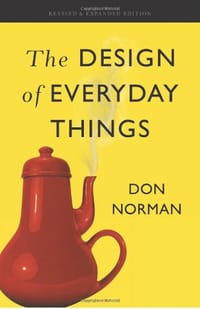
书籍介绍
翻开这本书,你或许会先为书中那些'反人类'的设计会心一笑——推该拉、拉该推的门把手,永远找不到标记的开关。但真正让人读下去的,是作者那句近乎'免责'的判断:用不好,不是你的错,是设计的错。全书最锋利处,在于它把'用户操作失误'重新定义为'设计的失败',并系统拆解了可视性、自然匹配、反馈与约束这几条朴素却极难做全的原则。耐人寻味的是,读者普遍反馈它'最好读'、语言平实不堆术语,前三分之一略显枯燥,越往后越有意思。它适合两类人:一是想建立设计直觉的从业者,二是任何被糟糕交互折磨过的普通人——读完你会重新看待身边每一个'反设计'的细节。
作者简介
Don Norman is co-founder of the Nielsen Norman Group, an executive consulting firm that helps companies produce human-centered products and services. He is Breed Professor of Design Emeritus at Northwestern University and Professor Emeritus at the University of California, San Diego, where he was founding chair of the Department of Cognitive Science and chair of the Department of Psychology. He has served as Vice President of Apple Computer's Advanced Technology Group, and his many books include "Emotional Design," "The Design of Future Things," and most recently, "Living with Complexity."
AI导读
核心看点
- 揭示日常设计缺陷源于忽视用户心理
- 提出可视性、匹配与反馈等核心原则
- 强调好设计应引导用户 effortless 操作
读者共识
- 设计界圣经,重塑对日常物品的认知视角
- 文字通俗有趣,但图表较少略显枯燥
- 虽有年代感,核心原则至今仍是行业基石
精彩摘录
- "为什么汽车有这么多的控制器和功能,但却比电话系统易学易用呢?答案很简单:可视性程度高。控制和被控制之间保持了良好的自然匹配关系,每种控制器只有单一的功能,因此信息反馈清晰快捷,整个系统易被拥护理解。"
- "人们倾向于只要能够满足解释就满意。但是我们的解释是建立在与过去经验类比的基础上,那经验不一定能够应用到目前的情况之下。"
- "设计其实是一种沟通,设计人员必须深入了解使用者并与之沟通 设计实际是一个对表面上相互冲突的各种要求进行协调的过程 所有伟大的设计都是在艺术美、可靠性、安全性、易用性、成本和功能之间寻求平衡与和谐"
- "133页。差错有几种形式,最基本的为失误slip和错误mistake。"
- "匹配原则,自然匹配。设计出让用户一看就明白如何使用的产品!"
- "外在记忆最重要、最有趣的一个功能就是提醒,它清楚的显示出头脑中的知识和外界知识的交互作用。 提醒本身有两个不同的层面:信号和信息。"
- "可视性要表现的就是操作意图和实际操作之间的匹配,并且要让用户看出物品之间的关键差异。"
- "Today, in the developing field of cognitive science, two different views are emerging. The traditional view considers thought to be ratio- nal, logical, and orderly; this approach uses mathematical logic as the scientific means to explain thought. Adherents of this approach have pioneered the develo"
目录
The Psychopathology of Everyday Things
The Psychology of Everyday Actions
Knowledge in the Head and in the World
Knowing What to Do: Constraints, Discoverability, and Feedback
Human Error? No, Bad Design
显示全部
用户评论
me likey
设计的哲学,就是生活的哲学。我们的概念模型,其实也是生活方式。
课本
首次出版是在1988年,将心理学和认知科学与设计理念系统联系在一起的先驱作品。门把手、水龙头、座机电话和早期个人电脑...案例看起来有点陈旧,但好设计应该遵循的原则在今天仍是经典不变的。
封面设计最好的一版
印象最深的是 傻子设计 把知识放在环境中 还有就是 某个民族其实认为时间的概念和我们恰恰相反:时间朝我们而来,而不是我们朝前行进
人没错,一切都是设计者的锅。
躺在盘里的资源已经是六年以前的了,在这个自己推理出不少的时候再看更多只剩对自己当年为啥不早看省时间的不满,但估计当年也根本没有看明白的智商吧。不得不说诺曼写的花里胡哨足够“普世”和“有趣”,不仅如此,偶尔他也能用例子告诉我们,有些问题他也明白。
这绝对是能hold true for generation的设计理念思维入门好书 值得反复研读 尤其喜欢作者能把什么事情都讲得吸引人和有趣 最后还以过来人的身份给newbie设计师一些中肯建议 分享设计理念以外的人文格局 就像一位德高望重的老师在和你炉边夜话 哈哈 受用!
適合對交互設計完全沒概念的人,我已經接觸過一些基礎看起來就營養比較少。另外中文簡體版沒法看…翻譯的一些詞很不過關






下载
收藏