
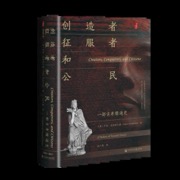
![何以成诗 - [美]田菱(Wendy Swartz)](https://static.book345.com/covers/s/9787522811123.jpg)
书籍介绍
这本书最耐人寻味的地方,在于它把'阅读'本身当成了创作的前提与延伸:读者翻完一本书,随即换笔成文,过去典籍中的意象、典故、思想被文士按一己意图重新拼贴、挪用、调适,置于全新语境,彼此建立起旧文本间从未有过的联系。作者田菱借互文性理论切入六朝,却并未停留于'某某思想影响了某位诗人'的结论,而是考察诗人如何在《三玄》《诗经》《楚辞》等'文化资本'库中自由取舍、灵活调度。它适合这样一些读者:厌倦了'接受史'式的因果罗列,想看清文学创作与思想资源之间流动、复妙的关系;也适合对'玄言诗为何被视作偏离正统'这一困惑感兴趣的人——本书给出了令人信服的解答。
作者简介
【作者简介】
[美]田菱(Wendy Swartz),美国罗格斯大学中国文学教授,著有《阅读陶渊明:历史接受范式的变迁(427~1900)》[Reading Tao Yuanming:Shifting Paradigms of Historical Reception(427‒1900),2008];主编《早期中古中国:文献导读》(Early Medieval China:A Sourcebook,2014)与《中古中国的记忆:文本、礼仪和社群》(Memory in Medieval China:Text,Ritual,and Community,2018);译有《嵇康诗》(The Poetry of Xi Kang,2017);论文见于《哈佛亚洲研究学报》《美国东方学会学报》《中国文学:随笔、论文和评论》《早期中古中国》等学术刊物。
【译者简介】
郭鼎玮,德国柏林自由大学历史与文化学院汉学系博士研究生。
AI导读
核心看点
- 以互文性理论细读六朝诗歌,揭示文本间的复杂关联。
- 探讨嵇康、陶渊明等诗人如何挪用哲学典籍进行创作。
- 分析阅读与写作的互动关系,展现六朝文人的文化传承。
读者共识
- 学术价值高,提供了理解六朝诗歌与哲学关系的新视角。
- 论证严谨,打破了传统思想影响的粗暴范式,见解独到。
- 部分读者认为书名翻译不佳,但内容扎实,值得细读。
精彩摘录
- "Not only is reading a necessary part of a writers education, but it figures here as an immediate precursor to the act of writing: the reader exchanges a book for a brush in the genesis of literary creation. The writer has accumulated knowledge of both the moral virtue and literary craft of past exem"
- "Reading and writing in early medieval China demanded a cultural competence underwritten by a mastery of certain texts and traditions and a familiarity with contemporary intellectual developments. The use and recycling of cultural resources through quotation, allusion, or other forms of rewriting not"
- "Like most of his contemporaries, Sun Chuo possessed at hand vari ous, often-conflicting, textual resources for his poetic compositions. For his poem to Yu Bing, for example, the Shijing provided a rich source of cultural and literary meanings for discussing matters of state and gover nance; the Yiji"
- "This social, interactive feature was key to the Flourishing development of xuanyan poetry in the Jin dynasty, of which most extant examples were written in group or exchange form. The poets shared familiarity with a select set of texts and allusions attested not only to their collective identity out"
- "The core of Tao Yuanmings adaptation of the Zhuangzi radition consists in a cluster of recurrent themes in his poetry, such as authenticity (真) solitary independence(獨), self-sufficiency (自足) and transformation(化). Ever ready to tell his own story, Tao Yuanming fashions his account of himself after "
求书
收藏