
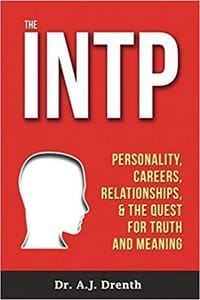
书籍介绍
这本书最打动INTP的地方,或许正在于它毫不回避地揭开了这类人最隐秘的困境:他们并非天生冷漠,而是被一种叫
作者简介
A.J. is the principal visionary and founding father of Personality Junkie®, which he conceived in 2009 with the aim of exploring the theoretical underpinnings of psychological type and related areas of personality study. His research has primarily involved Jungian / Myers-Briggs® typology, while remaining conversant with the Enneagram and Big Five models as well. A.J. has authored four books on typology and currently boasts the two best-selling INTP books Amazon.com. His work has been referenced in numerous books, articles, and e-publications.
In its broadest form, A.J.’s primary interest area is human subjectivity. He is particularly concerned with how the architecture of the mind—our “subjective lens”—shapes our beliefs, values, interests, biases, etc. He believes that investigating the nature of our psychological lenses, including the contributions of personality type, can help us better understand ourselves and our presuppositions.
A.J. has also long been fascinated by the perennial question of “how to live.” On this front, he has devoted much time to exploring topics such as identity, purpose, and authenticity. He is especially interested in how clarifying our identity / purpose as individuals might help us cultivate more meaningful and effective lives. He has found typology useful in this respect as well, drawing on its insights regarding the respective strengths and roles of the personality types.
Consistent with his own type (INTP), A.J. brings an explorative and synthetic approach to personality studies. Novices and professionals alike appreciate his thought-provoking yet accessible writing style.
AI导读
核心看点
- 深度解析INTP的Ti-Ne-Si-Fe功能栈及心理机制
- 揭示INTP从迷茫到自我整合的三阶段成长路径
- 探讨如何处理劣势情感功能Fe带来的内心冲突
读者共识
- 被公认为INTP群体的深度自救指南,剖析精准且深刻
- 帮助读者理解自身矛盾,建立内心秩序,缓解存在焦虑
- 部分观点具普适性,非INTP读者亦可从中获得自我认知启发
精彩摘录
- "Inferior Function: Extraverted Feeling (Fe)"
- "The Feeling function weighs and evaluates our affective responses to the world. Since it is rather unconscious and undifferentiated in Thinking types, Thinkers are often unaware of their own emotions and Feeling judgments. Feeling types, by contrast, are not only aware of their emotions in general, "
- "Because of their Fe's concern for maintaining external harmony (or what may be better understood as its discomfort with disharmony), INTPs may abstain from expressing their judgments in order to avoid unsettling others. While not as overtly warm or effusive as FJ types, INTPs can be sensitive to oth"
- "As if all this wasn’t enough, the effects of a hyperpolarized Fe is not limited to INTPs’ relationships, but can also infiltrate their career decisions. For instance, Fe may lure INTPs into characteristically Feeling-oriented careers, such as human services or helping professions. Unfortunately, it "
- "……The changes of Phase III are primarily psychological, involving a gradual shift in attitude and approach. Phase III INTPs are typically less attached to their work in the sense that they are less concerned with the advancement or indulgence of their Fe ego. This allows them to enjoy their work for"
- "Transitioning to Phase III can be a “two steps forward, one step back” type of affair. As is true of other types, INTPs don’t skip over Phase II and move right into Phase III. Most will enjoy their fair share of pursuing, indulging, and promoting their Fe. Like other types, they need to dabble in “s"
- "In many instances, INTPs manage to contain their anger, dealing with its effects on an inward basis. In contending with their own inner beast, they may experience any number of dark thoughts or urges. These may range from suicidal thoughts, to intense feelings of hatred, to fantasies of criminal act"
- "Second, INTPs need to stop listening to their dark emotions. As Thinking types, they must recognize that, outside of "fight or flight" emergencies, their emotions are rarely good compasses for navigating life. (作为思考型的人,他们必须认识到,除了“战或逃”的紧急情况外,他们的情绪很少是导航生活的好指南针。) This is because many of their emotions,"
用户评论
2019
囫囵吞枣的看了一番,对INTP的理解更加深入了些。篇幅不长,对于初识MBTI的小白(-我自己)有了整体概念,还算不错吧。
管它是玄学还是科学呢!就当爽文随便来读读
书中建议INTP适合做的工作的类型大抵和我之前的自我感觉差不多,但是本书更帮我细化了。
对于理解自我非常有帮助,推荐每个INTP阅读本书
每一个intp都值得去读一读,尤其是在自我探索这条路上已经走了很久的那类。
这本书没有提出新奇的理论,也没有将概念辨析得十分明确,但它一定程度上能让intp寻找到某种认同和归属。
在怀疑再怀疑、否定之否定、批判又批判的纽拉特式项目中,给intp找到一块相对确定的木板。它可能无法长久站立,也承受不了千钧之力,但至少没有腐烂。
暂且将它定为未来几年常读的“心灵鸡汤”,或是山顶洞人的夜航船,足见其带给我的抚慰与开解。
觉得这个模型大体上还比较符合我,上一个让我觉得很贴近的模型是女性阿斯伯格人格模型,上一个是敏感性人格,再上一个是卡尼霍伦的神经症人格,再上一个是米德尔马契里的多萝西娅和卡苏朋。总的来说就是我看很多模型都觉得符合自己,但这个目前算是比较整体可以统筹多个方面,可信与否需要事实的验证。极度倾向逻辑、内向思考、搜集信息,最差的是外向情感,这算是最准的了,事实上我确实非常难和别人共情,察觉自己的感情也都需要仔细地辩证分析。至今还记得第一次认真思考嫉妒这种感情时的惊讶:它的模型竟然如此精巧且复杂。
深入透彻
十分精准的概括了本INTP的典型行为和心理活动,并且能够一步步剖析背后的本质,并带来建议。果然是INTP写的书,十分对INTP的胃口。妥妥的INTP自救指南,INTP们的福音。至少可以读10遍以上。对本人来说,劣势功能Fe的强烈影响存在于职场、生活、家庭方方面面,且将伴随终身,奉劝各位INTP要不断加深对自己的理解,扬长避短,及时醒悟与“自救”,降低困扰,找到适合自己的方式来平衡工作与家庭,实现INTP探寻真理的理想。
终于完整地读完了第一本英文书,没想到献给了The INTP这种玄学书籍,不过16种类型里面,想必只有INTP会写整整一本书来剖析自己,MBTI不是用来给别人贴标签或者合理化自己的不成熟行为,他是审视自己感知和判断的方式的一种途径,可以帮助我们发现自己最珍视的东西,并且在了解与他人不同倾向的过程中,更好的理解自己与身边人,达到一种和谐共处,高效交流的状态。
下载
收藏