
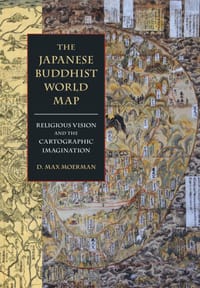
THE JAPANESE BUDDHIST WORLD MAP
出版时间
2021-12-31
ISBN
9780824886783
评分
★★★★★
书籍介绍
From the fourteenth through the nineteenth centuries Japanese monks created hundreds of maps to construct and locate their place in a Buddhist world. This expansively illustrated volume is the first to explore the largely unknown archive of Japanese Buddhist world maps and analyze their production, reproduction, and reception. In examining these fascinating sources of visual and material culture, author D. Max Moerman argues for an alternative history of Japanese Buddhism—one that compels us to recognize the role of the Buddhist geographic imaginary in a culture that encompassed multiple cartographic and cosmological world views.
The contents and contexts of Japanese Buddhist world maps reveal the ambivalent and shifting position of Japan in the Buddhist world, its encounter and negotiation with foreign ideas and technologies, and the possibilities for a global history of Buddhism and science. Moerman’s visual and intellectual history traces the multiple trajectories of Japanese Buddhist world maps, beginning with the earliest extant Japanese map of the world: a painting by a fourteenth-century Japanese monk charting the cosmology and geography of India and Central Asia based on an account written by a seventh-century Chinese pilgrim-monk. He goes on to discuss the cartographic inclusion and marginal position of Japan, the culture of the copy and the power of replication in Japanese Buddhism, and the transcultural processes of engagement and response to new visions of the world produced by Iberian Christians, Chinese Buddhists, and the Japanese maritime trade. Later chapters explore the transformations in the media and messages of Buddhist cartography in the age of print culture and in intellectual debates during the eighteenth and nineteenth centuries over cosmology and epistemology and the polemics of Buddhist science.
The Japanese Buddhist World Map offers a wholly innovative picture of Japanese Buddhism that acknowledges the possibility of multiple and heterogeneous modernities and alternative visions of Japan and the world.
用户评论
抽丝剥茧式的分析,thorough and inspiring,有想法仅仅只是第一步,怎么样搜集有用的材料并让材料说话才是最体现功力的。
多元的材料与合宜的阐释,写得好极了。作者将地图看作宗教经验(vision)和世界观的具现,前三章主要分析镰仓至桃山时期僧侣对依照《大唐西域记》设计之《五天竺图》的描绘、复制与改造,进而揭示出这此时僧侣的宇宙想象、以及他们调和古老想象与当下现实的诸多方式。此处作者很强调地图的俯瞰视角与宗教经验之间的关系,值得注意。如果说周文欣的五台山研究意在揭示现实的想象化,此处则是想象的现实化。后三章关注江户至明治时期僧侣在面临欧洲宇宙学冲击时的主动回应,尤其指出在此时僧侣的理解中,欧洲的地圆与日心说仅为人眼可见之方便视相,而须弥世界则为不可见之实相。这实际上为现下学者如何用当代话语理解与介入古代提供了一面很微妙的透镜。另外觉得,如以乔纳森克拉里关于视觉现代性的相关研究对读,或能有更多收获。
Visual analysis和contextualization都很到位,做艺术史的朋友们也可以来参考一下!
在長途飛行的路上讀完了,心服口服。(著實沒想到說話風格慢得急死人的魔慢老師寫作如此清晰明快)我覺得這本書對「宗教文圖學」的社會史寫作的推進有很大助益,從12世紀到19世紀以佛教地圖(2d到3d,或是不同dimension的疊加表現)為中心的詳實分析展現了佛教宗教視野如何在變動的日本中世紀到現代「啟蒙」中完成進化、在地化與自洽。我覺得這本書圖像的研讀方式很精妙,不論是談到金剛杵的獨股、三股、五股來應對日、中、印的文化繁簡(一為尊則消除borderland complex,與tansen sen說到五台山之前的舍利法不同),行旅途跡與世界中心的偏移,製圖者對於手頭資料的取捨等等,都值得年輕學者學習(的確比sujung kim老道)。南瞻部州變成一滴倒著的淚好美。補:後兩章的傳教士與佛學辯論。
University of Hawaii Press的其他书籍查看全部
 Minority Stages
 Theater of the Dead
 The Making of the First Korean President
 Literary Remains
 Remote Homeland, Recovered Borderland
 Confucian Role Ethics
求书
收藏