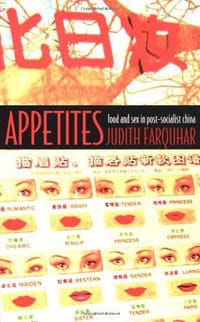
Chinese society and culture changed dramatically with the end of Maoist socialism in the early 1980s. So did the everyday life of Chinese bodies. In Appetites Judith Farquhar shows how new forms of desire, pleasure, anxiety and curiosity emerged as capitalist reforms advanced. Though many have suggested that after decades of socialist collectivism people simply returned to their natural human inclinations toward food and sex, Farquhar argues instead that novel needs and experiences of private life came into existence after the end of the Maoist period. The mundane activity of eating well in improving economic times is linked to historical memories of the late 1950s famine. The systematic understanding of flavours in traditional Chinese medicine connects to a modern self-consciousness about life of the body. Even the self who can indulge private sexual passions, and the sexuality that can be assesses by social psychologists, must be invented and sustained in on-going public reflections about personal and national life. Ranging over a variety of cultural terrains - fiction, medical texts, film and television, journalism and observations of clinics and urban daily life in Beijing - Appetites sympathetically analyses modern Chinese reflections in a changing world. As much at home in science studies and social theory as in the details of life in Beijing, this account will appeal to China scholars, medical anthropologists, ethnographers in many fields and specialists in cultural studies.
Judith Farquhar is Professor of Anthropology at the University of North Carolina at Chapel Hill. She is the author of Knowing Practice: The Clinical Encounter of Chinese Medicine.
显示全部