
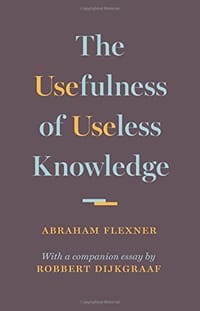
The Usefulness of Useless Knowledge
出版时间
2017-02-21
ISBN
9780691174761
评分
★★★★★
书籍介绍
这本书最尖锐之处,在于Flexner把'无用'二字扛到了台前,却用它撬动了一个被普遍忽视的问题:我们凭什么用'有用'来衡量知识的价值?当科研经费越来越贴着'即时产出'跑,好奇心驱动的探索便成了最先被牺牲的那个。作者不回避这个悖论——基础研究与直接应用之间,因果关系 murky到连他自己都承认梳理不清,知识的河流蜿蜒出无数支流,无人能锁定究竟是谁影响了谁。真正打动读者的,是这份论证背后的立场:压制'完全不受约束的学术自由'的,从来不是轻狂的思想家,而是企图框住人类精神、令它不敢展开翅膀的人。它适合所有身处'被功利主义引导的社会'、却仍想为好奇心保留一席之地的人读。
作者简介
Abraham Flexner (1866–1959) was the founding director of the Institute for Advanced Study, one of the world's leading institutions for basic research in the sciences and humanities.
Robbert Dijkgraaf, a mathematical physicist who specializes in string theory, is director and Leon Levy Professor at the Institute for Advanced Study. A distinguished public policy adviser and passionate advocate for science and the arts, he is also the cochair of the InterAcademy Council, a global alliance of science academies, and former president of the Royal Netherlands Academy of Arts and Sciences.
AI导读
核心看点
- 探讨基础研究虽看似无用,却常催生重大技术突破
- 强调好奇心驱动与绝对学术自由对创新的核心价值
- 批判功利主义导向,呼吁保护纯粹探索的精神空间
读者共识
- Flexner原文论证有力,是捍卫学术自由的经典之作
- 读者普遍赞同好奇心是科学进步的根本驱动力
- 部分读者认为当代评论对人文关怀的补充略显不足
精彩摘录
- "好奇心最终可能会得到一些有用的成果,也可能不会。但它大概是现代思维当中最杰出的特征。它不是什么新鲜事物。它可以追溯到伽利略、培根,追到艾萨克・牛顿爵士。而它一定得是完全不受限的。"
- "他对法拉第一封信中的话表示赞赏:“不要认为我是一个深邃的思想家,或给我贴上“早熟’的标签。我不过是一个想象力活跃的人,我对《一千零一夜》中的故事和对《百科全书》一样深信不疑"
- "即便基础研究和直接应用之间存在某种可论证的关联,我们也很难梳理出此二者间明确的因果关系。应用有时看似伴随纯粹研究而诞生,二者间又有太多相互作用,完全搞不清楚是谁影响了谁。之所以很难分析因果关系,是因为知识的河流不仅仅蜿蜒曲折,而且延伸出支流,犹如百川归海。这种追寻根源和锁定结果的挑战不只出现在学术研究中,更是人类普遍需要努力应对的。众所周知,我们总是记不住何时、何地、何人启动了某种思维模式因为知识很容易跨越国界与不同学科的边界,所以我们很难将成功归因于特定的中心和领域。因此,科学的确是全球乃至全宇宙的事业。"
- "我们就是宇宙的眼晴。人类凝望着宙,也审视着自己,而身为幸运的宇宙观察者中的一员,人类对这一奇观叹为观止。美存在于旁观者的眼中,世界与思想之美则存在于我们的内心。实验和方程式,理论和望远镜,图书馆和实验室,这些事物并非从天而降。它们都是在地球上被人为创造出来的。我们生活在一个非凡的年代,人类的智慧、好奇心和英勇无畏都与指数级增长的星星点点的科学成就密不可分。科学让我们对自身存在的迷题有了更深刻的认知。"
- "我们总是反复听到这种说法:我们置身于一个物质主义的时代,关注的重点应当是物质产品和世俗机遇更广泛的分配。那些本没有错的人被剥了机遇和公平享有财富的权利,于是他们有理有据的抗议声让越来越多的学生放下了父辈们从事的研究,转向同样重要也同样紧迫的社会、经济和政府问题研究。我对这种趋势并无异议。我们生活的这个世界是我们唯一能感知到的世界。如果它不能变得更好、更公平,那么千百万的人依然会在沉默、悲伤和苦难中走向死亡。我本人也曾经用多年时间呼吁我们的学校对这个世界多些关切,毕竟学 生们将在其中度过此生。但如今我常常在想,这种思潮是否已变得过于强大?假如从世界上清除了某些带来精神意义的无用之物,那么人们是否"
- "在某些规模不小的地区一一尤其是德国和意大利一一人类精神的自由正遭到竭力的压抑。综合性大学经历了大幅重组,以至成为那些在政治、经济或种族方面奉行特定信条者的工具。在世界上仅存的几个民主国家中,时不时也会冒出某个头脑简单的人,质疑绝对不受约東的学术自由从根本上是否有价值。人类真正的敌人,不是大胆的、不负责任的思想家,无论其想法是对是错。真正的敌人,是企图框住人类的精神、令它不敢伸展翅膀的人ー一在意大利和德国,它也曾有过展翅翔的时刻,在英国和美国也是一样。"
- "我们绝不会站在这一立场为高等研究院辩护。它是作为学者的天堂而存在的。学者有权像诗人和音乐家一样随心所欲地工作,而有了这种机会,他们往往能够自我实现。"
- "想象力就是越过高山看到未知地带的能力。而好奇心则是人类固有的翻山越岭进行探索的驱动力。"
用户评论
论academic freedom的重要性。我觉得做学术的都需要念一下这本很短很短的书,特别是在这个被capitalism引导的、夸大utility的社会里。没有学术自由做不出很好的学术研究,而不被单纯的好奇心牵引着的学者,也很难创新。很好的读物
四月的时候学生Mark送我的书。前一章非常无聊,对"useless knowledge"定义狭隘地停留在自然科学研究,完全把humanities排除在外;后半本是论文本身,目的在于用 "the freeing of human spirit"来取代知识的实用性意义,比前半部分精彩太多。
Importance of curiosity and freedom for research.
A small but enlightening book that can be finished in one sitting. Flexner is a good story-teller who provides a strong defence of 'useless' knowldege. His argumentation has demonstrated not only the sharpness of a scientist, but also the humor of a humanist. Unfortunately, we have fewer academic leaders in the spirit of him now.
Curiosity and Creativity change the world
庄子也说“无用之用,方为大用”,但是在皇权的压制下,最终也只能是发展为遁世的虚无主义或者为了求取名声的功利主义。陶渊明是思想自由的吗?终归也不是。后世也只会记得徐光启的官职,而不是他翻译的几何原本。
https://www.douban.com/note/225786994
Princeton University Press的其他书籍查看全部
 Microeconomic Foundations II
 That Tyrant, Persuasion
 The Two Greatest Ideas
 The Princeton Guide to Historical Research
 The Handbook of China's Financial System
 Leaving Academia: A Practical Guide
下载
收藏