
书籍介绍
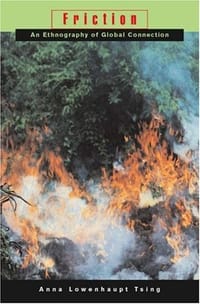
这本人类学著作最耐人寻味之处,在于它拒绝把'全球化'想象成一股平滑推进、不可阻挡的力量。作者把目光投向印尼雨林的伐木与采矿现场——那里没有宏大的企业蓝图,只有法律与非法交织的、磕磕绊绊的资本链条在运作。她提出'摩擦'这个比喻:它不是简单的阻力,而是同时生热、生力、生损害的接触面。正是这种不对等、不稳定却又充满创造性的碰撞,催生了毁灭森林与环保抗争这两种全新的文化形态。吸引读者的,恰是书中那个'杂草丛生的历史'章节:那些被环保主义者和开发商共同忽视的次生林,反而成了地方力量与全球资本角力的关键战场。它适合愿意在'地方'这个具体坐标上重新思考全球性的人阅读。
作者简介
Anna Lowenhaupt Tsing is Professor of Anthropology at the University of California, Santa Cruz. She is the author of In the Realm of the Diamond Queen (Princeton).
AI导读
核心看点
- 本书核心概念‘摩擦’挑战了全球化必然导致文化冲突的刻板印象,强调不同文化、资本与知识在接触中产生的复杂、不稳定但具有创造性的互动过程,揭示全球化并非平滑推进,而是充满张力与意外后果。
- 作者以印尼雨林为田野,深入剖析资本主义扩张如何通过非法与合法的边缘链条重塑景观,批判将全球视为统一力量的观点,展示当地行动者如何在资本渗透中利用‘普遍性’话语进行抵抗或合作。
- 书中探讨‘普遍性’知识的双重性,指出其既可能成为压迫工具,也可能被边缘群体挪用为动员资源,强调不应简单二元对立看待全球与地方,而应关注具体情境中知识、权力与生态的共构机制。
读者共识
- 读者普遍认可本书视角独特、理论创新性强,对理解全球化复杂性有重要启发,但多数反馈指出其行文晦涩、逻辑跳跃,阅读门槛极高,部分读者表示难以完全理解作者意图,需反复研读。
- 尽管部分读者批评其学术贡献有限或过于抽象,但仍有大量读者高度评价其打破二元对立的尝试,认为其对‘普遍性’的批判性重构及对边缘群体能动性的揭示具有深刻的学术价值与现实意义。
- 读者共识认为该书不适合寻求轻松阅读或简单结论的群体,但强烈推荐给愿意挑战思维定势、深入探索全球化阴暗面及复杂社会互动机制的严肃读者,认为其思想深度值得付出高昂的阅读成本。
精彩摘录
- "Cultures are continually co-produced in the interactions I call “friction”: the awkward, unequal, unstable, and creative qualities of interconnection across difference. Each chapter of this book develops a method for learning about such aspects of contingent encounters. While the situation in Indone"
- "Capitalism only spreads as producers, distributors, and consumers strive to universalize categories of capital, money, and commodity fetishism. Such strivings make possible globe-crossing capital and commodity chains."
- "To turn to universals is to identify knowledge that moves—mobile and mobilizing—across localities and cultures. Whether it is seen as underlying or transcending cultural difference, the mission of the universal is to form bridges, roads, and channels of circulation. Knowledge gained from particular "
- ""We are only spectators," he says with frustration. "We can only watch what is happening. First they take the trees. When the trees are finished, they come for the gold. When the gold is finished, they come for the coal. When the coal is finished, they come for the marble. When the marble is finishe"
- "A frontier is an edge of space and time: a zone of not yet-not yet mapped, not yet regulated. It is a zone of unmapping: even in its planning,a frontier is imagined as unplanned. Frontiers aren't just discovered at the edge; they are projects in making geographical and temporal experience. Frontiers"
- "This book shows how emergent cultural forms--including forest destruction and environmental advocacy--are persistent but unpredictable effects of global encounters across difference. Where would one locate the global in order to study it?"
- "To address these challenges, this book develops a portfolio of methods to study the productive friction of global connections."
目录
Table of Contents:
Preface ix
Introduction 1
PART I: Prosperity
"Better you had brought me a bomb, so I could blow this place up" 21
显示全部
用户评论
弱弱地打个四星,坦白讲,尽管头发都揪掉了一大把,也没怎么读懂。。。
三月份环境社会学的小组报告书,太多比喻和新概念,跳跃闪回的写作。。大概抓住一些但很难整体把握。。。美国室友说这个人的writing非常糟糕。。。老师说准备明年把这书从syllabus上撤了。。。
在末日松茸之后读这一本发现anna tsing的关注点真的是没有变,只是更加深入了(在friction处长出松茸哈哈)。在不同文化,政体,族群,自然的交界面,作者探访了universalism的可能,否定了relativism的犬儒,认为承认universal,并进一步探寻local particularities才是地域研究的可行之道。而在这探寻中,作者一次又一次地强调自然的社会性,呼吁我们重新思考作为客体的自然是如何被生产出来,又在全球的合作与分歧中(frictions!)扮演了怎样的角色,其中最有趣的,估计就是作者发现的,科学预测的准确性与所采用的社会对于预测本身的态度息息相关。在“客观”的科学与“主观”的社会的摩擦中,仍有向前的可能
真的太难懂了,尤其是讲植物学的那一章,“Nature and God”,人类学家太独特的视角了…
以作者在印尼60-90s的一些田野材料论证世界主义中的特殊性这个议题,从frontier, salvage capitailsiim, spectecular accumulation, gap, scale making, productive confusion, natural lover, translation等角度切入论述全球化摩擦。有意思的点在于全球化不一定是“从一个全球整体到地方碎片,而是从一些碎片到另一些碎片的过程。以比较中立的角度记述,可能为了立自己的理论,不太好的点在于没有去和aihua wong这些同样全球化理论的集大成者对话。
文化在“摩擦”的互动中不断地共同产生跨越差异的尴尬、不平等、不稳定和创造性的相互联系。全社会动员的一个核心特征: 它建立在协商或多或少公认的目标、对象和战略方面的差异的基础上。
这从某种层面解释了,为什么很多看似有意义的政策没办法真正落地,而看似失效的政策在现实中却获得了超乎预期的效果。
相比起本土与全球、特殊性与普遍性这类困囿于学术殿堂之内的价值争斗,Charles·R·Hale「文化批评」与「行动主义研究」两条人类学取径之间的张力视角提供了更多启发,回应了politcal-engaged anthropologists心中的伦理困惑,并反射出学术体制在整体社会环境中的相对位置,标记出拥有双重忠诚的行动主义研究者——既忠于批判性的学术生产空间,又忠于在学术界之外抗争的人们的原则与实践——调节两个空间的责任。
当个人从“批判的、愤愤不平的、无能为力的”well-educated students位移到运动者的立场,在“相对无权的人利用那些令人困惑的类别来推动ta们的抗争?”这一点上拥有更加丰富的体验、更有亲近感的价值归属之后,内心情感的微妙偏移况味复杂。
三星半,为了期末论文认真啃了一遍,平心而论是很标准的美国人类学做法,你不必田野做得像华中一样事无巨细,但一定要讲一个make sense的新故事,所以要说除了“文笔好”以外别无优点倒也不至于,但真要说学术贡献,我觉得安清讲了个不知道so what的新故事……可能也是space/scale making这个领域本来也太空虚了,你好像很容易用法国后现代讲些新故事,但有啥用就不知道了。
要赶due,就看了intro,感觉比末日松茸写得好,intro还是挺逻辑清晰的。这本书主要就是拓展了这个friction概念:不仅仅是阻力,也有在摩擦中组织、团结和前进的意思。并用这个概念来谈universal和particularity…简单来说就是世界都不是一分为二的,local和global,universal和particularity等等这些二分法的概念都是都是back and forth的,在local和global互动的过程中相互建构的。关于local people自己的能动性部分很对我胃口:在大的结构下的个体应对,从而重塑/relocalize结构。但看了看评论,貌似后面章节比较碎片化?回想她的末日松茸好像也挺散的,当时归结于她田野做的不扎实,现在感觉可能这就是她的个人风格…

Princeton University Press的其他书籍查看全部
 Microeconomic Foundations II
 That Tyrant, Persuasion
 The Two Greatest Ideas
 The Princeton Guide to Historical Research
 The Handbook of China's Financial System
 Leaving Academia: A Practical Guide
下载
收藏