
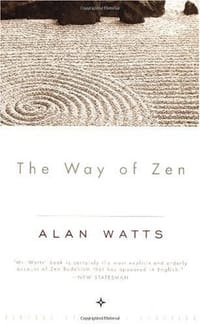
书籍介绍
这不是一本教你打坐修行的手册,而是一部把禅从神坛上请下来、放回日常生活的思想史。Watts 的独特处在于:他让读者看清禅如何在印度大乘的“空”里出生,又在中国道教与艺术的土壤里落地,最终把“开悟”与“烦恼”并置——最高境界不是消灭欲望,而是带着尘劳入世。书中最长的一章梳理禅宗源流与公案,末章谈禅与艺术,选的俳句尤为精致。读者反复提及的,是那种“放下、行动”的流动感:禅是不拘的、无目的的生活之道。作为西方人讲东方哲学,它反而把“空性”“无念”这类概念讲得通透可感,让不少读者觉得比本土佛学著作更易入口。它适合想系统了解禅的思想脉络、又厌倦教条式说读的读者。
作者简介
Alan W. Watts, who held both a master’s degree in theology and a doctorate of divinity, is best remembered as an interpreter of Zen Buddhism in particular, and of Indian and Chinese philosophy in general. Standing apart, however, from sectarian membership, he has earned the reputation of being one of the most original and “unrutted” philosophers of the twentieth century. Watts was the author of some twenty books on the philosophy and psychology of religion that have been published in many languages throughout the world, including the bestselling The Way of Zen. An avid lecturer, Watts appeared regularly on the radio and hosted the popular television series, Eastern Wisdom and Modern Life,in the 1960s. He died in 1973.
AI导读
核心看点
- 本书系统梳理禅宗从印度佛教起源,经中国道家融合,至日本艺术表达的完整历史脉络。作者以西方哲学视角,清晰阐释空性、无念等核心概念,揭示禅宗并非神秘主义,而是对日常生活的深刻洞察与直接体验,帮助读者理解禅宗如何打破二元对立思维,实现精神自由。
- 书中深入剖析禅宗与道家思想的内在联系,纠正了以往西方学界忽视道家影响的偏见。通过大量公案与历史文献,展示禅宗如何吸收道家自然无为的精神,形成独特的修行方式。作者强调真正的觉悟不在于脱离世俗,而在于在世俗事务中保持清醒与慈悲,这种观点极具启发性。
- 作者以幽默且严谨的笔触,批判了将禅宗简化为随意性或反智主义的误解。书中详细解释直指人心、顿悟等概念的真实含义,指出禅宗修行旨在消除概念束缚,回归本然清净。对于正念、冥想等现代心理疗法的哲学基础,本书提供了深厚的理论支撑,引导读者超越表面形式,追求内在觉醒。
读者共识
- 读者普遍赞赏作者以西方视角清晰、准确地阐释禅宗历史与哲学,认为其比某些东方学者更懂西方思维,且未忽视道家影响。尽管部分读者批评其过于简化或存在误解,但多数认为本书是了解禅宗的极佳入门读物,逻辑清晰,易于理解,对破除对禅宗的迷信与误解有重要作用。
- 许多读者表示本书改变了他们对禅宗及东方哲学的看法,认为其内容深刻且实用,有助于缓解现代焦虑。尽管部分读者指出翻译质量问题,但原版内容仍获高度评价。读者共识认为,作者对禅宗的热爱与尊重贯穿全书,其严谨态度与深刻见解值得肯定,是了解禅宗精神实质的可靠指南。
- 部分读者反映书中某些概念难以理解,或认为其内容过于学术化,不适合大众阅读。但也有大量读者认为,正是这种严谨性使得本书具有独特价值。读者共识强调,本书不适合寻求速成技巧或神秘体验的人,而适合愿意深入思考、探索生命本质的读者。对于希望理解正念哲学基础的读者,本书具有不可替代的价值。
精彩摘录
- "Direct pointing (直指) is the open demonstration of Zen by nonsymbolic actions or word,s which usually appear to the uninitiated as having to do with the most ordinary secular affairs, or to be completely crazy. In answer to a question about Buddhism, the master makes a casual remark about the weather"
- "Zen, in particular, has always attached great importance to the expression of Buddhism in formaly secular terms--in arts of every type, in manual labor, and in appreciation of the natural universe. Confucian and Taoist alike would be especially agreeable to the idea of an awakening which did not inv"
- "...the main importance of the Vimalakirti Sutra for China and for Zen was hte point that perfect awakening was consistent iwth the affairs of everyday life, and that, indeed, the highest attainment was to 'enter into awakening without exterminating the defilements [klesa].' (p.81)"
- "Because the ultimate reality has no qualities and is not a thing, it cannot become an object of knowledge. Therefore prajna (般若), direct insight, knows the truth by not knowing. (p.82)"
- "...though Wisdom lies outside affairs, it never lacks them. Thought Spirit lies beyond the world, it stays ever within it. (p.83)"
- "...that truly to know is not to know, that the awakened mind responds immediately, without calculation, and that there is no incompatibility between Buddhahood and the everyday life of the world. (p.83)"
- "The satori (日语:顿悟) which so frequently follows these interchanges is by no means a mere comprehension of the answer to a riddle. For whatever the Zen master says or does is a direct and spontaneous utterance of 'suchness,' of his Buddha nature, and what he gives is no symbol but the very thing. (p.8"
- "He insisted that the whole idea of purifying the mind was irrelevant and confusing, because 'our own nature is fundamentally clear and pure.' In other words, there is no analogy between consciousness or mind and a mirror that can be wiped. The true mind is 'no-mind' (无心), which is to say that it is "
用户评论
Those who know do not say, those who say do not know.
一直拖延着没做完读书笔记,所以之前未标已读。这几天得开始做,否则印象就不深了需重读。但重读此书肯定也会是愉快的体验。不清楚作者本人是否是皈依了的佛徒,但在字里行间,能体味出他对禅法的深深信仰和身体力行的实践,这是与佛学学者的文字决然有别的。禅宗的源流和法脉、历史相当复杂,但他讲得非常清晰易懂且有趣。虽是为西方读者而写,但在今天,对于已与国学和宗教失联的多数中国读者,这本书也非常适合。五星推荐!
Alan Watts比Keith还扯
禅宗和道教的那些不可不说的故事。比较Descriptive,入门用很合适。
我时不时就需要读读佛学... 也不是说spiritually有多大长进,但是观点真的实用。读老美解读东方哲学,反而觉得易懂很多,这是什么情况
字字珠玑,刻骨铭心
五星半
比较全面关于禅的书,尤其是讲述道家思想对禅宗形成的影响很细致,然后最后一章禅与艺术感觉不错,选的俳句尤其精致,禅的历史和公案之类的,和铃木大拙的《禅与生活》多有重合。除了罗马音化的汉语拼音让人一头雾水,估计西方人也看着云里雾里。总体来说,面向西方人写的介绍禅宗的书籍,用词来说相对会浅显一些,比较容易入门,这也是阿伦瓦兹的书的优点,他的讲授录音也很吸引人,时不时会选一段听几分钟,娓娓道来,气氛活跃,常常一片欢笑,可以跟本书一起品。顺便说一下,中文版书名《心之道—致焦虑的年代》有点过于功利化了,本来禅宗追求的是回归本心,见性成佛,在哪个时代皆是如此,又何以专门指戳焦虑年代?
人生两次转折,一次是读尼采,一次是读Alan
Vintage Books的其他书籍查看全部
 Sputnik Sweetheart
 American Prometheus
 Life & Times of Michael K
 Plainwater
 The Image
 The Technological Society
求书
收藏