
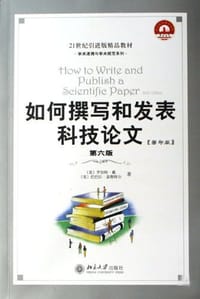
书籍介绍
《如何撰写和发表科技论文(第6版)(影印版)》于1979年首次出版后不断再版和重印,深受理工科学生和科研人员的欢迎,被全世界上百所大学列为科技写作方面的教科书或参考书。《如何撰写和发表科技论文》旨在帮助理工科学生和科研人员提高科技论文写作能力,使其论文更容易被国际期刊接收和发表。全书分为8编41章,清晰而准确地阐述了科技论文的各个要素、论文投稿和发表过程中应注意的事项、如何进行会议交流、准备会议摘要、口头陈述论文、撰写海报和会议报告以及基金申请书等其他文章的写作,涵盖了科学论文写作和发表的方方面面。对于理科学生和科研工作者具有重要的指导作用。
罗伯特•戴(Robert A. Day)为美国特拉华大学英文教授,1986年到1999年期间在该校教授本科生和研究生的科技英语写作课程。同时他还是美国科技信息所出版社(ISI Press)的前任社长以及微生物学期刊和美国微生物学会出版的其他期刊的执行主编。
巴巴拉•盖斯特尔(Barbara Gastel)为本书第六版的作者之一。她是得克萨斯A&M大学副教授,撰写了《将科学介绍给大众》、《科学与教学:大学与专业学校老师指南》等书,同时也是科学编辑委员会的刊物《科学编辑》的编辑之一,具有丰富的教学和实践经验。
AI导读
核心看点
- 详解IMRAD结构逻辑与写作规范
- 涵盖投稿评审及会议交流全流程
- 强调科学写作的简洁与清晰原则
适合谁读
- 理工科研究生及青年科研人员
- 需发表英文论文的高校师生
- 希望提升学术写作能力的学者
读前提醒
- 结合具体写作任务对照练习
- 关注图表设计与投稿流程细节
- 注意部分案例可能略显过时
读者共识
- 理工科研究生必读的写作指南
- 内容实用幽默,强调实践操作
- 被广泛视为科研写作标准教材
本导读基于书籍简介、目录、原文摘录、短评和书评生成,不等同于全文精读。
精彩摘录
- "The logic of IMRAD can be defined in question from: what question was studied? The answer is the Introduction. How was the problem studied? The answer is the Methods. What were the findings? The answer is the Results. What do these findings mean? The answer is the Discussion."
- "The goal of scientific research is publication. A scientific experiment, no matter how spectacular the results, is not completed until the results are published. The scientist must not only "do" science but must "write" science. Certainly, many scientists do not like to write. As Charles Darwin said"
- "… must provide a written document showing what he or she did, why it was done(reason or significance of the research), how it was done(method), and what was learned from it(results and discussion)."
- "Like the Occam's razor, the spirit of scientific writing is also simpleness and clarity. State your facts as simply as possible, even boldly. No one wants flowers of eloquence or literary ornaments in a research article. — R. B. McKerrow Successful scientific experimentation is the result of a clear"
- "A scientific experiment is not complete until the results have been published and understood. Publication is no more than "pressure waves" unless the published paper is understood(声音没有被人听到就相当于没有,而文章没有被别人正确理解就相当于这篇文章没有写). Too many papers fall silently in the woods. A scientist will spend months or ye"
- "Especially because of the work of Louis Pasteur, who confirmed the germ theory of disease and who developed pure-culture methods of studying microorganisms, both science and the reporting of science made great advances. … Pasteur found it necessary to describe his experiments in exquisite detail. Be"
- "What question(problem) was studied? The answer is the Introduction. How was the problem studied? The answer is the Methods. What were the findings? The answer is the Results. What do these findings mean? The answer is the Discussion."
- "An acceptable primary scientific publication must be the first disclosure containing sufficient information to enable peers: 1. to assess observations 2. to repeat experiments 3. to evaluate intellectual processes moreover, it must be susceptible to sensory perception, essentially permanent, availab"
作者简介
罗伯特•戴(Robert A. Day)为美国特拉华大学英文教授,1986年到1999年期间在该校教授本科生和研究生的科技英语写作课程。同时他还是美国科技信息所出版社(ISI Press)的前任社长以及微生物学期刊和美国微生物学会出版的其他期刊的执行主编。
巴巴拉•盖斯特尔(Barbara Gastel)为本书第六版的作者之一。她是得克萨斯A&M大学副教授,撰写了《将科学介绍给大众》、《科学与教学:大学与专业学校老师指南》等书,同时也是科学编辑委员会的刊物《科学编辑》的编辑之一,具有丰富的教学和实践经验。
目录
用户评论
how to write and publish a scientific paper
不着老板待见的苦逼娃只能自己研究咋写paper了。。
深入浅出,逻辑清楚,细节详尽
非常棒的一本书
实用、有趣。有部分稍过时
跟我这学期学的科技论文写作差不多的内容
读的是英文版,很实用!既可以当练口语,又可以学习写作。
道理都懂,还需时间和实践
有点啰嗦了,按需。
涉及方法论的书,读英文真的很爽。虽然很啰嗦,但事无巨细讲得很清楚。这本书也一样。涵盖了发表期刊文章的全流程。参考我自己发论文的经验,读一遍还是学到不少东西。
(这本书不需要从头读到尾,而且其中举例子的段落都可以略去,英文的幽默梗找不到而且很啰嗦。)




收藏