
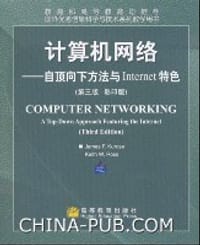
书籍介绍
翻开这本书,最先撞进眼里的往往不是深奥的理论,而是那些你每天都在用、却未必想过的网络现象:BitTorrent 如何靠点对点分担流量, Skype 怎样打通语音,一个中国厂商又如何保证网卡 MAC 地址全球不重号。作者把应用层放在最前面讲,正是让你在熟悉的世界里理解协议——先看见网页、下载、视频如何运作,再回头追问它们背后的运输层、网络层在做什么。书里大量 C++ 与 Java 的 Socket 示例和 Wireshark 抓包实验,把抽象的时延、排队、路由变成可以亲手操作的东西。它适合那些不愿被 OSI 七层模型劝退、想从 Internet 的实际运作反推原理的读者。唯一需要提醒的是:这是影印版,翻译质量参差,读起来偶有磕绊,但瑕不掩瑜,它依然是把'网络究竟怎么跑起来'讲得最透彻的入门书之一。
AI导读
核心看点
- 本书采用独特的自顶向下教学法,打破传统OSI七层模型,直接基于TCP/IP五层体系结构,从应用层逐步深入至物理层,符合人类认知规律,帮助读者快速建立对互联网整体架构的宏观理解,避免陷入底层细节的泥沼。
- 内容涵盖网络协议原理、Socket编程实践及网络管理安全等前沿话题,提供大量C++与Java源代码示例及Applet演示,强调动手实践与理论结合,使读者不仅能理解协议机制,还能掌握实际开发技能,具备极强的工程应用价值。
- 书中穿插对网络领域先驱人物的专访,还原技术发明的历史背景与创造精神,不仅传授硬核技术知识,更传递科学伦理与创新思维,这种人文与技术交融的编写方式在同类教材中极为罕见,能极大激发读者的探索兴趣。
读者共识
- 尽管中文版翻译质量遭到广泛批评,被指误人子弟,但读者普遍认可本书英文原版内容的卓越性。其自顶向下的教学思路被公认为最符合初学者认知,应用层讲解细致入微,P2P等前沿内容介绍清晰,是计算机网络领域不可多得的经典之作。
- 读者一致认为本书在激发学习兴趣方面表现优异,作者善于通过幽默的语言和生动的案例解释枯燥的协议原理,使复杂的技术概念变得通俗易懂。书中对网络发展历史的回顾及人物专访,增加了阅读的人文厚度,提升了整体阅读体验。
- 该书被评价为理论与实践结合最好的教材之一,其提供的实验指导极具价值,能显著提升读者使用Wireshark等工具进行网络分析的能力。尽管部分章节逻辑对已有基础者可能略显跳跃,但作为入门及进阶教材,其综合评分依然极高。
精彩摘录
- "因为排队时延随时间变化,所以分组n发送到路由器n的往返时延实际上比分组n+1发送到路由器n+1的往返时延更大。的确,我们在上述例子中观察到了这种现象:到路由器6的时延比到路由器7的时延大。"
- "Whereas a transport-layer protocol provides logical communication between processes running on different hosts, a network-layer protocol provides logical communication between hosts."
- "rip是被当作一个应用层进程(虽然它是一个能操作UNIX内核中的转发表的特殊进程)来实现的,所以它能在一个标准套接字上发送和接收报文,并且使用一个标准的运输层协议。RIP是一个运行在UDP上的应用层协议。"
- "The application developer has control of everything on the application-layer side of the socket but has little control of the transport-layer side of the socket."
- "Many of today’s most popular and traffic-intensive applications are based on P2P architectures. These applications include file sharing (e.g., BitTorrent), peer-assisted download acceleration (e.g., Xunlei), Internet Telephony (e.g., Skype), and IPTV (e.g.,Kankan and PPstream)."
- "One interesting property of MAC addresses is that no two adapters have the same address. This might seem surprising given that adapters are manufactured in many countries by many companies. How does a company manufacturing adapters in China make sure that it is using different addresses from a compa"
- "EstimatedRTT = (1-α) · EstimatedRTT + α · SampleRTT"
- "Until the early 1990s the Internet was used primarily by researchers, academics, and university students to log in to remote hosts, to transfer files from local hosts to remote hosts and vice versa, to receive and send news, and to receive and send electronic mail. Although these applications were(a"
目录
Chapter 1:Computer Networks and the Internet
Chapter 2:Application Layer
Chapter 3:Transport Layer
Chapter 4:Network Layer and Routing
Chapter 5:Link Layer and Local Area Networks
显示全部
用户评论
:
TP393/0264-6
印象中看的是第五版的英文版。深入浅出,详略得当,伪代码给的恰到好处,课后实验也是一流的,让你把wire shark玩得溜溜的。
看过的第一本英文教材。。。
特此来批判一下这本翻译的教材,好好的一本书就这样毁了!
好看
啥也不说了