
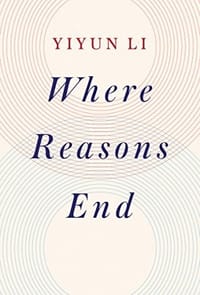
书籍介绍
这不是一本让人读得舒服的书,却是一本让人读完后久久无法舒服的书。李翊云让一位母亲在自杀身亡的儿子死后,进入一个名为“nowhere”的空间,与儿子展开一场只有对话、没有情节的交谈。全书没有故事,只有语言本身在反复纠缠:词源、语法、句法被一遍遍拆解,仿佛母亲唯有通过咬文嚼字,才能把儿子留住。许多读者因此感到被排斥——聪明而疏离,字里行间全是“I me”,让人窒息甚至反胃;也有人细读后终于触到那“难以名状的悲伤”。它不适合寻求慰藉的读者,却精准地捕捉到:当语言失效、理由穷尽之处,母亲只能靠文字重建一个活生生的儿子。这是一次把创伤写成艺术的高风险尝试,成败全在那份对文字的执念里。
作者简介
Yiyun Li grew up in Beijing, China and moved to the United States in 1996. She received an MFA from Iowa Writers' Workshop and an MFA in creative nonfiction writing from the University of Iowa. Her stories and essays have been published in The New Yorker, The Paris Review,and elsewhere. She has received a Whiting Writers' Award and was awarded a Lannan Foundation residency in Marfa, TX. Her debut collection, A Thousand Years of Good Prayers, won the Frank O’Connor International Short Story Award, PEN/Hemingway Award, Guardian First Book Award, and California Book Award for first fiction. She was recently selected as one of Granta's 21 Best of Young American Novelists. She lives in Oakland, California with her husband and their two sons, and teaches at University of California, Davis.
AI导读
核心看点
- 虚构母子在死后世界的对话,直面丧子之痛
- 以文字重构生命,探讨语言与情感的边界
- 无情节推进,全靠高密度的哲学思辨支撑
读者共识
- 文字极具美感与智力挑战,但情感基调极度压抑
- 部分读者认为母亲形象冷漠自恋,对话显刻意
- 评价两极分化:有人视其为艺术杰作,有人觉其虚伪
精彩摘录
- "Perfect. Imperfect. A pair of adjectives that come over and over again, in all seasons, day in and day out, taunting us, judging us, isolating us, turning our isolation into illness. Is there a more accoplished adjective than perfect? Perfect is free from comparison, perfect rejects superlative. We "
- "I don’t like making friends with older people. Besides, one can’t really be friends with one’s mother. Can one not? No. The essence of growing up is to play hide-and-seek with one’s mother successfully, Nikolai said. All children win, I said. Mothers are bad at seeking. You did find me. Not as your "
- "I suppose you’re right, I said. Still, I wish you knew how much you are missed by many people. Mommy, Nikolai said, and the way he said it almost made me weep. Mommy, you know that’s a cliché. What if life could be saved by clichés? What if life must be lived by clichés? Somewhere tomorrow and somew"
- "Rules are set to be broken, he said. Deadlines are set to be missed, I said. Deadline as a word used to fascinate me, a word that connects time and space and death with such absoluteness. Promises are made not to be kept, he said. Love is made not to last, I said. A contestable statement, though he "
- "Poor you, he said. Waylaid by time. Waylay, I said. I’ve never used it in my writing. No offense, but you don’t have an expansive vocabulary. Luckily my mind is not limited by my vocabulary, I said. (In my head I used the same tone that I had used when Nikolai had introduced me to his kindergarten c"
- "Days are not the only place where we live, Nikolai said. Time is not the only place where we live, I said. Days are. I don’t have to have days to live now. And yet I have to live in days, I said. I’m sorry, he said. Days: the easiest possession, requiring only automatic participation. The days he ha"
- "If memory were a fetter, he said, many people would envy me. Why? Each day they live makes the fetter more unbreakable than the day before. What if, I thought, that is life’s necessity? Still, I said, aren’t you able to know the poem even if you can’t remember? It doesn’t work the way you imagined. "
- "I’m rather dense, I said. Gormless, you know. Dense and gormless were the favorite adjectives Nikolai and his brother used to describe me. Do you really believe that? Why not, I said. How I always hate your hypocrisy, he said. Oh, I said. I was taken aback. I was surprised that I had forgotten this:"
用户评论
看的过程中有很多话想说,但看完却觉得说什么都是多余的。这是一场永远不会结束的对话,是生者与死者,现实与想象,琐碎与精细,拥有与失去…理性永远无法抵达终点的对话。虽然词句简单,却蕴意丰富,精致好看。
写得太好了。看哭了好几次。
你们疯了
Better than self help books in dealing with loss, grief, and forgiveness
太悲伤了,悲伤的浓度如此之高,以至于感受到了一种稀薄。感觉有些人是生下来就背负成为艺术家的使命,所以老天赐予Ta种种不幸。只有艺术家才能把这不幸变成人类存活过的证明。
无法言说
过于意识流,又很哲学思辨,所以读起来很费劲…很多时候要反复读才能get到真实含义…
现在还能回想起 当时读这本时感受到的心痛
理性的终结之处还是理性的开始之处
整篇都是心碎。
Random House的其他书籍查看全部
 Jennifer Chan Is Not Alone
 Adriatic
 A Swim in a Pond in the Rain
 Blowout
 The Second Mountain
 Dreyer's English
下载
收藏