
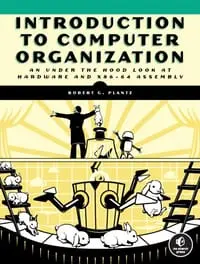
Introduction To Computer Organization: A Guide To X86-64 Assembly Language And GNU/Linux
出版时间
2021-05-01
ISBN
9781718500099
评分
内容简介
This hands-on tutorial is a broad examination of how a modern computer works. Classroom tested for over a decade, it gives readers a firm understanding of how computers do what they do, covering essentials like data storage, logic gates and transistors, data types, the CPU, assembly, and machine code.
Introduction to Computer Organization gives programmers a practical understanding of what happens in a computer when you execute your code. You may never have to write x86-64 assembly language or design hardware yourself, but knowing how the hardware and software works will give you greater control and confidence over your coding decisions. We start with high level fundamental concepts like memory organization, binary logic, and data types and then explore how they are implemented at the assembly language level.
The goal isn’t to make you an assembly programmer, but to help you comprehend what happens behind the scenes between running your program and seeing “Hello World” displayed on the screen. Classroom-tested for over a decade, this book will demystify topics like:
How to translate a high-level language code into assembly language
How the operating system manages hardware resources with exceptions and interrupts
How data is encoded in memory
How hardware switches handle decimal data
How program code gets transformed into machine code the computer understands
How pieces of hardware like the CPU, input/output, and memory interact to make the entire system work
Author Robert Plantz takes a practical approach to the material, providing examples and exercises on every page, without sacrificing technical details. Learning how to think like a computer will help you write better programs, in any language, even if you never look at another line of assembly code again.
Bob Plantz was a professor at Sonoma State for 21 years, teaching a variety of core computing classes. He started his career designing electronics for the horizon scanners on the Gemini spacecraft and Apollo Lunar Module. After that, he got his PhD in electrical engineering at UC Berkeley, and went on to work as a software engineer for eight years before becoming an educator.
读者评论
No Starch Press的其他书籍查看全部
 《Open Circuits》
 《The Rust Programming Language (Covers Rust 2018)》
 《Linux Basics for Hackers》
 《Scratch Programming Playground》
 《Python Playground》
 《Python Crash Course》