
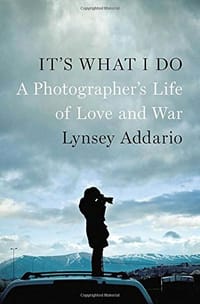
书籍介绍
这并非一本战争摄影的炫技手册。真正打动读者的,是作者反复叩问的那个词:为什么。一个可以朝九晚五、拥有安稳家庭的人,凭什么一次次把命押在炮火里?她在科伦加尔山谷看见怀孕六个月的同行仍穿着防弹衣跋涉,恍然悟出——'我们的职业就是我们的生命,它定义着我们的身份'。于是全书的重心不在枪林弹雨如何惊险,而在一个女性如何在暴行与残酷中,坚持用镜头捕捉人的尊严:难民营里鲜艳衣裳与咧嘴的笑,禁书藏于塔利班的高墙之内,星空下赤裸而自由的自己。它适合那些想理解'一个人为何甘愿为理想舍弃一切'的读者,也适合在琐碎日常里感到窒息、渴望看看'世上有人活得完全不一样'的人。残酷是真的,美好也是真的,而选择看见并记录,是作者给自己争取到的机会。
作者简介
Lynsey Addario (born 1973) is an American photojournalist. Her work often focuses on conflicts and human rights issues, especially the role of women in traditional societies.
She graduated from Staples High School, in Westport, Connecticut, in 1991. She graduated from the University of Wisconsin, Madison, in 1995. She began photographing professionally in 1996 at at the Buenos Aires Herald in Argentina, and then began freelancing for the Associated Press, with Cuba as a focus.
In 2000, she photographed in Afghanistan under Taliban control. She has since covered conflicts in Afghanistan, Iraq, Darfur, the Congo, and Haiti. She has covered stories throughout the Middle East and Africa. She has visited Darfur or neighboring Chad at least once a month from August 2004.
She has photographed for The New York Times, The New York Times Magazine, Time, Newsweek, and National Geographic.
In Pakistan on May 9, 2009, Addario was involved in an automobile accident while returning to Islamabad from an assignment at a refugee camp. Her collar bone (clavicle) was broken, another journalist was injured, and the driver was killed.
Addario was one of four New York Times journalists who were missing in Libya from March 16–21, 2011. The New York Times reported on March 18, 2011 that Libya had agreed to free her and three colleagues: Anthony Shadid, Stephen Farrell and Tyler Hicks. The Libyan government released the four journalists on March 21, 2011. She reports that she was threatened with death and repeatedly groped during her captivity by the Libyan Army.
Addario told the press that "Physically we were blindfolded and bound. In the beginning, my hands and feet were bound very tightly behind our backs and my feet were tied with shoelaces. I was blindfolded most of the first three days, with the exception of the first six hours. I was punched in the face a few times and groped repeatedly." And "It was incredibly intense and violent. It was abusive throughout, both psychologically and physically. It was very chaotic and very aggressive. For me, there was a lot of groping right away. Sort of everyone who had to pick me up and carry me somewhere, they would reach around and grab my breasts and touch my butt--everyone who came near me.
In November 2011, The New York Times wrote a letter of complaint on behalf of Addario to the Israeli government, after allegations that Israeli soldiers at the Erez Crossing had strip-searched and mocked her and forced her to go through an X-ray scanner three times despite knowing that she was pregnant. Addario reported that she had "never, ever been treated with such blatant cruelty." The Israeli Defence ministry subsequently issued an apology to both Addario and The New York Times.
The extensive exhibition In Afghanistan at the Nobel Peace Center in Oslo, Norway has her photos of Afghan women juxtaposed with Tim Hetherington's photographs from American soldiers in the Korengal Valley.
Addario is married to Paul de Bendern, a journalist with Reuters. They married in July 2009. They have one son, Lukas (B. 2011).
She is the recipient of multiple awards, including the MacArthur Fellowship in 2009. Her work in Waziristan, Sept. 7, 2008, was part of work receiving the Pulitzer Prize in 2009 for International Reporting. She won the Getty Images Grant for Editorial photography in 2008 for her work in Darfur. She received the Infinity Award in 2002 by the International Center of Photography.
AI导读
核心看点
- 本书是普利策奖得主、著名战地摄影师林赛·阿德里奥的回忆录,真实记录了她从纽约普通女孩成长为全球顶尖战地记者的历程。书中毫无保留地展示了她在阿富汗、伊拉克、苏丹、利比亚等战乱地区的亲身经历,包括被塔利班囚禁、遭遇绑架、在炮火中坚持工作的惊险时刻,展现了新闻工作者对真相的极致追求。
- 作者深入探讨了女性战地摄影师的特殊困境与视角。书中详细描写了她在男性主导的战争报道领域如何打破偏见,以及作为女性如何与当地女性建立信任,记录她们在战争中的苦难与坚韧。同时,书中也坦诚面对了职业带来的心理创伤、身体伤害以及对个人生活的巨大冲击,展现了职业理想与现实代价的激烈冲突。
- 这不仅是一部战争纪实,更是一部关于爱、家庭与自我认同的深刻反思。书中后半部分重点讲述了作者如何在经历生死边缘后,重新审视生命意义,最终找到理解并支持其事业的伴侣,并在成为母亲后尝试平衡战地记者与母亲的双重身份。这种从追求极端职业成就到回归人性温暖与家庭责任的转变,构成了全书最动人的情感内核。
读者共识
- 读者普遍被作者的专业精神、勇气及对真相的执着所震撼,认为这是一部令人敬佩且情感充沛的自传。尽管部分读者指出作者的文字功底不如其摄影作品出色,或认为后半部分关于家庭生活的描写略显平淡,但绝大多数读者认为书中展现的人性光辉、对生命的尊重以及作者面对苦难时的坚韧态度,具有极高的阅读价值与感染力。
- 书中关于战地记者职业风险与心理代价的描述引发了广泛共鸣,读者对作者在极端环境下坚持记录真相的行为表示高度敬意。许多读者表示,阅读此书让他们对战争受害者有了更深的同情,对新闻工作者的牺牲有了更深刻的认识。同时,作者最终选择回归家庭、拥抱生活的转变,也被读者视为一种成熟与智慧,而非对理想的背叛。
- 读者一致认为,这本书超越了普通的职业回忆录,成为一部关于人性、爱与和平的深刻宣言。尽管书中涉及大量暴力与苦难,但读者反馈称,作者的文字中始终流淌着对生命的热爱与对美好的追求,这种在黑暗中寻找光明的力量,给读者带来了巨大的精神慰藉与正向激励。许多读者表示,读完此书后,对生活中的困难有了更豁达的态度,更加珍惜当下的和平与亲情。
精彩摘录
- "后来我和卖书的人熟识了,他便把他的秘密藏书——塔利班规定的禁书——也拿给我看。我回到房间,看来读书是我打发时间的唯一的选择了。周围非常安静。我脱掉衣服,光着身子站在阳台上,站在星空下。"
- "这些年来,我强迫自己在报道同一性质的事件时发挥创造力。我开始在拍摄难民营时有时失焦,有时以抽象的方式拍摄,试图打动与《纽约时报》读者不同的人,即那些专注于视觉表达和艺术美观的人。尽管冲突场面非常丑陋,但其中的主角穿着色彩鲜艳的衣服,尽管不断承受着灾难,他们仍咧开嘴在笑。"
- "我常常想到伊丽莎白,她是如何在怀孕六个月时仍穿着防弹衣在科伦加尔山谷中跋涉。我突然明白她为什么在怀孕期间仍强迫自己工作——从某种意义上说,我们的职业就是我们的生命,它定义着我们的身份,而不不仅仅是一份用以糊口的工作。"
- "He articulated what I had been trying to intuit. He taught me how to read light. He taught me the power of the sun at a low angle in the sky just after sunrise or before sunset to illuminate the world in that golden, magical way with long, dancing shadows. He talked of how a shaft of light fell onto"
目录
Prelude
PART ONE. DISCOVERING THE WORLD: Connecticut, New York, Argentina, Cuba, India, Afghanistan
Chapter 1 No Second Chances in New York
Chapter 2 How Many Children Do You Have?
Chapter 3 We Are at War
显示全部
用户评论
IT IS WHO I AM. IT IS WHAT I DO.
如果我可以向对战争灾难类新闻摄影有兴趣的人推荐一本书,我会推荐这一本。 看的时候有很多次都差点泪流满面,这个女人实在是让人敬佩。有多少人愿意舍弃自己的生命去捍卫自己的新闻理想,有多少人愿意舍弃朝九晚五,和美家庭亲人朋友,只因为自己相信那些无法发声之人需要被听见,事实需要被更多的人见证,公众有了解实事的权利。这本书只能用 astonishing形容。。。。
It's not a job you do just for living. The work defines who you are. The work is your life.
大晚上的睡不着,把很久以前就开始看的这本书翻出来看完了。书中印象最深的一句话是,"I choose to live in peace and witness war--to experience the worst in people but to remember the beauty." 读这本书时,为作者前期的经历笑过,看到作者08年在阿富汗的经历忍不住的流泪过。我发自心底的敬佩着这些为了自己热爱的工作不顾艰险的人们。这本书深入浅出的展现了一个摄影记者的生活,对于我更是一个要坚定的找寻自己追求的提醒与对于冲突,战争,贫穷与疾病的深思。
“I never imagined I could one day find the perfect partner, who fits effortlessly into the chaos of my life. You keep me grounded, and you encourage me to embrace my passion for this work without letting me sink into the world’s darkness. “
emmm…可能期待过高了。笔者的经历,思考,与对工作生活的热情。世界某些角落发生的事情引发了我自己对生活现状的反思。
战地摄影师好让人敬佩。被女主的执着和她和丈夫之间的爱情感动。印象最深的就是她提到过的要拍出好看的照片,这样才会吸引人来关注发生了什么。
引人入胜
几年前看过中文翻译版,当时的我还算跟作者是半个同行。如今回到另一个世界的我,重新阅读作者的战地摄影师经历,仍然能唤醒自己的经历。感情和事业的挣扎,是这个世界上不同女性的共同难题。作者在生育这件事上曾经有过的困惑,在生育后获得的前所未有的体验,在一定程度上让我释然:一个战地摄影记者都可以处理好家庭和事业的平衡,作为平凡职业的我们,又有什么理由恐惧呢?让儿子能有去经历的权利,这是一个母亲能给的最好的礼物。
Penguin Press的其他书籍查看全部

求书
收藏