
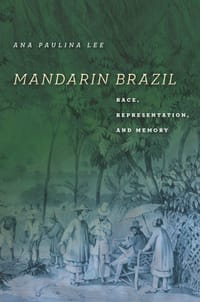
In Mandarin Brazil, Ana Paulina Lee explores the centrality of Chinese exclusion to the Brazilian nation-building project, tracing the role of cultural representation in producing racialized national categories. Lee considers depictions of Chineseness in Brazilian popular music, literature, and visual culture, as well as archival documents and Brazilian and Qing dynasty diplomatic correspondence about opening trade and immigration routes between Brazil and China. In so doing, she reveals how Asian racialization helped to shape Brazil's image as a racial democracy.
Mandarin Brazil begins during the second half of the nineteenth century, during the transitional period when enslaved labor became unfree labor—an era when black slavery shifted to "yellow labor" and racial anxieties surged. Lee asks how colonial paradigms of racial labor became a part of Brazil's nation-building project, which prioritized "whitening," a fundamentally white supremacist ideology that intertwined the colonial racial caste system with new immigration labor schemes. By considering why Chinese laborers were excluded from Brazilian nation-building efforts while Japanese migrants were welcomed, Lee interrogates how Chinese and Japanese imperial ambitions and Asian ethnic supremacy reinforced Brazil's whitening project. Mandarin Brazil contributes to a new conversation in Latin American and Asian American cultural studies, one that considers Asian diasporic histories and racial formation across the Americas.
About the author
Ana Paulina Lee is Assistant Professor of Luso-Brazilian Studies at Columbia University.
显示全部