
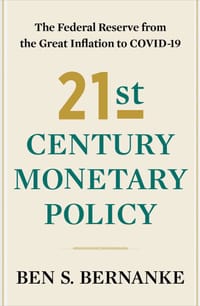
书籍介绍
这不是一本教你如何使用货币政策的工具书,而是一部美联储如何'摸着石头过河'的自述史。伯南克以亲历者身份,把抑制通胀与保持就业这组永恒矛盾,放进过去七十年美国经济的真实冲击里逐一检验:从马丁'派对结束前收走酒碗'的隐喻,到大衰退后工具箱的持续扩容,再到疫情中震惊前辈的非常之举。读者记住的,往往是那些'官方视角的历史因果'——政策框架为何随事件演进,而非随经济学理论迭代。它也毫不回避争议:书中对QE与MMT的辩护、对美联储独立性当代风险的警告,让不少读者'看完却不喜欢作者'。适合想理解政策背后权衡、而非只需结论的人。
作者简介
Ben S. Bernanke is a Distinguished Senior Fellow at the Brookings Institution. Author of the best-selling memoir The Courage to Act, he served as chair of the Federal Reserve from 2006 to 2014.
AI导读
核心看点
- 本书由美联储前主席伯南克亲自撰写,深入剖析了21世纪以来美联储货币政策的演变历程。作者详细解释了在新冠疫情等极端冲击下,美联储如何运用量化宽松、直接借贷等非常规工具防止金融系统崩溃,并阐述了这些策略与20世纪传统政策的根本区别,为读者提供了理解现代央行运作机制的独家内部视角。
- 书中系统梳理了美联储政策框架的重大转型,特别是从传统的通胀目标制转向平均通胀目标制(FAIT)及更积极的充分就业导向。伯南克结合菲利普斯曲线平坦化、自然失业率下降等宏观经济背景,解释了为何美联储需要调整策略以应对低增长、低通胀环境,并澄清了外界对货币政策宽松导致资产泡沫的误解。
- 作者回顾了从大萧条到2008年金融危机再到疫情期间的历史教训,强调美联储在独立性、透明度及沟通手段上的持续改进。书中不仅记录了政策制定的艰难权衡,还探讨了货币政策在维护金融稳定方面的隐性角色,以及面对全球储蓄过剩、潜在增长率下降等结构性挑战时,央行工具箱的扩展与局限。
读者共识
- 读者普遍认为这是了解美联储内部运作及现代货币政策演变的权威之作,具有极高的史料价值和独家视角。尽管部分读者批评其带有自我辩护性质,但多数观点认为其内容详实、逻辑清晰,比市面上许多泛泛而谈的金融书籍更具深度。作为亲历者,伯南克对危机时刻的决策细节披露,为理解全球金融体系提供了不可替代的一手资料。
- 多数读者指出本书阅读难度较大,需要扎实的经济学背景知识才能完全理解。部分读者反映中文版翻译质量参差不齐,建议直接阅读英文原版以获得更准确的表述。尽管存在阅读障碍,但读者仍高度评价其作为“美联储百科全书”的价值,认为其对于理解当前全球货币宽松常态及央行角色转变至关重要,值得耐心研读。
- 读者对书中关于政策独立性与透明度的讨论评价较高,认为这揭示了现代央行在政治压力下的生存之道。然而,也有读者对作者为QE政策辩护的立场表示反感,认为其忽视了政策对普通民众的负面影响。总体而言,读者共识认为本书虽非完美中立,但作为理解21世纪金融监管与货币政策边界的重要文献,其学术与历史价值不容置疑。
精彩摘录
- "More benignly, the downward drift in the natural rate of unemployment, a flatter Phillips curve, and well-anchored inflation expectations looked to have given the Fed more room to push for a “hot” labor market with less concern about too-high inflation."
- "As a result of its review, the FOMC approved two principal changes to its policy framework. First, in pursuing its inflation goal, the Committee would henceforth try to make up for past undershoots (though not overshoots) of the inflation target. If inflation ran below 2 percent for a time, as it ha"
- "The second major change to the Fed’s framework was a more proactive approach to ensuring full employment. In his speech, Powell said that monetary policy would henceforth respond only to shortfalls of employment from its maximum level, rather than to deviations (either shortfalls or overshoots) from"
- "In its new strategy the FOMC agreed to take a more agnostic view about u*. It would push for lower unemployment until inflation or other signs of overheating provided tangible evidence that maximum employment had been reached. Undeniably, that strategy would carry some risk that inflation would rise"
- "Inflation posed another, increasingly worrying, threat. Some economists, including Larry Summers, Olivier Blanchard (the former chief economist of the IMF), and Jason Furman (former head of Obama’s CEA), voiced their concerns that the combination of powerful fiscal stimulus, accumulated household sa"
- "Under its FAIT framework, the FOMC had sought a temporary overshoot of its inflation target. The risk was that the overshoot would go too far and persist for too long."
- "As modified by the experience of the 1970s and the insights of Friedman, Phelps, and others, the Phillips curve remains a centerpiece of economists’ thinking about inflation today. To summarize, in its contemporary form, the Phillips curve makes three assertions: First, economic expansion, when driv"
- "In part because of these practical difficulties, the Committee would abandon its monetarist framework after only three years, in October 1982, returning to its traditional approach of targeting the funds rate."
用户评论
Global QE的始作俑者,除却对MMT的辩解之外,更好的是官方视角的historical causalities。全球生产力下降的情况下,a lower natural rate would eventually lead to higher asset prices until dxy breaks. 继续做个观察者和小韭菜。
heavy lifting read,终于看完了。前两部分有多么让人心驰神往,最后一部分有有多让人犯恶心。当然值得一看,但bernanke真是让人喜欢不起来
美联储、美国货币政策与宏观经济,读起来并不轻松,需要较深的经济学背景知识
QE政策解读和伯南克自我辩护书,当代货币政策必读书
伯南克结合美国经济和金融的历史发展进程,把美联储抑制通胀和保持充分就业的历程进行了详细的描述。美联储的工具箱不断的丰富,同时也根据经济形式的变化不断调整已有的工具。美联储的政策制度越来越透明,也有效地保持了独立性。
an encyclopedia on Fed
先读的中文版,翻译实在太烂了,从第二部分开始换到英文版,通顺多了。内容比较浅显,但是可以看到从伯恩斯时代到鲍威尔时代美联储的演变,包括它的各种考量与顾虑,作为了解美联储的入门读物还是不错的。
正本清源

W. W. Norton & Company的其他书籍查看全部





求书
收藏