
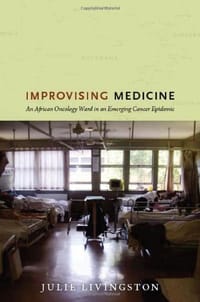
Improvising Medicine
出版时间
2012-08-29
ISBN
9780822353423
评分
★★★★★
书籍介绍
这是一部发生在博茨瓦纳唯一肿瘤病房的民族志,但真正的主角不是医学技术本身,而是
用户评论
作者不是人类学出身,写出民族志质量很高。人类学还真是没门槛。Livingston 结合历史,人类学,还有public health,是我想走的路。读的时候,发现cue了导师两三次,哈哈,觉得好好笑。有这突然和作者距离近了点的感觉
Care, pain and laughter happening every day in the oncology ward is not only personal or pathological but also intimately social and cultural within this small neighborhood, where people are connected and bound together by individualized yet shared suffering from one of the worst nightmares of modern humankind – cancer.
shows a historian’s mastery of materials & candid voice; core idea: cancer as a “boundary object,” pain always begs social response, oncological urgency vs resource scarcity
Livingston认为讲述癌症的民族志需要以graphic的方式呈现。可这本书graphic程度还不如她在living and dying里写的那章,看完我整个人浑身都不舒服……
这本书第四章有些偷懒:由于非洲cancer epidemic背景,护士成为主要的care-giver. 但以护士为叙述中心并不代表可以省略家人/社会关系网所给予患者的care & therapy. 恕我无法认同她对这一章的处理。
所以我对这本书的阅读止步第四章……如果后面有需要当然还会重读。前面几章她对整个非洲尤其Botswana背景下的癌症治疗还是做了很详实的铺陈。感叹:不深入研究the anthropology of ethics的学者还是不要轻易在章节标题里用moral一词,容易让人有非分之想……
Duke University Press的其他书籍查看全部






下载
收藏