
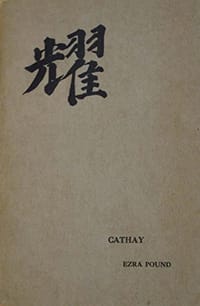
书籍介绍
这是一部充满悖论的译作:庞德不懂中文,却凭友人费诺洛莎的笔记,把中国古诗搬进了英语。读者最常讨论的,恰恰是它的
作者简介
Ezra Weston Loomis Pound (30 October 1885 – 1 November 1972) was an expatriate American poet and critic, and a major figure in the early modernist poetry movement. His contribution to poetry began with his development of Imagism, a movement derived from classical Chinese and Japanese poetry, stressing clarity, precision and economy of language. His works include Ripostes (1912), Hugh Selwyn Mauberley (1920) and the unfinished 120-section epic, The Cantos (1917–1969). Pound worked in London during the early 20th century as foreign editor of several American literary magazines, and helped discover and shape the work of contemporaries such as T. S. Eliot, James Joyce, Robert Frost and Ernest Hemingway.[a] Angered by the carnage of World War I, Pound lost faith in Great Britain and blamed the war on usury and international capitalism. He moved to Italy in 1924 and throughout the 1930s and 1940s embraced Benito Mussolini's fascism, expressed support for Adolf Hitler, and wrote for publications owned by the British fascist Sir Oswald Mosley. During World War II, he was paid by the Italian government to make hundreds of radio broadcasts criticizing the United States, Franklin D. Roosevelt and Jews, as a result of which he was arrested in 1945 by American forces in Italy on charges of treason. He spent months in detention in a U.S. military camp in Pisa, including three weeks in a 6-by-6-foot (1.8 by 1.8 m) outdoor steel cage, which he said triggered a mental breakdown: "when the raft broke and the waters went over me". The following year he was deemed unfit to stand trial, and incarcerated in St. Elizabeths psychiatric hospital in Washington, D.C., for over 12 years. Pound began work on sections of The Cantos while in custody in Italy. These parts were published as The Pisan Cantos (1948), for which he was awarded the Bollingen Prize in 1949 by the Library of Congress, leading to enormous controversy. Largely due to a campaign by his fellow writers, he was released from St. Elizabeths in 1958 and returned to live in Italy until his death. His political views ensure that his work remains as controversial now as it was during his lifetime; in 1933 Time magazine called him "a cat that walks by himself, tenaciously unhousebroken and very unsafe for children". Hemingway wrote: "The best of Pound's writing—and it is in the Cantos—will last as long as there is any literature."
用户评论
朗读
补评:不知道是不是这个版本,姑且标这个版本吧。toilet查了一下,应该是梳妆的意思,当然也不排除有反讽的意味,毕竟女主人公是娼妓,而她的丈夫是醉鬼。短诗比较可人,尤其是同原诗对照着读,中文是横向的一行一联,而英文把句子纵向断开,因此一些句意的转折或者承接就觉得很奇妙。 @2020-09-19 19:40:53
粗略地读了一下,所以不打分了。读了一些对于翻译的分析和点评,感觉语法真的很大程度地限制了翻译啊
异质的意象为原作所无,创造性的误译更使本书可脱离翻译范畴转变为诗集。
哪里有中英对照本!对中文不精通但还是有翻译李白(リハク)的勇气,这就是大家吗
用词简约平和,当创作比当译本读更舒服些,The Seafarer放在里面违和
庞德这本翻译中国古诗的《华夏集》真是有意思,虽然不少古代文化语境中的特定用词肯定不能那么直译hhh个人最喜欢的译作是李白(Rihaku)的《古风·胡关饶风沙》(Lament of the Frontier Guard),庞德将“荒城空大漠”译为“Desolate castle, the sky, the wide desert”,既有意象派的精准和凝练,又不失原诗宏大意境。
看的不是这个版本,而是网上扒的扫描版,1915年最早发行的那个版本,只有几十页。另外Lustra中增补那几首也读过了。

New Directions的其他书籍查看全部

下载
收藏