
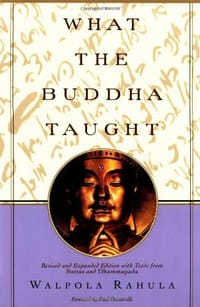
书籍介绍
这本书最耐人寻味的地方,在于它几乎刻意回避了绝大多数人对佛教的期待:它不渲染轮回、不贩卖来世、不渲染神秘体验,反而把佛教当作一套可以理性检验的
AI导读
核心看点
- 澄清佛教非盲信宗教,强调智慧与正见
- 系统阐述四圣谛与八正道核心教义
- 破除常见误解,还原佛陀如实教导
读者共识
- 英文佛学入门经典,逻辑清晰严谨
- 文字简练,有效消除对佛教的误读
- 虽偏学术但极具启发性,值得细读
精彩摘录
- "一般的人,並不生活在他們眼前的生活中,他們都生活在過去或未來里。雖然看外表他們似乎是在此時此地做著些什麽,事實上他們是生活在他們思想中的另一個世界里,生活在虛構的問題與苦悶里。通常他們是活在過去的記憶中,或對未來的慾望與懸揣之中。因此他們並不生活在他們目前在做的工作里,也不樂於這工作。所以,他們就對現狀不滿、不開心,而自然而然的不能對當前像是在做的工作,獻出全部的身心了。 愚蠢的人,又冥索未來,又追悔過去,就像碧綠的蘆葦在驕陽中被刈斷一般,一下子就枯萎了。"
- "强迫自己去相信与接受某些不瞭解的事物,是政治,不是宗教,也不是睿智 有一个时常被提起的问题:佛教到底是宗教呢?还是哲学?不管你叫它做什么,都无关宏旨。佛教仍然是佛教,不论你给它贴上什么样的标签。标签是不相干的。我们将佛的教诫称为“佛教”,也没有什么特别的重要性。人们为它所取的名字,是不关紧要的。 名字有什么相干? 我们叫做玫瑰的, 叫任何别的名字, 仍然一样的芬芳。 佛教里一向是由智慧得正见,而不是由盲信而生信仰。"
- "根据佛的教诲,疑是五盖之一,能覆蔽人心,使不得如实见到真理,并能障碍一切进步。疑却不是一种罪恶,因为在佛教理没有盲信这一条。事实上,佛教里根本就没有其他宗教里所谓罪的观念。一切恶法的根本是无明与邪见。不可否认的是:只要有疑、迷惑、意志不坚定,就不可能有进步。但同样不可否认的,在没有确实明瞭之前,疑是一定存在的。可是想求进步,就绝对必须祛除疑惑;而祛除疑惑,又必须确实明瞭。 叫人不怀疑,叫人必须要信,是没有道理的。仅仅说一声“我相信”,并不能表示你已有了知与见。一个学生做数学题目的时候,到了某一阶段,他不知道该怎么演算下去。这时他就生起疑虑和惶恐,只要此疑不除,他就不能进步。想进一步演算下去,他"
- "佛教是既非悲观的,也非乐观的。如果一定要说它怎么样,毋宁说它是“实 观”的。因为它对人生、对世界的观点是如实的。它以客观的眼光看一切事物,既不诳 骗你,使你在一个愚人的乐园中,醉生梦死的度过一生;也不以各种虚幻的恐惧与罪恶 来恫吓、折磨你。它只是客观而正确地告诉你:你是什么?你周围的世界又是什么?并 为你指出走向十足自由、和平、宁静与快乐的途径。 识并不能辨认事物,它只是一种知觉,对于某一事物的在一连串的因果关系中,一件事物的消逝,就构成另一件事物生起的条件。其中,并没有不变的实体。存在的察觉。 世间迁流不息,无有恒常。 佛教最反对愁惨、苦恼、悔罪、郁闷等心理状态,认为这些都是体证真理的障碍。"
- "That is why there is not a single example of persecution or the shedding of a drop of blood in converting people to Buddhism, or in its propagation during its long history of 2500 years. It spread peacefully all over the continent of Asia, having more than 500 million adherents today. Violence in an"
- "This is true not only in intellectual and spiritual matters, but also in human relations. When, for instance, we meet a man, we do not look on him as a human being, but we put a label on him, such as English, French, German, American, or Jew, and regard him with all the prejudices associated with th"
- "Almost all religions are built on faith - rather 'blind' faith it would seem. But in Buddhism emphasis is laid on 'seeing', knowing, understanding, and not on faith, or belief."
- "The question of belief arises when there is no seeing - seeing in every sense of the word. The moment you see, the question of belief disappears. If I tell you that I have a gem hidden in the folded palm of my hand, the question of belief arises because you do not see it yourself. But if I unclench "
用户评论
佛教基本教義入門書,Walpola Rahula經典之作,戴密微作序。附巴利文佛典選譯。顧法嚴譯中文版見:http://www.douban.com/subject/2324913/
苦、集、灭、道,四圣谛
it is the standard.
這本書完美詮釋了苦海無邊,佛法為岸的真理
in simple word, the author depicted outline of Buddha and the doctrine
很好读,比较浅
对于佛教的理解有了很深的感受,也打破了很多旧有的成见。
五蕴的解释好像过于简略。
啊——
中规中矩的入门书,推荐给入门者,但没啥有趣的见地
求书
收藏