
内容简介
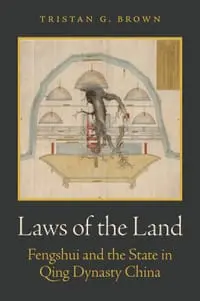
Today the term fengshui, which literally means “wind and water,” is recognized around the world. Yet few know exactly what it means, let alone its fascinating history. In Laws of the Land, Tristan Brown tells the story of the important roles—especially legal ones—played by fengshui in Chinese society during China’s last imperial dynasty, the Manchu Qing (1644–1912).
Employing archives from Mainland China and Taiwan that have only recently become available, this is the first book to document fengshui’s invocations in Chinese law during the Qing dynasty. Facing a growing population, dwindling natural resources, and an overburdened rural government, judicial administrators across China grappled with disputes and petitions about fengshui in their efforts to sustain forestry, farming, mining, and city planning. Laws of the Land offers a radically new interpretation of these legal arrangements: they worked. An intelligent, considered, and sustained engagement with fengshui on the ground helped the imperial state keep the peace and maintain its legitimacy, especially during the increasingly turbulent decades of the nineteenth century. As the century came to an end, contentious debates over industrialization swept across the bureaucracy, with fengshui invoked by officials and scholars opposed to the establishment of railways, telegraphs, and foreign-owned mines.
Demonstrating that the only way to understand those debates and their profound stakes is to grasp fengshui’s longstanding roles in Chinese public life, Laws of the Land rethinks key issues in the history of Chinese law, politics, science, religion, and economics.
Tristan G. Brown is assistant professor of history at the Massachusetts Institute of Technology.
目录
显示全部
读者评论
Princeton University Press的其他书籍查看全部
 《Microeconomic Foundations II》
 《That Tyrant, Persuasion》
 《The Two Greatest Ideas》
 《The Princeton Guide to Historical Research》
 《The Handbook of China's Financial System》
 《Leaving Academia: A Practical Guide》