
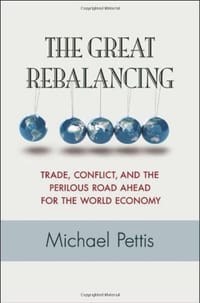
书籍介绍
这本书最锋利之处,在于它拒绝把贸易失衡简单归咎于'谁偷了别人的工作'或'汇率操纵者',而是用一组会计恒等式把全球当作一个封闭系统来推演:一国储蓄率的扭曲,必然在别处制造出等量反向的扭曲。作者的核心洞察相当反直觉——中国过去几十年的高速增长,本质是家庭在补贴投资与生产,居民收入占GDP比重从六成多一路滑向五成以下,增长越快,消费被压得越狠。由此观之,所谓'出口奇迹'不过是内需不足的镜像。这一视角极具说服力,但也引发争议:读者既惊叹于'收入效应+会计恒等式解释一切'的简洁有力,也批评它重复冗长、论证不够严密,甚至不如作者早年的著作严谨。它适合愿意补上宏观经济学、并试图理解'增长为何不可持续'的读者,而非寻求政策处方者。
作者简介
Michael Pettis is professor of finance and economics at Peking University, a senior associate at the Carnegie Endowment, and a widely read commentator on China, Europe, and the global economy. He is the author of The Volatility Machine: Emerging Economies and the Threat of Financial Collapse.
AI导读
核心看点
- 本书彻底颠覆了关于贸易失衡的传统认知,作者利用会计恒等式证明,一国的贸易顺差必然对应他国的逆差,全球收支永远平衡。所谓‘货币操纵’或‘不公平贸易’往往是表象,实质是各国国内储蓄与消费结构的严重扭曲。作者指出,中国等国的政策强制压低居民收入以补贴投资,导致储蓄率畸高,进而通过资本输出造成全球失衡,这种模式不可持续且极具破坏性。
- 作者深入剖析了中国经济增长模式的内在缺陷,指出其依赖压低劳动力成本、抑制居民消费来维持高储蓄和高投资。这种模式不仅导致国内贫富差距扩大,还使得企业部门债务高企,而居民部门缺乏消费能力。书中强调,真正的经济再平衡必须通过财富转移,即提高居民收入占比、完善社会保障,从而刺激内需,而非依赖出口或无效的基础设施投资。
- 本书预测了全球主要经济体面临的严峻调整后果,包括中国经济增速的长期放缓、欧元区的潜在解体以及美元地位的相对衰退。作者警告,试图通过汇率调整或外部施压来解决失衡是徒劳的,因为失衡根源在于国内政策。任何国家若继续维持扭曲的储蓄消费模式,都将面临资产泡沫破裂或债务危机,唯有接受痛苦的内部结构调整,才能实现真正的经济健康。
读者共识
- 读者普遍认为本书提供了极具启发性的分析框架,彻底澄清了关于贸易失衡的常见误解。尽管部分读者批评其逻辑推导过于简化、缺乏实证支持,甚至认为其结论荒谬,但多数人承认其核心观点——即贸易失衡源于国内储蓄消费扭曲——具有深刻的洞察力。这种视角有助于理解全球金融危机的根源,以及为何单纯的外交施压无法解决经济问题。
- 关于中国经济的讨论,读者共识是本书揭示了增长模式不可持续的真相。许多读者认同作者关于‘资本便宜、劳动力被剥削’的分析,认为这解释了为何中国需要转向内需驱动。然而,也有读者指出作者对中国政策后果的预测过于悲观,且忽视了中国政府在调整过程中的努力。总体而言,读者认为本书在揭示结构性问题上具有价值,但在解决方案上缺乏可行性。
- 读者普遍反映本书写作风格存在争议,部分人认为其逻辑清晰、观点犀利,是理解全球经济的重要读物;另一部分人则批评其内容重复、论证不严谨,甚至带有意识形态偏见。尽管如此,多数读者承认作者迈克尔·佩蒂斯作为资深中国经济学家的权威性,其基于会计恒等式的分析方法为理解复杂的国际经济关系提供了有力的工具,尽管具体结论需审慎对待。
精彩摘录
- "Asian countries have followed the growth model establised in the 1960s and 1970s by Japan, and this growth model includes crucially these three conditions: 1. Systematically undervalued currencies, in which the central bank intervenes in the currency to reduce its exchange value. (This transfer the "
- "These growth strategies engineered by Beijing forced households to subsidize investment and production, thus generating rapid economic and emplyment growth at the expense of household income growth."
- "From 1990 to 2002, household income ranged from 64% of GDP to 72% of GDP. It peaked in 1992, before a tremendous bout of inflation in 1993 and 1994 brought it down, and then began a slow, erratic decent to 66% in 2002, after which time it plunged to under 50% of GDP, if the numbers can believed (mos"
- "The difference between posted GDP growth rates and real increases in wealth shows up as excess debt. Eventually the imbalances this misallocation creates have to be resolved, and the wealth destruction has to be rcognized as debt levels are paid down. The petrodollars were recycled in massive amount"
- "Any distortion in one country's position that affects its international trade and capital position must be reflected in an equal and opposite distortion elsewhere. The global balanes of the payments will always balanace, one way or the other. Higher savings in one country must be met either with hig"
- "There are for the most part threee conditions under which net foreign capital inflows improve lont-term growth prospects for the recipient country: 1. When a country has high levels of potntially productive investment but domestic savings are insufficient to satisfy domestic demand, the country bene"
- "I argued in my own testimony that China had indeed boosted creditfuueled demand with its fiscal responese to the crisis, but because most of the resulting credit expansion had gone into investment, and not intoconsumption, China's contribution to global demand over the medium term was minimal and pe"
- "As the world rebalances, China must rebalance just as dramatically and perhaps even more so."
目录
CHAPTER ONE Trade Imbalances and the Global Financial Crisis 1
Underconsumption 4
The Different Explanations of Trade Imbalance 6
Destabilizing Imbalances 9
We Have the Tools 11
显示全部
用户评论
A powerful illustration of how little understanding most analysts have of economics. Through accounting identifies and economic history, Pettis masterfully explains the forces underlying forces shaping international economics and in so doing, blows away one cliche after another about China's place in the world.
在我看来在这本书貌似更像个读后感,接触Michael本人多了才能体会到这些感觉的来源到底来自何处,对于启发和思考都很有帮助,尽管你发现你的想法有时和他并不完全一样。
外行表示不明觉厉。。似乎要先去补补宏观经济学
很有启发的论点。很多细节、机制还需深挖和探讨,虽然这些探讨已经不是一本书能展现的。
基本把所有关于中国经济的stereotype都推翻了。信息太多表示还无法融会贯通。整体认为发展中国家尤其是中国的经济不稳定性来自于经济资源分配的不均衡
简单的逻辑、冗长的讨论、极致的键政,读后立即能拿来用。许久不见的古早凯恩斯总量均衡分析,把全球当成整体来探讨各国总产出结构和贸易平衡之间的联动效应。基本的框架都写在附录中了,两个全球层面的恒等式(Y=C+S=C+I),收入不均带来消费抑制(MPC递减),S偏高,在Y不变前提下,为消化这部分储蓄,要么I上升,要么S回落。如果I上升,那去向无非是生产性投资,存货投资、投机性投资三种;如要S回落,则需要靠富人或政府消费、普通人提高消费(如虚拟资产价格上升使他们产生了变富的假象)以及失业(收入为0,消费为正,比如全职子女)。全球水平总是平衡,但国与国之间可能存在失衡,比如贸易盈余和贸易赤字的对子(东亚对北美,中欧对南欧)。中国和德国的出口经济来自国内的消费不足,如工资增长滞后、汇率低估与金融抑制。
7/10. 开创“收入效应+会计恒等式解释一切”流。有一定启发性。其中收入效应的解释力其实用储蓄消费的微观数据其实不难检验,但相关讨论很少,能不能hold up我不太乐观。
需要認真學習。重复太多,写几篇论文/blog显然是作者更喜欢的方式。 美国,近欧国家,德,中,日案例学习,不太清楚具体情况现在是什么,可是没有作者期待的解决方案在真的实行吧(起码中国是烷)。非常有帮助的基本框架。
Princeton University Press的其他书籍查看全部
 Microeconomic Foundations II
 That Tyrant, Persuasion
 The Two Greatest Ideas
 The Princeton Guide to Historical Research
 The Handbook of China's Financial System
 Leaving Academia: A Practical Guide
求书
收藏