
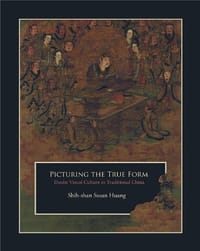
Picturing the True Form investigates the long-neglected visual culture of Daoism, China's primary indigenous religion, from the tenth through thirteenth centuries with references to earlier and later times. In this richly illustrated book, Susan Huang provides a comprehensive mapping of Daoist images in various media, including Dunhuang manuscripts, funerary artifacts, paintings, and other charts, illustrations, and talismans preserved in the fifteenth-century Daoist Canon. True form (zhenxing), the key concept behind Daoist visuality, is not a static picture but entails an active journey of “seeing” underlying and secret phenomena through a series of metamorphoses.
The book's structure mirrors the two-part Daoist journey from inner to outer. Part I focuses on inner images associated with meditation and visualization practices for self-cultivation and longevity. Part II investigates the visual and material dimensions of Daoist ritual. Interwoven through these discussions is the idea that the inner and outer mirror each other and the boundary demarcating the two is fluent. Huang also reveals three central modes of Daoist symbolism—aniconic, immaterial, and ephemeral—and shows how Daoist image-making goes beyond the traditional dichotomy of text and image to incorporate writings in image design. These particular features distinguish Daoist visual culture from its Buddhist counterpart.
莱斯大学艺术史副教授
1991年获台湾大学学士,1995年获台湾大学硕士,2002年获耶鲁大学博士。黄士珊目前的研究集中于十至十四世纪中国道教和佛教的视觉艺术。在莱斯任教前,她曾在华盛顿大学和哥伦比亚大学执教。她的论文《道教天地水三官及南宋中国(1127-1279)视觉文化的创造》曾获得耶鲁大学Blanshard奖项。著有Picturing the True Form: Daoist Visual Culture in Traditional China(2012),并曾在《故宫学术季刊》、《亚洲艺术》、《道教研究》等发表文章。
- 聚焦十至十三世纪道教视觉文化
- 解析真形概念与内景外象
- 梳理道藏图像与仪式语境
- 艺术史与宗教研究者
- 道教文化与美术爱好者
- 海外中国学兴趣读者
- 注意作者对明道藏图像的早期解读
- 关注佛道图像交互影响
- 结合注释理解深层理论
- 构建冥想时空结构精妙
- 图像串联道教宇宙观理路
- 注释详赡具极高参考价值
本导读基于书籍简介、目录、原文摘录、短评和书评生成,不等同于全文精读。
- "Webb Keane’s notion that “religions may not always demand beliefs, but they will always involve material forms“...David Morgan"histori-ans and scholars of religion will come to see images and visual prac- tices as primary evidence in the study of religion and not merely as incidental illustrations.""
- "It is a promising point of departure to acknowledge the gray zone of Daoist and Buddhist iconographies and to study this ambiguity as a cultural phenomenon."
- "The originally formless nature of the Daoist divinities described in written sources makes the creation of individual icons problematic a n d perhaps impossible.Thus,most images of Daoist deities appear generics reflected in extant artifacts."
显示全部
 Uncertainty in the Empire of Routine
 Worldly Stage
 Power of Place
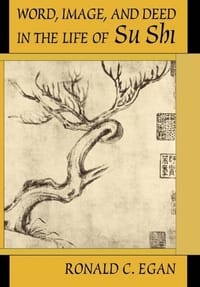 Word, Image, and Deed in the Life of Su Shi