
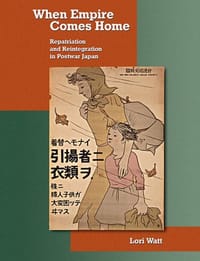
Following the end of World War II in Asia, the Allied powers repatriated more than six million Japanese nationals from colonies and battlefields throughout Asia and deported more than a million colonial subjects from Japan to their countries of origin. Depicted at the time as a postwar measure related to the demobilization of defeated Japanese soldiers, this population transfer was a central element in the human dismantling of the Japanese empire that resonates with other post-colonial and post-imperial migrations in the twentieth century. Lori Watt analyzes how the human remnants of empire, those who were moved and those who were left behind, served as sites of negotiation in the process of the jettisoning of the colonial project and in the creation of new national identities in Japan. Through an exploration of the creation and uses of the figure of the repatriate, in political, social, and cultural realms, this study addresses the question of what happens when empire comes home.
華樂瑞(Lori Watt),美國聖路易華盛頓大學歷史系與國際及區域研究系助理教授,研究領域為二十世紀日本政治社會史、帝國主義與去殖民化、戰後/後殖民移民、軍事文化、飲食文化等,著有《當帝國回到家:戰後日本的遣返與重整》。
 Uncertainty in the Empire of Routine
 Worldly Stage
 Power of Place
 Word, Image, and Deed in the Life of Su Shi