
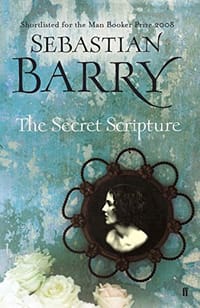
书籍介绍
The acclaim that has greeted Sebastian Barry’s The Secret Scripture is varied and enthusiastic, and it's not hard to see why. When Frank McGuiness praised it for ‘raw, rough beauty’ and described Sebastian Barry's fiction as ‘unique’ and ‘magnificent’, this claim was no hostage to fortune; just a few sentences of the prose here will convince most readers of the justice of those words. As in the best-selling A Long Long Way, Barry is concerned with the imperatives of telling a story, but in a literary form that is rich with both psychological understanding and a skilful conjuring of time and place.
Roseanne McNulty may (or may not) be on the point of nearing her 100th birthday -- but there is little certainty about this fact. In her twilight years, her destiny is uncertain, as the Roscommon Mental Hospital -- her home for so many years of her life -- is on the point of closing. As the fateful hour approaches, Roseanne spends her time of talking to her psychiatrist of many years, Dr Grene. The relationship between the two is strangely interdependent, and the doctor is also attempting to come to terms with the death of his wife. As we learn more about the two principal protagonists, we are presented with a rich and subtle picture of human relationships -- and the (often unintentional) damages that we all do to each other.
The form of the book consists of the separate journals of Roseanne and Dr Grene, and we gradually learn about Roseanne’s family in Sligo in the 1930s. What emergence is a poignant personal history; it is also a subtly ambitious picture of nothing less than the Irish psyche at a particular point in its history. There are echoes here of another great Irish chronicler of the human condition, William Trevor, and The Secret Scripture is no worse for that. --Barry Forshaw
Review
A subtle study of psychology, religion, family and politics in Ireland.This is not, as the title might suggest, another Da Vinci Code clone. Barry (A Long Long Way, 2005, etc.) writes vigorously and passionately about his native land. The story is told antiphonally, alternating narratives between a secret journal (hidden beneath the floorboard) kept by Roseanne McNulty, a patient in a mental hospital, and the "Commonplace Book" of her psychiatrist Dr. Grene, who's dealing with serious issues of grief after the death of his wife. Roseanne has always been something of an outsider, her father a cemetery-keeper and rat-catcher but most importantly a Protestant in a land largely hostile to this religious orientation. Although Roseanne remembers a happy childhood, in which she was the proverbial apple of her father's eye, he becomes involved in the political and military entanglements of Irish political life. When Roseanne grows up, she becomes the wife of Tom McNulty, but through a series of misunderstandings - as well as through the machinations of the grim-faced and soul-destroying priest, Fr. Gaunt - she is as good as accused (though falsely) of adultery with the son of a political rebel. Out of malice toward Protestants as well as out of a misplaced moral absolutism, Fr. Gaunt has her marriage annulled - and, using nymphomania to explain her "condition," has her locked up in the asylum. Dr. Grene gets interested in her story as well as her history, and in tracking down her past he finds a secret that she has kept hidden for many years, a secret that affects them both and that intertwines their families. In a final assessment of Roseanne - after she's spent decades in the asylum - Dr. Grene determines that she is "blameless." She responds: "'Blameless? I hardly think that is given to any mortal being.'" Indeed, blamelessness is a state no one achieves in this novel.Barry beautifully braids together the convoluted threads of his narrative. (Kirkus Reviews)
精彩摘录
- "一个人如果在灾难深重,孤立无援之际,还能使自己快乐起来,那他就是真正的英雄。"
- "历史并非真实时间按照正确次序进行的规矩排列,而是在悲凉的现实面前高举着的猎猎旌旗,上面描绘着臆想与揣度的绮丽组合,变幻莫测。"
- "他瞪着我,眼睛的颜色很奇怪,有些斑驳,就像海藻。他故乡岛屿的海藻就长在他眼睛里。也许那里的女人子宫里就有海藻浮动,那里的人半是生活在水里,就像我读到的造物之初那些最早出现的小生灵一样。哦,随即他眼中的一切都不见了,他盯着我,这时我才第一次留意到约翰•拉威尔隐藏的另外一面,他的善良。我不知道战争用死尸和诅咒掩埋了多少人性善良。"
- "真正的安慰在于,大世界的历史上有那么多比我的遭遇更大的悲恸,我这小小的不幸只能叨陪末座,充当火堆边上的一点灰烬而已。我每次提到这点是因为我希望这是真的。 然而当人满心痛苦的时候,这痛苦似乎也充满了全世界。但这只是幻觉而已。"
- "我仍然对父亲的离去耿耿于怀,但无论如何我可以把它搁在脑下塞到枕头下面,枕着它安然入睡。我有挡不住的快乐,没错,早上起床的时候,我还得照顾妈妈,但我有能力照顾她,喂她吃饱饭,反正她什么也不说,哪儿也不去,就只是穿着家居条纹服待在家里。我浑身有使不完的劲头儿,如同摩托车加足马力,我加速出发。每天早晨我醒过来都莫名其妙跳下床,浑身是劲,加足马力开出家门,穿过街道,推开加罗咖啡馆的玻璃门,热情地亲吻我的朋友克丽西,大笑着和她道早安,如果普朗蒂太太在的话,就会对我羞涩一笑,我就会心花怒放,心花怒放。"
- "当时的我,看一切都觉得好美。"
- "一个人如果在灾难深重,孤立无援之际,还能使自己快乐起来,那他就是真正的英雄。"
- "也许他的喜悦终究是没有依据的。然而难道人不该在变幻莫测的漫漫人生路上,尽量使自己快乐吗?无论如何,世界终究是美好的,如果我们不是人类而是任何其他生物的话,我们一定会为生存本身感到永恒的喜悦。"
用户评论
I wonder whether this story will be shortly made of film. Obviously this is a hot topic for oscar winning: chaos, insanity, black river and love.
比漫漫长路稍逊色,尤其是结尾部分把真相全部揭露以后并没有对剧情起到任何作用,实则一大败笔。巴里的文字仍然直白易读,有诗之美。历史可建构也便可以解构,there would not be a History but histories. 记忆的狡猾性及个人经历对历史的修正都是巴里常用的手法:Sligo made me and Sligo undid me.
R4 read by Doreen Keogh & Alex Jennings. The cruelty & callousness of oppressed men and women.
Faber & Faber的其他书籍查看全部
 Oppenheimer
 Old God's Time
 Tenet
Tenet Mary Ventura and the Ninth Kingdom
 Conversations with Friends
 Walk the Blue Fields
下载
收藏