
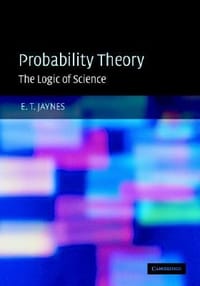
Probability Theory
出版时间
2003-06-09
ISBN
9780521592710
评分
★★★★★
书籍介绍
这不像一本普通的概率论教材。作者Jaynes是一位物理学家,他做了一件大胆的事:把概率从“数个数、算频率”的旧框子里解放出来,重新赋予它“合理推理”的身份——即在信息不完全时,我们该如何给出一个尽可能合理的判断。全书最见功力的前两章,正是从概率体系、高斯分布、先验概率一路写到对费希尔频率派观点的正面驳斥,读来酣畅,也最具争议。它适合那些不满足于“套公式”、想追问概率为何如此成立的读者;也提醒我们:现代学生往往把数学当作容易的部分,而真正的难点,是如何把现实问题的第一步连接抽象。这是一位作者去世前托付编辑务必出版的书,厚重、略晦涩,却值得一读再读。
AI导读
核心看点
- 将概率论重构为逻辑推理的延伸,统一概率与统计推断。
- 批判频率学派,主张概率反映认知状态而非客观频率。
- 融合物理学直觉与数学严谨,提供贝叶斯思维的全新视角。
读者共识
- 被誉为贝叶斯学派圣经,思想深邃,虽晦涩但值得反复研读。
- 作者以物理学家直觉重构概率,对频率学派的批判极具启发性。
- 阅读门槛极高,常令人感到智力受挫,但精神满足感极强。
精彩摘录
- "令A是一个数学理论背后的公理系统,T是可以从A中推导出来的任意命题或定理。现在,无论T断言什么,可以从公理推导出T的事实都不能证明公理之间没有矛盾。这是因为,即使存在矛盾,T当然也可以从这些公理中推导出来! 对于我们的问题来说,这是哥德尔定理的核心思想。正如费希尔(Fisher,1956)所注意到的,它向我们展示了哥德尔的结果为什么在直觉上是正确的。我们不认为逻辑学家会接受把费希尔的简单论证作为完整的哥德尔定理的证明。然而对于我们大多数人来说,这比哥德尔冗长而复杂的论证更有说服力。"
- "The writer has learned from much experience that this primary emphasis on the logic of the problem, rather than the mathematics, is necessary in the early stages. For modern students, the mathematics is the easy part; once a problem has been reduced to a definite mathematical exercise, most students"
- "Good mathematicians see analogies between theorems; great mathematicians see analogies between analogies."
- "How can we build a mathematical model of human common sense?"
- "How could we build a machine which would carry out useful plausible reasoning, following clearly defined priciples expressing an idealized common sense?"
- "Of course, on publishing a new theorem, the mathematician will try very hard to invent an argument which uses only the first kind; but the reasoning process which led to the theorem in the first place almost always involves one of the weaker forms (based, for example, on following up conjectures sug"
- "Many people are fond of saying, ‘They will never make a machine to replace the human mind – it does many things which no machine could ever do.’ A beautiful answer to this was given by J. von Neumann in a talk on computers given in Princeton in 1948, which the writer was privileged to attend. In rep"
- "George P´olya on ‘Mathematics and Plausible Reasoning’. He dissected our intuitive ‘common sense’ into a set of elementary qualitative desiderata. In the writer’s lectures, the emphasis was therefore on the quantitative formulation of P´olya’s viewpoint, so it could be used for general problems of s"
你可能会关注的书籍
 Probability, Statistics, and Queuing Theory with Computer Science Applications
 Probability Theory and Mathematical Statistics
 Lectures on Probability Theory
 3. Evolution and the Theory of Probability
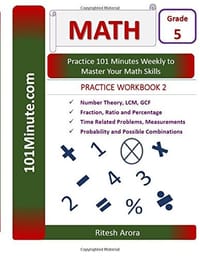 101minute.com Math Practice Workbook, Grade 5: Number Theory, Lcm, Gcf,fraction, Ratio and Percentage,time Related Problems, Measurements,probability and Possible Combinations
Cambridge University Press的其他书籍查看全部
 Networks of Faith and Profit
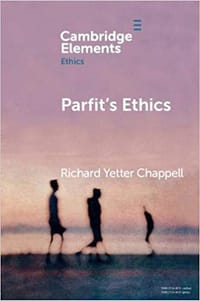 Parfit's Ethics
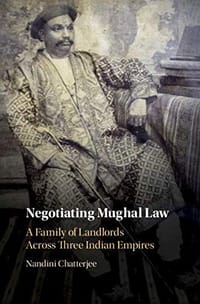 Negotiating Mughal Law
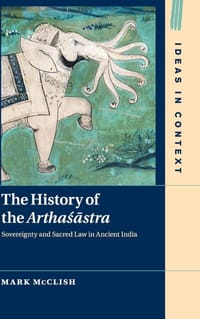 The History of the Arthaśāstra
 A History of the Roman Equestrian Order
 Jurist in Context
下载
收藏