
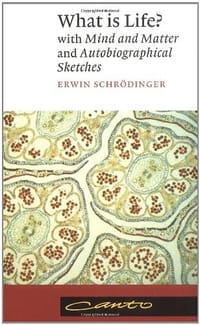
书籍介绍
翻开这本书,读者最先被吸引的往往那句“生命以负熵为食”,但真正让人久久难忘的,是薛定谔在《心灵与物质》一篇里抛出的、至今仍有争议的论断:人类在生物学意义上的进化早已停滞,未来未必会继续进步。这一判断与全书温和的启蒙基调形成强烈反差,也成为短评中最引发讨论的焦点。更有意思的是,书中对意识“统一性”“超越时间”的探讨,竟被读者发现与当代游戏《艾尔登法环》的黄金树意象遥相呼应,显示出它超出科学范畴的想象力。因此这本书的独特之处,不在于提供了可验证的生物学结论,而在于它提供了一种看待世界的多重视角——从物理的有序、遗传的信息,一路延伸到心灵的本质与人类的处境。它适合那些不满足于“是什么”、而愿意追问“为什么”的读者。
作者简介
作者简介
埃尔温•薛定谔(Erwin Schr•dinger,1887—1961),奥地利物理学家,量子物理奠基人之一,因提出举世闻名的波动力方程而荣获1933年诺贝尔物理学奖。1943年,他在都柏林三一学院的系列讲座中,阐述了对生命本质现象的思考,后来他将这些观点和论断整合,出版了《生命是什么》一书。这部小书是20世纪具有影响力的科学著作之一,吸引了许多物理学家转投生物学,直接启发了DNA双螺旋结构模型的发现,并且推动了分子生物学的诞生。
译者简介
梁震宇,广东广州人,荷兰代尔夫特理工大学与莱顿大学产业生态学理学硕士。嗜读书,爱写作,偶尔与古典乐同好排练演出。现居荷兰,主要从事笔译工作、跨文化交流与学术会议交替传译,兼职教授中文。
AI导读
核心看点
- 首提生命以负熵为食,解释生命有序性来源
- 预言遗传物质是非周期性晶体,启发DNA发现
- 融合物理与哲学,探讨意识、心灵与物质的关系
读者共识
- 虽年代久远,但跨学科视野极具启发性,经典永存
- 翻译质量参差不齐,选对版本是良好阅读体验关键
- 不仅科普知识,更重塑看待世界与生命的认知角度
精彩摘录
- "我们所说的思想(1)本身是一种有序的东西,(2)只能应用于在一定程度上有序的材料,即知觉或经验。这有两个推论。首先,一个身体组织,要想与思想密切对应(比如我的大脑与我的思想密切对应),就必须是一种非常有序的组织,这意味着在它内部发生的事件必须遵循严格的物理定律,至少要达到很高程度的准确性。其次,外界其他物体对那个物理上组织得很好的系统所造成的物理印象(显然对应于相应思想的知觉和经验),构成了我所说的思想材料。因此一般来说,我们的系统与别人的系统之间的物理相互作用本身具有某种程度的物理秩序,也就是说,它们也必须遵守严格的物理定律并达到一定程度的准确性。 所有原子每时每刻都在作完全无序的热运动,可"
- "在原子选定的一组不连续状态当中,或许存在但并不必然存在一个最低能级,它意味着原子核彼此紧密靠拢。这种状态下的原子便构成了一个分子。这里要强调的是,分子必定具有某种稳定性;除非外界至少把提升至下一个较高能级所需的能量差提供给它,否则构型是不会改变的。因此,这种定量的能级差定量地决定了分子的稳定程度。"
- "当一个不是活的系统被孤立出来或者被置于均匀的环境中时,由于各种摩擦力的影响,所有运动通常都很快静止下来;电势或化学势的差别消失了,倾向于形成化合物的物质也是如此,温度因热传导而变得均一。此后,整个系统逐渐衰退成一块死寂的、惰性的物质,达到一种持久不变的状态,可观察的事件不再出现。物理学家把这种状态称为热力学平衡或最大熵。"
- "有机体正是以负熵为生的。"
- "这个世界为人类点亮了璀璨的意识之光,而人类用自己的生命和语言塑造并改变着我们称为人性的那件艺术作品,并用演说和文字甚至用生命来证明它。因此,人类比其他任何物种更能强烈地感受到内心不和谐而引起的剧烈的折磨。若没有这种不和谐,人类就不曾承受任何痛苦,就没有进化。"
- "因此在生命的每一步、每一天中,我们当时拥有的某种形体似乎必须发生变化,它们被征服、被删除或被某种新的形体取代。我们原始意志对此的抵抗是现存形状对改造其形体的斧子的抵抗的精神呼应。对于我们来说,我们自己既是斧头也是雕塑,既是征服者也是被征服者—它是一个真正持续不断的“自我征服”。"
- "何种物质活动是与意识相关联的? 那些有我们的感觉和直觉,也有可能有行为参与的一系列事件在以同样的方式屡屡重复时,它们就渐渐脱离意识范畴。但一旦场合或环境条件与以前的不同,事件的发生就是有意识的。 从意识中逐渐隐退对于我们精神生活的整个结构具有非常重要的意义。我们的精神生活完全建立在通过重复练习而系的的过程上,即记忆。 神经活动的特性,总的来说是器官活动的特性,它们只要是新的,便于意识有关。 意识与生物体的学习密切相关,但是它对这一切如何发生却是无意识的。 在所有时代所有民族中,每一种恪守的道德标准都曾经是且现在仍是自我否定。 实际上有意识的生命必然与我们原始的自我欲望进行持续抗争。 在生命的每"
- "我们每个人都有一种无可争辩的印象,即他自身和经验的总和形成了一个与任何其他人迥异的统一体。他们把它叫做“我”。可是,这个“我”又是什么呢?"
用户评论
negative entropy. 配上yaleopencourse里的thermodynamics视频。好有意思。
物理苦手没怎么看懂 😢
Unbelievably intelligent. Intelligently unbelievable.
篇幅里很大一部分是高中生物课和物理课学的。但是讲了一些特别特别有趣的问题。比如第一个问题就是,一个原子那么小,为什么人体要搞那么大呢?因为热力学定律/diffusion等等只是统计上成立的,数量不够没法搞。
英文写得太晦涩了……跟那个时代的paper一样现在看起来觉得知识密度太低了
补
看了一遍 又听一遍~
你可能会关注的书籍
 Life Is What You Make It
 Life Is Like a Piano. What You Get Out of It Depends on How You Play It: Manuscript Paper for Inspiration and Composition (120 Pages/ 8.5x11/12 Staff)
Cambridge University Press的其他书籍查看全部
 Networks of Faith and Profit
 Parfit's Ethics
 Negotiating Mughal Law
 The History of the Arthaśāstra
 A History of the Roman Equestrian Order
 Jurist in Context
下载
收藏