
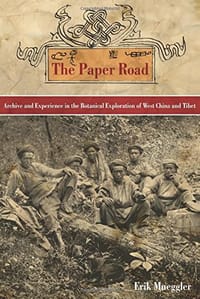
This interesting book interweaves the stories of two early twentieth century botanists to explore the collaborative relationships each formed with Yunnan villagers in gathering botanical specimens from the borderlands between China, Tibet, and Burma. Mueggler introduces Scottish botanist George Forrest, who employed native ethnic Naxi adventurers in his fieldwork from 1906 until his death in 1932. We also meet American Joseph Francis Charles Rock, who, in 1924, undertook a dangerous expedition to Gansu and Tibet with the sons and nephews of Forrest's workers. Mueggler describes how the Naxi workers and their Western employers rendered the earth into specimens, notes, maps, diaries, letters, books, photographs, and ritual manuscripts. Drawing on an ancient metaphor of the earth as a book, Mueggler provides a sustained meditation on what can be copied, translated, and revised, and what can be folded back into the earth.
Erik Mueggler is professor of anthropology at the University of Michigan. He was a 2002 winner of the MacArthur Foundation Genius award.
- "Two landscapes merged in this project. Both were made of earth and paper, layered together in distinctive ways. One emerged out of an interleaving of plant specimens and their paper wrappings, visions of the earth and their paper descriptions. The processes that wrapped paper and earth together were"
- "He was making an equation, simple enough: experience becomes archive; archive orders experience. Perception makes the earth into paper; paper makes the earth social. He wanted his pen, his camera, his compass, to be conduits for this simple reciprocal exchange, nothing more. As he walked further int"
 Ginseng and Borderland
 Secure the Soul
 We are Amphibians
 Go Nation
 Hanoi's Road to the Vietnam War, 1954-1965
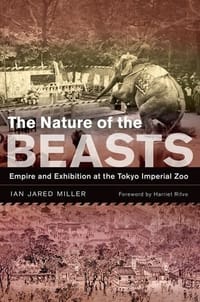 The Nature of the Beasts