
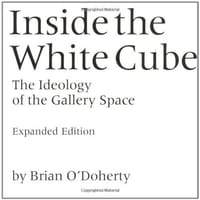
书籍介绍
这本书最锋利处,在于它揭穿了白方画廊精心营造的'艺术纯洁性'幻觉。Brian O'Doherty 指出,那种纯白、无窗、隔绝尘世的展示空间,并非中立的容器,而是一种意识形态装置:它像教堂般规训着观看者的声音、姿态与凝视,让身体被排斥,只留下被允许的'纯粹审美'。一杯尿液在打光下亦可闪耀金光——艺术的魔力正来自这套空间仪式,而非作品本身。读者最津津乐道的,正是这种'圣光'如何悄悄将普通人规训为艺术的消费者。它适合所有曾在展厅里不知该往哪儿站、却隐约感到被某种 invisible 力量牵引的人。
AI导读
核心看点
- 揭示白盒子画廊的意识形态本质
- 分析空间如何规训观众观看行为
- 探讨语境即内容的艺术生产机制
读者共识
- 观点辛辣且极具启发性
- 对不熟悉艺术史者较不友好
- 是理解现代美术馆机制的经典
精彩摘录
- "The white cube was a transitional device that attempted to bleach out the past and at the same time control the future by appealing to supposedly transcendental modes of presence and power. But the problem with transcendental principles is that by definition they speak of another world, not this one"
- "A Fable of Horizontal and Vertical -Modernism - The Properties of the Ideal Gallery - The Salon - The Easel Picture - The Frame as Editor - Photography - Impressionism - The Myth of the Picture Plane - Matisse - Hanging - The Picture Plane as Simile -?The Wall As Battleground and Art The Installatio"
- "In classical modernist galleries, as in churches, one does not speak in a normal voice; one does not laugh, eat, drink, lie down, or sleep; one does not get ill, go mad, sing, dance, or make love. The white cube was a transitional device that attempted to bleach out the past and at the same time con"
- "Art exists in a kind of eternity of display... This eternity gives the gallery a limbolike status; one has to have died already to be there... The space offers the thought that while eyes and minds are welcome, space-occupying bodies are not."
- "...The stability of the frame is a neccesary as an oxygen tank is to a diver... Where it curtails or elides subject matter, it does so in a way that strenghtens the edge... Once you know that a patch of landscape represents a decision to exclude everything around it, you are faintly aware of the spa"
用户评论
temple white cube
艺术作用的改变,使得政治活动家经常表达了对画廊和它所代表的商业体系的不满
Where am I supposed to stand? This question doesn't only ask people where they should stand spatially in the gallery, but also ask people how their perceptions of the art work are changed by the gallery space. Gallery space starts to have influence on one’s perception and becomes reflective of modernism, being the content rather than the context. M
薄薄一本小书,论点很有启发性,但对不熟悉现当代艺术史的读者也实在是不友好。White Cube作为当代艺术的陈设、展览空间,最大限度地把艺术品与外部世界隔离开,阻断了时间的流逝,让艺术品的陈列空间具有了教堂和墓穴宗教般的神圣特质。在modernism的语境下,context成为了content,画廊不再是被动地承载艺术品的场所,“the object introduced into the gallery 'frames' the gallery and its laws”。对此艺术家也没有放弃对空间的干预,Duchamp的Mile of String让无数丝线布满画廊的空间,使其成为观众无法涉足的所在,Klein则直接用垃圾填满画廊。对架上绘画“边缘”的探讨、观者与艺术品的关系没太读懂。
@2019-01-24 15:48:15
前三章都挺引起思考的,喜欢第一章。第四章的gesture概念我还是觉得蛮晦涩..读不懂5555 / 杜尚的“Mile of String” at “First Papers of Surrealism”很有意思———艺术家的装置setup是否自动变为策展? installation和exhibition之间的距离 / gallery———永恒的、排他的、一个审美单位的心理容器
当这些文章于 1976 年首次出现在“艺术论坛”时,它们的影响是立竿见影的。它们被讨论、注释、引用、收集和翻译——它们出现的三期“艺术论坛”几乎不可能获得。让布赖恩·奥多尔蒂 (Brian O'Doherty) 的挑衅性文章再次可用是艺术界的一个信号事件。这个版本还包括“作为手势的画廊”,这是一篇比其他版本晚十年出版的极其重要的作品。奥多尔蒂是第一个明确面对战后艺术特定危机的人,因为他试图研究现代商业和博物馆画廊所基于的假设。考虑到经济、社会背景和美学之间复杂而复杂的关系,在艺术画廊的竞争空间中表现出来,他提出了艺术家必须如何根据画廊空间和系统来解释他们的作品的问题。
①奥多尔蒂的两副面孔:艺术家和艺术批评家。艺术家的身份给了他侵略性强的写作风格,艺术批评家的身份则给了他不错的思辨能力和理论素养。两者结合起来,便造就了奥多尔蒂的魅力:既能犀利无情地揭人脸皮插人心脏,又能沉下心来爬梳艺术史和艺术理论的谱系,整个读起来就像是有逻辑的爽文。②但有理由怀疑,奥多尔蒂没能好好研读格林伯格的《现代主义绘画》。奥多尔蒂指控现代主义绘画的反错觉主义:若说颜料和画布的实体性已使绝对的平面性无法成立,那么鼓吹平面性则恰恰是错觉主义的残余。但格林伯格早就说过,现代主义绘画的平面性绝非绝对的平面性,因而绝非彻底的反错觉主义,而是用表面游走的视觉错觉取代深入其中的触觉错觉,这一点弗雷德在《艺术与物性》中讲得更加清楚。可以说,奥多尔蒂将现代主义绘画的原理教条化了。
University of California Press的其他书籍查看全部
 Ginseng and Borderland
 Secure the Soul
 We are Amphibians
 Go Nation
 Hanoi's Road to the Vietnam War, 1954-1965
 The Nature of the Beasts
求书
收藏