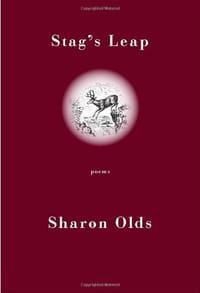
Stag's Leap is a stunningly poignant sequence of poems that tells the story of a divorce, embracing strands of love, sex, sorrow, memory, and new freedom.
In this wise and intimste telling——which carries us through the seasons when her marriage was ending——Sharon Olds opens her heart to the reader, sharing the feeling of invisibility that comes when we are no longer standing in love’s sight; the surprising physical bond that still exists between a couple during parting; the loss of everything from her husband’s smile to the set of his hip; the radical change in her sense of place in the world. Olds is naked before us, curious and brave and even generous toward the man who was her mate for thirty years and who now loves another woman. As she writes in the remarkable “Stag’s Leap,” “When anyone escapes, my heart / leaps up. Even when it’s I who am escaped from, / I am half on the side of the leaver.” Olds’s propulsive poetic line and the magic of her imagery are as lively as ever, and there is a new range to the music—sometimes headlong, sometimes contemplative and deep. Her unsparing approach to both pain and love makes this one of the finest, most powerful books of poetry she has yet given us.
Born in San Francisco on November 19, 1942, Sharon Olds earned a BA at Stanford University and a PhD at Columbia University.
Her first collection of poems, Satan Says (1980), received the inaugural San Francisco Poetry Center Award. Olds's following collection, The Dead & the Living (1983), received the Lamont Poetry Selection in 1983 and the National Book Critics Circle Award....
- 本书是2013年普利策诗歌奖获奖作品,以组诗形式完整记录了一段三十年婚姻走向终结的全过程。作者毫不避讳地描写离婚过程中的痛苦、愤怒与失落,同时也展现了面对破裂关系时的诚实与勇气,深刻揭示了亲密关系解体时复杂的情感纠葛。
- 诗歌深入探讨了身体记忆与情感剥离的矛盾体验。作者细腻刻画了即便在关系破裂后,身体间仍存在的惯性联结,以及失去伴侣后对自我身份认知的崩塌与重建。这种对生理本能与心理创伤交织状态的描写,具有极强的生理真实感和心理冲击力。
- 作品展现了从绝望到自我治愈的艰难历程。虽然充满悲伤,但诗中亦蕴含着对过往爱的感激与对自由的接纳。作者以无畏的坦诚面对伤痛,拒绝羞耻,通过诗歌创作完成自我疗愈,最终在废墟中寻找新的生存意义,体现了人性在极端痛苦中的坚韧与尊严。
- 适合对亲密关系、婚姻伦理及情感创伤有深刻思考的读者。本书不提供廉价的安慰,而是直面关系破裂的残酷真相,适合那些经历过情感挫折、渴望在文学中寻找共鸣与理解,或希望深入探讨人性复杂面的成熟读者阅读。
- 适合诗歌爱好者及文学研究者。莎朗·欧茨以精准、密集且富有音乐性的语言著称,其作品在形式与内容上均达到极高水准。读者可从中学习如何通过具象的身体描写与隐喻,将抽象的情感痛苦转化为具有普遍意义的艺术表达,提升审美鉴赏力。
- 适合关注女性自我成长与心理重建的读者。书中展现了女性在婚姻解体后如何重新确立自我边界、处理悲伤并最终获得独立的过程。对于正在经历人生重大转折、需要心理支持与精神力量的读者,本书能提供深刻的情感见证与陪伴。
- 请做好心理准备,本书情感浓度极高,内容涉及大量关于性、背叛、痛苦及死亡意象的描写。阅读时可能会引发强烈的情绪波动,建议在心境平稳时少量多次阅读,避免一次性沉浸过深导致心理不适,保持适当的心理距离以保护自身情绪。
- 不要期待传统的叙事逻辑或道德评判。作者拒绝简化复杂的人性,诗中充满矛盾、模糊与未解的困惑。读者应放弃寻找‘对错’或‘结局’,转而关注语言本身的质感与情感的真实流动,体会作者在痛苦中保持诚实与克制的写作姿态。
- 建议结合诗歌的韵律与节奏进行朗读。莎朗·欧茨的诗作具有强烈的音乐性,朗读有助于感受其语言的力量与情感张力。同时,可关注诗中关于身体感知的描写,理解其如何通过生理体验来映射心理状态,从而更深入地理解作者的艺术意图。
- 读者普遍认为本书情感冲击力极强,语言纯净而密集,具有令人窒息的真实感。尽管主题沉重,但作者毫无保留的坦诚与对痛苦的直面,被评价为具有治愈力量。许多读者表示被其勇气所震撼,认为这是关于爱与失去最诚实、最有力的文学表达之一。
- 部分读者指出本书主题单一,全程围绕离婚与前任展开,可能让期待多元题材的读者感到疲惫。有人批评其篇幅过长,认为部分内容重复且缺乏节制,建议精简。但更多读者认为这种重复正是创伤记忆的真实写照,是作品不可或缺的一部分。
- 读者高度认可作者对身体与情感关联的深刻洞察,认为其描写超越了俗套的情感宣泄,达到了哲学与生理层面的深度。尽管有人因内容过于私人化而感到难以共情,但主流评价认为其艺术成就极高,是当代英语诗歌中处理个人创伤的典范之作。
本导读基于书籍简介、目录、原文摘录、短评和书评生成,不等同于全文精读。
- "2001年9月 纽约市 一周以后,我对一个朋友说: 我想我永远都没办法写他。 也许过上一年我可以写点什么。 在我内心有什么东西也许有一天 要写出来;现在它被折叠起来,再折叠, 再折叠,像在学校时的一个字条。而在我的梦中 有人在玩花牌,在空中有一张 巨大的、抛出的、斜飞的花牌 着了火。当我醒来,我发现自己 数着上次见我前夫以来的 日子——只有几年,数周, 几个小时。我们签了文件并走下到 克莱斯勒大楼的一层, 我们周围大厅完美无缺的漂亮 就像一个国王的坟墓,天花板上 画着一架小小的飞机,在壁画中,飞翔。 它进入了我责难的心,这个早晨, 轻轻地、小心翼翼般害羞地, 未驯服的,一种更美妙的 他在进行的"
- "也许我已经忘了一半 曾经的他,但不是我曾以为的他,不是 伤口,和好像不知从何而来的骤然的 致命打击,尽管它是从我们在一起的 生活的核心而来。现在睡吧,莎朗, 睡吧。就算我们说,从内里 这已是木已成舟。你生来就要治愈。 睡吧做梦吧——可不是梦他的返回。 因为这不会伤害他,让他受伤,在你的梦中。”"
- "我不了解他,我了解我对他的 想法。第一年独自一人, 他们说不久我就会 忘了他,而我的心的皮肤 似乎挨着某个赤裸的 心的皮肤。”"
- "我的朋友伸过手来 到我交握的双拳那儿, 他的手背蹭着它们,一秒, 带着笨拙,带着没有爱欲的 礼貌,家里一般的善。"
- "如果我,能选择一个去死的地方 那将永远不会是你的怀抱中 我们想好了 我会看着你从我之中出去"
- "你的形象,显现 在房子的那一头,朝着我 走来,在人与人之间挤出路来, 就像灵魂曾经挤出它的路,穿过 衣服,直到它摆在那里,赤袒, 在挚爱者的灵魂旁边,那时它们似乎 游到彼此之中。它们歌唱。 我走出去 到列柱间的波谷中,穿越 大海中央的干燥地底—— 大水 一面扑向我的墙,从左手边, 还有右手边。"
- "我不该那样告诉他, 我告诉他我会试着 从爱他中出来,可是我感觉我会一生 爱他。"
- "于是又一次,我看见,我的生活曾多么有福, 首先,曾经能够爱, 然后,有现在在我身后的分手, 并且没有在孩子们小的时候失去他, 而孩子们现在根本不会失去他, 没有在他还爱我的时候失去他,没有 失去一个可能会一生爱我的人。"