

书籍介绍
这本书在读者口中被反复称作机器学习领域的“圣经”与“handbook”,但它并不是一本让你轻松翻完的入门读物。它最大的价值在于“全”:从概率、统计的基础,到生成模型、判别模型、图模型、推断算法,再到条件随机场、L1正则、深度学习,千余页的大部头把整个学科版图铺陈在你面前,尤其适合那些没时间一篇篇啃原始论文、又想快速定位到某个方法推导的人。然而,也正是“全”带来了争议:作者采取统一的贝叶斯概率视角,学派立场鲜明,有读者直言“太执着于一个学派”“大坑慎入”;内容覆盖面广却“每一个点都不太细致”,需要你自己回去找论文补深;加之勘误众多,甚至催生了读者自发撰写的勘误表。它适合有一定数学基础、愿意边写代码边追推导的人,而不适合寻求速成或希望面面俱到讲解的初学者。
作者简介
Kevin P. Murphy is Associate Professor in the Department of Computer Science and in the Department of Statistics at the University of British Columbia.
AI导读
核心看点
- 本书采用统一的概率论视角,系统涵盖机器学习核心算法,包括概率图模型、贝叶斯推断、变分推断及深度学习基础。书中提供大量伪代码与数学推导,旨在帮助读者深入理解算法背后的统计原理与实现细节,而非仅停留在API调用层面。
- 内容极其全面,被读者称为百科全书式教材,涵盖从基础线性代数、优化理论到前沿非参数方法、稀疏模型等广泛主题。作者Kevin Murphy作为领域权威,确保了内容的学术严谨性与完整性,适合作为长期参考工具书查阅特定算法的理论依据。
- 尽管内容庞大,但部分读者指出书中存在排版错误、公式推导跳跃及内容杂乱的问题。建议读者结合勘误表使用,并明确本书不适合作为初学者的入门读物,其深度与广度更适合具备扎实数学基础的研究人员或高级开发者进行理论深化。
读者共识
- 读者普遍认为本书是机器学习领域的经典参考书,内容覆盖面极广,具有极高的学术价值。尽管存在错误多、结构混乱、不适合初学者等严重缺点,但其在概率图模型、贝叶斯推断等核心理论方面的深度与完整性,使其成为研究人员不可或缺的工具书。
- 多数专业读者指出书中存在大量印刷错误、公式错误及逻辑漏洞,严重影响阅读体验与学习准确性。因此,强烈建议读者在使用时必须配合官方勘误表或社区修正版本。这种‘瑕不掩瑜’的评价反映了其内容价值与编辑质量之间的巨大反差。
- 读者共识认为本书不适合系统性学习或入门,其百科全书式的结构导致知识点碎片化,缺乏连贯的教学引导。它仅适合作为遇到问题时的查询手册,或供有深厚数学功底的研究者进行特定理论推导参考。对于希望系统掌握ML基础的人,推荐其他更规范、友好的教材。
精彩摘录
- "To understand these terms, you first need to understand the concept of likelihood. Assume you have a probability distribution - or rather family of such distributions - p(x;w) which assigns a probability to each data point x, given a specific setting of its parameters w. That is, different values of"
- "In particular, we define machine learning as a set of methods that can automatically detect patterns in data, and then use the uncovered patterns to predict future data, or to perform other kinds of decision making under uncertainty"
- "a property known as the long tail, which means that a few things (e.g., words) are very common, but most things are quite rare. Machine learning is usually divided into two main types. In the predictive or supervised learning approach. most methods assume that yi is a categorical or nominal variable"
- "In our notation, we make explicit that the probability is conditional on the test input x, as well as the training set D, by putting these terms on the right hand side of the conditioning bar |. When choosing between different models, we will make this assumption explicit by writing p(y|x,D,M), wher"
- "Regression is just like classification except the response variable is continuous."
- "Instead, we will formalize our task as one of density estimation, that is, we want to build models of the form p(xi|θ). There are two differences from the supervised case: First, we have written p(xi|θ) instead of p(yi|xi, θ); that is, supervised learning is conditional density estimation, whereas u"
- "Picking a model of the “right” complexity is called model selection, and will be discussed in detail below. zi is an example of a hidden or latent variable, since it is never observed in the training set."
- "There are many ways to define such models, but the most important distinction is this: does the model have a fixed number of parameters, or does the number of parameters grow with the amount of training data? The former is called a parametric model, and the latter is called a nonparametric model. Pa"
目录
Chapter 1: Introduction
Chapter 2: Probability
Chapter 3: Statistics
Chapter 4: Gaussian models
Chapter 5: Generative models for classification
显示全部
用户评论
Probabilistic ML课本,就写作业看看,错误连篇。。。
欲仙欲死啊~~
.... 从推荐里拿出去
基本上大部分的知識體系都覆蓋到了,沒來得及讀完,自己的數學還是短板
这本书优点就是很全面,千余页的大部头,啥都有。缺点也是很全面,每一个点都不太细致,还需要自己去找论文看。
🙄️
Very beginner-friendly
百科全书一般,但是有点太细致了,适合遇到问题时查一查。(补标:2014-2015)
本书可以看成扩展版的PRML,也是从概率的角度来阐述机器学习的方法。本书可以称为是恢弘的“巨著”。涉及到的知识点非常多,从头到尾全部看一遍很困难。适合当做工具书放在手边,需要了解那种技术,就翻到那一章看看。
你可能会关注的书籍
 Gaussian Processes for Machine Learning (Adaptive Computation and Machine Learning)
 Graph Machine Learning: Take graph data to the next level by applying machine learning techniques and algorithms 1st Edition
 Practical Machine Learning with LightGBM and Python: Explore Microsoft's gradient boosting framework to optimize machine learning
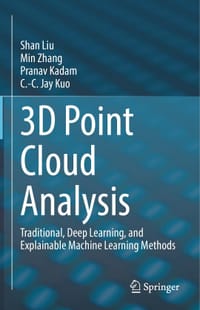 3D Point Cloud Analysis: Traditional, Deep Learning, and Explainable Machine Learning Methods
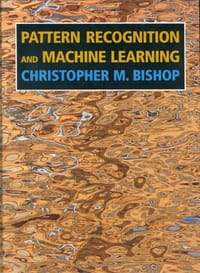 Pattern Recognition and Machine Learning
MIT Press的其他书籍查看全部
 The Politics of Dating Apps
 Hacking Life
 Designing with the Body
 The Ordinary Man of Cinema
 Streaming, Sharing, Stealing
 White City, Black City
下载
收藏