
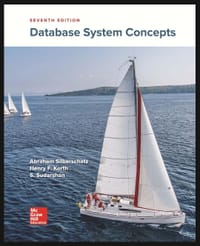
书籍介绍
这不是一本让你快速上手写SQL的手册,而是一部把数据库'从里到外拆给你看'的系统性著作。第7版最耐品之处,在于它不满足于教人如何查询,而是层层下探:从逻辑层的表,一路深入到磁盘存储、数据序列化、索引、事务,再到分布式存储与计算的最新进展。正因如此,它常被计算机课程(如CMU 15-445、MIT 6.830)作为配套读物——先在这本书里建立宏观图景,再到课堂上从底层到分布式逐层印证,读来格外过瘾。它适合愿意花两三个月啃七八百页、追求'高屋建瓴又详尽系统'的读者;若你只想要一本轻快的速查书,它啰嗦的长句和密集的展开或许会让你失望。
作者简介
Abraham (Avi) Silberschatz is the Sidney J. Weinberg Professor of Computer Science at Yale University. Prior to coming to Yale in 2003, he was the vice president of the Information Sciences Research Center at Bell Labs. He previously held an endowed professorship at the University of Texas at Austin, where he taught until 1993. Silberschatz is a fellow of the ACM, a fellow of the IEEE, and a member of the Connecticut Academy of Science and Engineering. He received the 2002 IEEE Taylor L. Booth Education Award, the 1998 ACM Karl V. Karlstrom Outstanding Educator Award, and the 1997 ACM SIGMOD Contribution Award. Silberschatz was awarded the Bell Laboratories President’s Award three times, in 1998, 1999 and 2004. His writings have appeared in numerous journals, conferences, workshops, and book chapters. He has obtained over 48 patents and over 24 grants. He is an author of the textbook Operating System Concepts.
Henry F. (Hank) Korth is a Professor of Computer Science and Engineering and co-director of the Computer Science and Business program at Lehigh University. Prior to joining Lehigh, he was director of Database Principles Research at Bell Labs, a vice president of Panasonic Technologies, an associate professor at the University of Texas at Austin, and a research staff member at IBM Research. Korth is a fellow of the ACM and of the IEEE and a winner of the 10-Year Award at the VLDB Conference. His numerous research publications span a wide range of aspects of database systems, including transaction management in parallel and distributed systems, real-time systems, query processing, and the influence on these areas from modern computing architectures. Most recently, his research has addressed issues in the application of blockchains in enterprise databases.
S. Sudarshan is currently the Subrao M. Nilekani Chair Professor at the Indian Institute of Technology, Bombay. He received his Ph.D. at the University of Wisconsin in 1992, and he was a member of the technical staff at Bell Labs before joining IIT Bombay. Sudarshan is a fellow of the ACM. His research spans several areas of database systems, with a focus on query processing and query optimization. His paper on keyword search in databases published in 2002 won the IEEE ICDEMost Influential Paper Award in 2012, and his work on main-memory databases received the Bell Laboratories President’s Award in 1999. His current research areas include testing and grading of SQL queries, optimization of database applications by rewriting of imperative code, and query optimization for parallel databases. He has published over 100 papers and obtained 15 patents.
AI导读
核心看点
- 本书作为数据库领域经典教材第7版,大幅更新分布式存储与计算内容,涵盖分布式查询处理、分布式事务及Kafka等前沿技术,紧跟学术界与工业界最新进展,适合希望深入理解现代数据库底层原理的读者。
- 内容体系极其庞大且详尽,从关系模型、SQL语言、事务管理到物理存储、索引结构均有深入讲解,包含大量算法伪代码与理论推导,旨在培养读者对数据库系统内部机制的深刻理解,而非仅停留在应用层语法。
- 书中强调数据本身的价值与安全性,详细阐述数据库设计原则、规范化理论及安全约束,虽然部分章节被读者认为冗长啰嗦,但其对概念的解释力求直观,配合CMU 15-445等课程资料可构建完整的数据库知识体系。
读者共识
- 读者普遍认为本书内容全面、系统且与时俱进,尤其在分布式数据库领域更新显著,但批评其行文啰嗦、废话较多,部分简单概念被过度复杂化,阅读体验不佳,需极大耐心才能坚持读完。
- 多数读者指出本书不适合初学者快速入门数据库应用开发,其定位偏向底层原理与系统设计,若仅想学习SQL语法或应用层开发,应选择更简洁的教程,本书更适合配合课程项目进行深度研习。
- 尽管存在冗长问题,读者仍认可其作为数据库领域权威教材的地位,认为其理论严谨、案例丰富,对理解数据库内部机制有不可替代的作用,但需警惕其翻译版本的质量问题,坚持使用原版阅读。
精彩摘录
- "作为对商业数据计算机化管理的响应,在20世纪60年代出现了最早的数据库系统。现代的数据库应用包括有非常复杂的全球型企业。跟现代的数据库应用相比,那些早期的应用是相对简单的。 所有的数据库应用,不管老的还是新的,都共享重要的公共元素。比如**数据库应用的核心不是执行某种计算的程序,而是数据本身**。今天,一些最有价值的公司之所以有价值,不是因为它们的有形资产,而是因为它们拥有的信息。想象一下,如果一个银行没有了账户和客户数据,一个社交网站丢失了用户之间的联系,则这些公司的价值就全部丧失了。 使用数据库来管理数据集有以下特点: - 数据非常有价值; - 数据量相对较大; - 数据会同时被许多用户和"
- "Although we refer to the SQL language as a “query language,” it can domuch more than just query a database. It can define the structure of the data, modify data in the database, and specify security constraints. IBM developed the original version of SQL, originally called Sequel, as part of the Syst"
- "When writing queries, you should be careful to include appropriate where clause conditions. If you omit the where clause condition in the preceding SQL query, it would output the Cartesian product, which could be a huge relation. For the example instructor relation in Figure 2.1 and the example teac"
- "The from clause by itself defines a Cartesian product of the relations listed in the clause. It is defined formally in terms of set theory, but is perhaps best understood as an iterative process that generates tuples for the result relation of the from clause. for each tuple t1 in relation r1 for ea"
- "In contrast, the attributes name and building appear in only one of the relations, and therefore do not need to be prefixed by the relation name. • The select clause is used to list the attributes desired in the result of a query. • The from clause is a list of the relations to be accessed in the ev"
- "In preceding chapters,we have emphasized the higher-level models of a database. For example, at the conceptual or logical level, we viewed the database, in the relational model, as a collection of tables. Indeed, the logical model of the database is the correct level for database users to focus on. "
- "3.7 Aggregate Functions Aggregate functions are functions that take a collection (a set or multiset) of values as input and return a single value. SQL offers five built-in aggregate functions: • Average: avg • Minimum: min • Maximum: max • Total: sum • Count: count If we do want to eliminate duplica"
- "3.7.3 The Having Clause 1. As was the case for queries without aggregation, the from clause is first evaluated to get a relation. 2. If a where clause is present, the predicate in the where clause is applied on the result relation of the from clause. 3. Tuples satisfying the where predicate are then"
目录
Chapter 1 Introduction
1.1 Database-System Applications 1
1.2 Purpose of Database Systems 5
1.3 View of Data 8
1.4 Database Languages 13
显示全部
用户评论
明天考试今天不睡。X﹏X
我想的是4.5⭐,因为这是我看过的教材里面最能理解的了。
针对近年来分布式存储领域的进展进行了大量重要更新,不是那种改改练习题就搞个新版本的更新
2学分,32学时,专业课参考书。极其泛读,老师上课直接用的配套PPT翻译版。因为学时关系,没有介绍高级内容,学的主要是1,3,4,5章,考试也只考PPT内容。缺点:不精简,可能适合计算机专业作为参考书。
配合Andy Pavlo的CMU15445一起食用,效果极佳。从底层存储,数据序列化,索引,查询,事务,然后到分布式上再来一遍,看得非常过瘾。最新版也紧跟学界和业界的最新动态,每个章节的reference里既能找到经典论文,也有新的进展。最后一章甚至是讲区块链的。另外,15445的projects也很值得,动手写数据库的关键组件。致力于后端开发和大数据方向的同学,都推荐看一看。
两个多月读了七八百页,终于发现本书特点即80%内容都在wibbly-wobbly-nonsense-generator
书是好书 就是有点啰嗦
适合作为15445或者类似课程的补充材料
丰富全面
McGraw-Hill Education的其他书籍查看全部
 Principles of Neural Science
 Fundamentals of Corporate Finance
 Discrete Mathematics and Its Applications
 Corporate Finance
 Introduction to Geographic Information Systems
 Cryptoassets
求书
收藏