
Mark F. Bear的作品
共 5 本
Dr. Mark Bear is Picower Professor of Neuroscience in the Picower Institute for Learning and Memory, Department of Brain and Cognitive Sciences, Massachusetts Institute of Technology. Prior to moving to MIT in 2003, Dr. Bear was on the faculty of Brown University School of Medicine for 17 years where he held the Sidney and Dorothy Doctors Fox Chair in Visual Neuroscience. He was an Investigator of the Howard Hughes Medical Institute for 22 years from 1994 to 2015, and served as Director of the Picower Institute from 2007 to 2009. After receiving his B.S. degree from Duke University, Dr. Bear earned his Ph.D. degree in neurobiology at Brown. He took postdoctoral training from Wolf Singer at the Max Planck Institute for Brain Research in Frankfurt, Germany, and from Leon Cooper at Brown. Bear’s laboratory has substantially advanced knowledge of how cerebral cortex is modified by experience. He made fundamental discoveries on bidirectional synaptic plasticity, metaplasticity, the molecular basis of amblyopia (a cause of visual disability in children), and the pathophysiology of fragile X syndrome (the most common inherited cause of intellectual disability and autism). He has been at the forefront of the efforts to translate knowledge of autism pathophysiology into new treatments. He has been recognized with a number of honors including the Brown University Class of 2000 Barrett Hazeltine Citation for Teaching Excellence, the Society for Neuroscience Young Investigator Award, the National Fragile X Foundation William & Enid Rosen Research Award, the Fragile X Research Foundation (FRAXA) Pioneer Award, the Ipsen Foundation Neural Plasticity Prize, the Beckman-Argyros Award in Vision Research, and election to the American Academy of Arts and Sciences. Barry Connors is the L. Herbert Ballou University Professor of Neuroscience and a Professor of Medical Science at Brown University and the Alpert Medical School. He is also a member of the Carney Institute for Brain Science at Brown. Dr. Connors received a B.S. from the University of Dayton, a Ph.D. in physiology and pharmacology from Duke University in 1979, and then pursued postdoctoral training with David Prince and Stephen Waxman at the Stanford University School of Medicine. He was a faculty member at Stanford from 1982 to 1987, and was recruited to Brown in 1987. He served as Chair of theDepartment of Neuroscience at Brown from 2006 to 2016. Dr. Connors' research has revealed cellular properties of the cerebral cortex and the thalamus, functions of electrical and chemical synapses, and the behavior of small neural networks in the mammalian brain. His current work focuses on neural dynamics of the forebrain during normal behavior and the seizures of epilepsy, and on the roles of neuronal and synaptic dysfunctions in neurodevelopmental disorders. He has been awarded a Klingenstein Fellowship in the Neurosciences, a Research Career Development Award from NIH, a Javits Neuroscience Investigator Award from NIH, and was elected Fellow of the American Association for the Advancement of Science. He has served on the editorial boards of numerous journals, including the Journal of Neuroscience, Journal of Neurophysiology, Cerebral Cortex, and Brain Structure and Function. Michael Paradiso is the Sidney A. Fox and Dorothea Doctors Fox Professor of Ophthalmology and Visual Science and Professor of Neuroscience at Brown University. He is the Founding Director of Brown’s Center for Vision Research and a member of Brown’s Carney Institute for Brain Science. Dr. Paradiso received a B.S. in physics from Pomona College and subsequently worked as a Research Engineer at the Stanford Research Institute in Menlo Park, CA. He received a Ph.D. in physics from Brown University. He was a Miller Research Fellow in neurobiology at the University of California, Berkeley, where he worked with Ralph Freeman, and later conducted postdoctoral research with Ken Nakayama at the Smith-Kettlewell Eye Research Institute in San Francisco. Dr. Paradiso’s research has investigated brain mechanisms underlying visual perception; these include form perception, surface perception, visual attention, perceptual constancies, and vision in natural visual contexts. His ongoing research investigates the role that saccadic eye movements play in coordinating activity in visual cortex for visual processing and object recognition. The lab is also developing a visual prosthesis for people with low vision and blindness. Dr. Paradiso is course director of Brown’s popular introductory neuroscience course, for which Neuroscience: Exploring the Brain was written. He has received awards including the Elizabeth H. LeDuc Award for Teaching Excellence in the Life Sciences, the Harriet W. Sheridan Award for Distinguished Contributions to Teaching and Learning, and the Undergraduate Council of Students Award for Excellence in Teaching. He has served on the editorial boards of Vision Research and the Journal of Vision and for many years he sat on the Executive Committee of the Vision Sciences Society.
Neuroscience: Exploring the Brain
Mark F. Bear
暂无资源Jones & Bartlett Learning · 2020
评分 暂无 · 人数未知
Acclaimed for its clear, friendly style, excellent illustrations, leading author team, and compelling theme of exploration, Neuroscience: Exploring the Brain, 4e takes a fresh, contemporary approac
Neuroscience
Mark F. Bear, Barry W. Connors, Michael A. Paradiso
pdf可获取Wolters Kluwer · 2015
评分 9.8分 · 21 人
Review Neuroscience is a remarkably well-organized and well-written text. It is highly accessible and easy to follow, which is impressive given the amount of detail and depth it provides. Each step of
神经科学
Mark F. Bear
暂无资源高等教育出版社 · 2011
评分 8.8分 · 74 人
《教育部高等教育司推荐国内外优秀生命科学教学用书•神经科学:探索脑(第3版)(影印版)》分为Foundations、Sensory and Motor Systems、The Brain and Behavior、The Changing Brain四部分。Neuroscience: Past, Present, and Future、The Neuronal Membrane at Res
Neurociencia
Mark F. Bear
暂无资源Lippincott, Williams & Wilkins · 2008
评分 暂无 · 人数未知
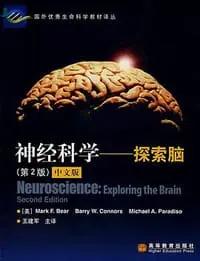
神经科学
Mark F. Bear
pdf可获取高等教育出版社 · 2004
评分 9.7分 · 666 人
本书是国际流行的神经科学本科教材,美国的布朗大学、明尼苏达大学等著名高校以此为教材。该书体系新颖,全书只分四大部分,但包括了神经科学的方方面面, 这样的安排有助于学生抓住神经科学的精髓。全书附有3类专栏:“发现之路”(pathofdiscovery)邀请一些在神经科学研究领域做出重大发现的科学家介绍其发现的科研历程,有助于培养学生的科学理想和献身科学的精神;“趣味话题”(ofspe
Dr. Mark Bear is Picower Professor of Neuroscience in the Picower Institute for Learning and Memory, Department of Brain and Cognitive Sciences, Massachusetts Institute of Technology. Prior to moving to MIT in 2003, Dr. Bear was on the faculty of Brown University School of Medicine for 17 years where he held the Sidney and Dorothy Doctors Fox Chair in Visual Neuroscience. He was an Investigator of the Howard Hughes Medical Institute for 22 years from 1994 to 2015, and served as Director of the Picower Institute from 2007 to 2009. After receiving his B.S. degree from Duke University, Dr. Bear earned his Ph.D. degree in neurobiology at Brown. He took postdoctoral training from Wolf Singer at the Max Planck Institute for Brain Research in Frankfurt, Germany, and from Leon Cooper at Brown. Bear’s laboratory has substantially advanced knowledge of how cerebral cortex is modified by experience. He made fundamental discoveries on bidirectional synaptic plasticity, metaplasticity, the molecular basis of amblyopia (a cause of visual disability in children), and the pathophysiology of fragile X syndrome (the most common inherited cause of intellectual disability and autism). He has been at the forefront of the efforts to translate knowledge of autism pathophysiology into new treatments. He has been recognized with a number of honors including the Brown University Class of 2000 Barrett Hazeltine Citation for Teaching Excellence, the Society for Neuroscience Young Investigator Award, the National Fragile X Foundation William & Enid Rosen Research Award, the Fragile X Research Foundation (FRAXA) Pioneer Award, the Ipsen Foundation Neural Plasticity Prize, the Beckman-Argyros Award in Vision Research, and election to the American Academy of Arts and Sciences. Barry Connors is the L. Herbert Ballou University Professor of Neuroscience and a Professor of Medical Science at Brown University and the Alpert Medical School. He is also a member of the Carney Institute for Brain Science at Brown. Dr. Connors received a B.S. from the University of Dayton, a Ph.D. in physiology and pharmacology from Duke University in 1979, and then pursued postdoctoral training with David Prince and Stephen Waxman at the Stanford University School of Medicine. He was a faculty member at Stanford from 1982 to 1987, and was recruited to Brown in 1987. He served as Chair of theDepartment of Neuroscience at Brown from 2006 to 2016. Dr. Connors' research has revealed cellular properties of the cerebral cortex and the thalamus, functions of electrical and chemical synapses, and the behavior of small neural networks in the mammalian brain. His current work focuses on neural dynamics of the forebrain during normal behavior and the seizures of epilepsy, and on the roles of neuronal and synaptic dysfunctions in neurodevelopmental disorders. He has been awarded a Klingenstein Fellowship in the Neurosciences, a Research Career Development Award from NIH, a Javits Neuroscience Investigator Award from NIH, and was elected Fellow of the American Association for the Advancement of Science. He has served on the editorial boards of numerous journals, including the Journal of Neuroscience, Journal of Neurophysiology, Cerebral Cortex, and Brain Structure and Function. Michael Paradiso is the Sidney A. Fox and Dorothea Doctors Fox Professor of Ophthalmology and Visual Science and Professor of Neuroscience at Brown University. He is the Founding Director of Brown’s Center for Vision Research and a member of Brown’s Carney Institute for Brain Science. Dr. Paradiso received a B.S. in physics from Pomona College and subsequently worked as a Research Engineer at the Stanford Research Institute in Menlo Park, CA. He received a Ph.D. in physics from Brown University. He was a Miller Research Fellow in neurobiology at the University of California, Berkeley, where he worked with Ralph Freeman, and later conducted postdoctoral research with Ken Nakayama at the Smith-Kettlewell Eye Research Institute in San Francisco. Dr. Paradiso’s research has investigated brain mechanisms underlying visual perception; these include form perception, surface perception, visual attention, perceptual constancies, and vision in natural visual contexts. His ongoing research investigates the role that saccadic eye movements play in coordinating activity in visual cortex for visual processing and object recognition. The lab is also developing a visual prosthesis for people with low vision and blindness. Dr. Paradiso is course director of Brown’s popular introductory neuroscience course, for which Neuroscience: Exploring the Brain was written. He has received awards including the Elizabeth H. LeDuc Award for Teaching Excellence in the Life Sciences, the Harriet W. Sheridan Award for Distinguished Contributions to Teaching and Learning, and the Undergraduate Council of Students Award for Excellence in Teaching. He has served on the editorial boards of Vision Research and the Journal of Vision and for many years he sat on the Executive Committee of the Vision Sciences Society.