
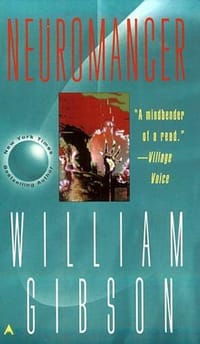
Hotwired to the leading edges of art and technology, Neuromancer is a cyberpunk, science fiction masterpiece—a classic that ranks with 1984 and Brave New World as one of the twentieth century’s most potent visions of the future.
The Matrix is a world within the world, a global consensus-hallucination, the representation of every byte of data in cyberspace...
Henry Dorsett Case was the sharpest data-thief in the business, until vengeful former employees crippled his nervous system. But now a new and very mysterious employer recruits him for a last-chance run. The target: an unthinkably powerful artificial intelligence orbiting Earth in service of the sinister Tessier-Ashpool business clan. With a dead man riding shotgun and Molly, mirror-eyed street-samurai, to watch his back, Case embarks on an adventure that ups the ante on an entire genre of fiction.
The winner of the Hugo, Nebula, and Philip K. Dick Awards, Neuromancer was the first fully-realized glimpse of humankind’s digital future—a shocking vision that has challenged our assumptions about our technology and ourselves, reinvented the way we speak and think, and forever altered the landscape of our imaginations.
William Gibson was born in the United States in 1948. In 1972 he moved to Vancouver, Canada, after four years spent in Toronto. He is married with two children.
William Ford Gibson is an American-Canadian writer who has been called the father of the cyberpunk subgenre of science fiction, having coined the term cyberspace in 1982 and popularized it in his first novel, Neuromance...
- 赛博朋克开山之作,定义虚拟现实概念
- 获雨果、星云、菲利普·迪克三大奖
- 深刻影响黑客帝国等后世科幻作品
- 文笔极具诗意,但信息过载令人眩晕
- 虽难读懂,但被视为无法超越的里程碑
- 不仅是小说,更是预测未来的导数值
- "药力迅猛得如同高速列车,一股白热的光芒从前列腺周边攀上他的脊椎,短路的性快感照亮了他头骨间全部缝隙。每一颗牙齿都像一枚音叉,在他的牙槽里歌唱,音调精准无比,歌声清楚得犹如乙醇。在朦胧的血肉包裹之下,他的骨架被打磨得锃亮,关节也变得滑溜。沙暴从头颅底部席卷而过,一波一波的高强度静电在眼镜后面戛然而止,变作最纯净的晶体,不断生长……"
- "“试试这个。”凯斯说。 他接过头带戴上,凯斯帮他放好电极。他闭上眼睛,凯斯按下电源钮。爱洛尔战栗了一下。凯斯断开连接。“你看见了什么,老兄?” “巴比伦。”爱洛尔悲伤地说,然后将电极递给他,一脚蹬出,又向走廊下面去了"
- "“视觉效果什么样?” “白色方块。” “你怎么知道那是个人工智能?” “我怎么知道?老天爷,那是我见过最密的冰墙。还能是什么?就连巴西军队都没那种冰墙。反正我退出了网络,叫电脑去查。”"
- "他们沿着光网层层上升,一点蓝光在上面闪烁。 这就是了,凯斯想。 冬寂是一个简单的白色方块。极度简单的外形,昭示着极度复杂的内里。 凯斯在操控台上输入离方块只有四个格点的位置。空白外壁高高矗立在他面前,隐隐透出内里闪动的阴影,似乎有上千名舞者在这张巨大的磨砂玻璃背后飞旋。 “它知道我们来了。”平线说。 凯斯又敲了一下操作台;他们前进了一个格点。 方块表面上显现出一个灰色圆圈。 “南方人” “撤,赶紧。” 那片灰色区域鼓了起来,变成一个圆球,离开方块。"
- "“没有。”他说。一切都不再重要了,他所知的一切都失去了意义;他的舌头掠过她嘴边风干的眼泪,咸咸的。她的体内有一种力量,他在夜之城就曾发现的一种力量,一直在那里,也让他停在那里,一度远离时间,远离死亡,远离那无情的仁清街,那追索不休的街头生活。他曾经去过那个地方;那不是任何人都能引领他到达,他也总是让自己遗忘的地方。他曾经一再拥有,又一再失去。她拉着他俯下身,他知道了,他记起来了,那属于肉身,属于牛仔们鄙弃的肉体。它无比宏大,无以理解,它是螺旋与外激素编码而成的信息的海洋,它无限精妙,只有毫无思想的身体才能体会。"
- "赛博空间。每天都在共同感受这个幻觉空间的合法操作者遍及全球,包括正在学习数学概念的儿童……它是人类系统全部电脑数据抽象集合之后产生的图形表现。有着人类无法想象的复杂度。它是排列在无限思维空间中的光线,是密集丛生的数据。如同万家灯火,正在退却……"
- "电脑创意空间。世界上每天都有数十亿合法操作者和学习数学概念的孩子可以感受到的一种交感幻觉……从人体系统的每台电脑存储体中提取出来的数据的图像表示。复杂得难以想象。一条条光线在智能、数据簇和数据丛的非空间中延伸,像城市的灯光渐渐远去,变得模糊……"
- "只不过一个月,在他充斥着毒品与高压的生活里,她那双曾经惊惧的眼睛便已变作了本能欲望的深潭。他眼看着她的人格裂变,犹如冰川崩溃,碎冰随水而逝,终于袒露出最原始的瘾君子的饥渴。他看着她全神贯注地追求新的刺激,让他想起了志贺的小摊上,摆在蓝色变异鲤鱼和竹笼中的蟋蟀旁边的那些螳螂。 “记得吃药时就睡不好。”说这话的时候,一股清晰的渴望向他袭来,欲望与孤独全在安非他命的波长上奔袭。他想起她肌肤的味道,想起港口边那黑暗酷热的房间里,她的手指是如何扣住他的后腰。 都是肉体,他想,都是肉欲。 凯斯意识到,他的旅程就在这些星星照耀之下启航,而这些廉价铬合金组成的星座,也已预示了他的命运。 “搞清楚谁是朋友不太容"