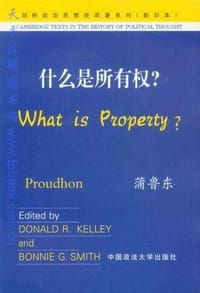
What is Property? is one of the most notorious and influential works of social criticism of the nineteenth century and certainly the best-known book by
Pierre-Joseph Proudhon, revolutionary author and contemporary of Marx. Proudhon’s short answer to this question “Property is theft” was even morenotorious,
linking private property as it did whth the worst features of “bourgeois” political hegemony and exploitation. Yet because of the eagerness of later admirers to place Proudhon in one later tradition or another (socialist, utopian, anarchist, fascist, etc.) the intellectual qualities of his book have never been
fully appreciated; nor has his critique of the institution of nineteenth-century political thought in general. This new translation, with a critical and historical introduction to these neglected aspects of Proudhon’s "diabolical work"(as he called it), tries to do justice to the work of this subversive critic who himself, through his assault on the central institution of modern Western society, spent his whole life in quest of social justice.
皮埃尔-约瑟夫·蒲鲁东 Pierre Joseph Proudhon
1809~1865
法国政论家和经济学家,小资产阶级社会主义者,无政府主义奠基人之一。1809年1月15曰出生于贝桑松一个农民兼手工业者家庭,家境贫苦,刻苦自学,曾在印刷厂当排字工人,后与人合伙开办小印刷厂。
1837年发表《论通用文法》一书,获贝桑松大学奖金,并迁居巴黎,从事著述活动。1840年发表《什么是财产?或关于法和权力的原理的研究》,提出“财产就是盗窃”的论点,蜚声于世。该书从小资产阶级立场出发批判资本主义大私有制,认为可以通过保护小私有制摆脱资本主义的各种弊端。
1846年5月5曰,K.马克思邀请他参加共产主义通讯委员会,并担任巴黎小组通讯员。他回信拒绝,指责共产主义学说是“教条主义”。同年发表《贫困的哲学》,企图以政治经济学来论...