
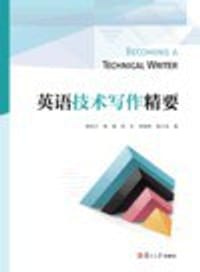
书籍介绍
Preface
In recent years, translation educators in China have argued that technical writing is an important dimension of professional translators’core competencies. The two main pain points that Master of Translation and Interpreting (MTI) programs have faced in offering any technical writing classes have been the few instructors with a technical writing education background and the lack of suitable textbooks. A handful of schools have explored inviting practicing technical writers to cover the classes as an alternative. Not every school has the luck to find technical writers who are willing to teach, however. In addition, students need access to affordable textbooks that fit their contexts so that they can systematically learn the principles and practices of technical writing. However, “there are some technical communication textbooks for Technical Communication majors, but teaching materials written for translation majors are not available yet (Tao and Xie 2019, p56)”.
We hope Becoming a Technical Writer will help with these challenges!
Why did we give our book its title?
We used “The Textbook” as our unofficial title for quite some time until one day the publisher asked for a book title. Given all the possible options we considered, we had to go through a long deliberation process to finally settle on this one. We are happy with this decision. We are now openly sharing our rationale and we hope you agree and you will like it.
●We were looking for something short, easy to remember, and that potentially could be a frequently used search query.
●We were looking for a title that could truthfully reflect the user-centered approach we followed in our textbook. Instead of focusing on the subject “technical communication”, our title suggests that this textbook will walk our users through a process of learning the knowledge, acquiring the skills needed, obtaining a job as a technical writer, and finally pursuing a career in technical writing.
We chose to use “technical writer” after we consulted the common practices of two largest technical writing organizations: STC and tekom. STC conducted a census on the state of the technical communication industry in 2018. Guess what? 46% of the respondents identify themselves as technical writers—the most popular job title! The home page of tekom refers to “technical communication” as the subject while “technical writing” is considered the profession.
Who is our audience and why this audience?
One of the most distinctive features of technical writing is that it has a specific audience. Therefore, our textbook is not for everyone. We have targeted students in the MTI programs in China as our primary audience. If you are not in this audience, but want to try using it, anyway, go ahead! You can select the sections that work for you.
We have read research articles arguing the convergence of the fields of translation studies and technical writing in the last decade. Technical writers are “translators” who translate specialized technical information for their target users in a manner that meets their expectations and at their level. The concept of “trans-creation” has been adopted by translators and the trans-creation approach has become a common practice in technical translation. In addition, translators and technical writers have been collaborating for a long time. Writing for translation, especially writing in controlled languages, is not just to reduce the cost, but more importantly to improve translation efficiency and effectiveness. Knowledge of technical writing principles and practices will help translators like you to better communicate with technical writers, or even to change your occupation and become a technical writer yourself. At the same time, a well-written and well-edited technical document will lead to better quality in translation.
How do we take care of this audience?
We are fairly familiar with our audience through years of working with aspiring technical writers and translators or teaching them in class. Dr. Tao, a professor of 23 years of teaching experience at Fudan University, currently directs the MTI program and she has initiated some innovative courses taught by professionals from translation industry, one of which is Technical Writing. Ms. Xie is the instructor who was invited to teach Technical Writing class specifically offered to the first-year MTI students at Fudan University, and she also taught the same class at other universities. Dr. Zhou has delivered technical writing workshops to MTI instructors and students at Chongqing University of Posts &
Telecommunications. Dr. Li taught an intensive class in Technical Writing in Global Contexts to MTI students at Guangdong University of Foreign Studies in May 2019. And Mr. Cheng, a professional translator and an associate professor at Anhui University of Science and Technology, also teaches English writing and Computer-assisted Translation.
Audience analysis is the core of technical writing.


求书
收藏