
书籍介绍
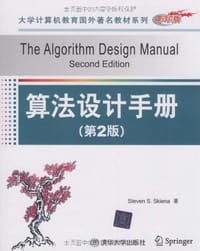
这不是一本用来从头学算法的书,而是一本给已经走过弯路的人读的'复盘指南'。它最打动人的地方,是作者斯基恩纳毫不掩饰的个人风格:他会用'关键操作总需要一对伙伴'这种戏谑说法解释图论,会在排序章节里插入大量实战小故事,会把递归的写法讲得炉火青清。与《算法导论》的严谨克制不同,它更贴近真实编程:从'超过100条数据该用哪种排序'到'五百万条数据要转向外部内存排序',每一步都贴着工程实践给建议。书后半部分的算法索引表是同类书中少见的'速查资源',被读者称作'终身学习之用'。它适合有一定基础、想系统梳理算法选型与实现技巧的程序员和研究人员;初学者或许会觉得吃力,但重读常有新获。
AI导读
核心看点
- 算法设计实用指南,侧重分析与实现
- 技术篇讲方法,资源篇供查阅参考
- 案例丰富,适合面试备战与查漏补缺
读者共识
- 比算法导论更贴近编程实践,实用性强
- 动态规划与回溯章节讲解清晰,好评多
- 部分代码有误,翻译质量参差不齐
精彩摘录
- "Typical computer science students study the basic sorting algorithms at least three times before they graduate: first in introductory programming, then in data structures, and finally in their algorithms course."
- "When you have morethan 100 items to sort, it is important to use an O(nlgn)-time algorithm like heapsort, quicksort, or mergesort. ... Once you get past (say) 5,000,000 items, it is important to start thinking about external-memory sorting algorithms that minimize disk access."
- "If you are determined to implement your own quicksort, use the following heuristics, which make a big difference in practice: * Use ranomization * Median of three * Leave small subarrays for insertion sort * Do the smaller partition first"
用户评论
代码中有错误。
比《算法导论》更贴近编程,更适合本人口味,听不错的。 有机会还要重读
2011-10-13
程序员面试必备,尤其是回溯那一章讲的很明白。
readability着实不如英文版
全!終生學習之用!感謝!🙏
一般
本书内容层次分明、系统,由一开始的分类叙述,到书的后半部的算法列表的组合是同类书中不曾看过的。作者对于递归的运用如火纯清,是自己的递归思维上升了一个台阶。另外每一章节中的小故事切切实实起到了开拓视野的作用。
清华大学出版社的其他书籍查看全部

下载
收藏