
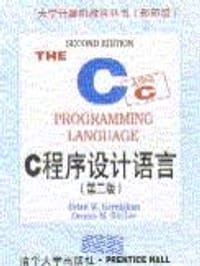
书籍介绍
这不是一本适合从头到尾'学习'的C语言教材,而是一本值得反复'阅读'的经典。它由C语言的共同作者亲自执笔,篇幅极薄,却把指针、数组、结构、输入输出等核心概念讲得透彻而克制。读者反复提及的,是它'Less is more'的凝练——薄得让人敬佩,也薄得'当教材看会让你疯掉':它不替你包办所有细节,而是逼你思考。书中对枚举、指针运算、符号位填充等易被忽略处的精确辨析,正体现了这种'不将就'的严谨。无论你重读还是初识,它都更像一位功力深厚的同行,把C语言最本质的东西交到你手上。
AI导读
核心看点
- 本书由C语言设计者亲自编写,严格遵循ANSI C标准,内容极度精简且权威。全书仅八章,涵盖数据类型、控制流、函数、指针、结构及UNIX接口,无任何冗余废话,体现了C语言简单高效的设计哲学,是理解C语言底层逻辑与标准库实现的唯一正统指南。
- 书中深入讲解指针、数组、内存管理及位运算等核心概念,通过大量短小精悍的代码示例展示正确用法。特别强调指针操作的合法性与安全性,如禁止对未声明函数进行隐式声明,详细解析fgets、realloc等标准库函数的正确调用方式,帮助读者建立严谨的编程习惯。
- 作为经典教材,本书不提供保姆式教学,而是假设读者具备基本编程思维。它不提供图形化界面或现代高级特性,专注于语言本质。书中习题极具挑战性,要求读者在Linux环境下使用vi和makefile进行实践,旨在培养读者独立解决复杂问题、深入理解系统底层机制的能力。
读者共识
- 读者普遍认同本书是C语言领域的圣经,简洁、优雅、权威,无可替代。尽管篇幅短小,但信息密度极高,每一页都经过精心打磨,无法删减任何一字。许多读者表示,读完此书后对C语言的理解发生了质的飞跃,认为其他C语言教材相比之下都显得冗长且低效,是程序员书架上必须珍藏的经典。
- 读者一致警告本书不适合零基础入门,强行阅读会导致困惑甚至放弃。多数评论指出,应先通过其他教材学习基本语法,再以此书作为进阶指南和规范参考。尽管有人批评其作为教材“让人疯掉”,但更多资深开发者认为,这种“疯掉”的过程正是打破思维定势、提升编程内功的必要痛苦,是成长的必经之路。
- 读者高度赞赏本书对UNIX系统接口的结合讲解,认为这是其他C语言书籍无法比拟的优势。通过本书,读者不仅能学会C语言,还能掌握UNIX编程环境的使用,理解系统调用的本质。尽管部分读者抱怨字体小或排版紧凑,但均认为这是为了保持书籍轻便、便于随时查阅,体现了作者对读者体验的另一种关怀,即高效获取知识。
精彩摘录
- ""相对于#define语句来说,它的优势在于常量值可以自动生成。尽管可以声明enum类型的变量,但编译器不检查这种类型的变量中存储的值是否为该枚举的有效值。不过,枚举变量提供这种检查,因此枚举比#define更具优势。此外,调试程序可以以符号形式打印出枚举变量的值";"
- "If a name that has not been previously declared occurs in an expression and is followed by a left parenthesis, it is declared by context to be a function name, the function is assumed to return an int, and nothing is assumed about its arguments. Furthermore, if a function declaration does not includ"
- "float类型通常是32位,它至少有6位有效数字,取值范围一般在10^-38 ~ 10 ^ 38之间"
- "BCPL and B are "typeless" languages. By contrast, C provides a variety of data types. The fundamental types are characters, and integers and floating-point numbers of several sizes. In addition, there is a hierarchy of derived data types created with pointers, arrays, structures, and unions. Express"
- "Right shifting a signed quantity will fill sign bits ("arithmetic shift") or on some machines ans with 0-bits ("logical shift") on others"
- "Declaring the argument x to be unsigned ensures that when it is right-shifted, vacated bits will be filled with zeros, not sign bits, regardless of the machine the program run on."
- "char *fgets(char *line, int maxline, FILE *fp) fgets reads the next input line (including the newline) from file fp into the character array line; at most maxline-1 characters will be read. The resulting line is terminated with '\0'. Normally fgets returns line; on end of file or error it returns NU"
- "void *realloc(void *p, size_t size) realloc changes the size of the object pointed to by p to size. The contents will be unchanged up to the minimum of the old and new sizes. If the new size is larger, the new space is uninitialized. realloc returns a pointer to the new space, or NULL if the request"
目录
Preface
Preface to the Edition
Introduction
Chapter 1.A Tutorial Introduction
Chapter 2.Types, Operators, and Expressions
显示全部
用户评论
很薄,但薄的让人敬佩~现在将计算机语言的需要向其借鉴啊~
当年在大四学长的旧书摊上 10 块钱买下,现在看来就像是在山洞里捡了一本武功秘籍,还是练心法内功的……
大一在旧书店买的,果然是本好书,带领我走向了程序猿的不归路...
Less is more~
字体太小
拿书本学编程,扯蛋。
p44 两个类型转换的例子,p104两种字符串常量的区别,p155 variable-length argument lists,第八章的几个例子,包括p187的malloc比较有趣。
C 语言入门最佳书籍之一
06年时在图书包馆借读过,还是铜版纸!现在想找,找不到啊!!!


清华大学出版社的其他书籍查看全部
下载
收藏