书籍介绍
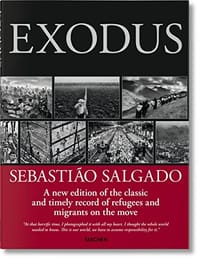
Over six years and 35 countries, Sebastião Salgado documents the story of human migration. From the Hutu population of Rwanda, hiding out in remote jungles, to the first boats filled with Arabs and sub-Saharan Africans trying to reach Europe across the Mediterranean Sea, Salgado captures both the scale of the migrant crisis and the heart-stopping moments of the individual exile story.
Humanity on the Move
Sebastião Salgado’s searing account of exiles, migrants, and refugees
It has been almost a generation since Sebastião Salgado first published Exodus but the story it tells, of fraught human movement around the globe, has changed little in 16 years. The push and pull factors may shift, the nexus of conflict relocates from Rwanda to Syria, but the people who leave their homes tell the same tale: deprivation, hardship, and glimmers of hope, plotted along a journey of great psychological, as well as physical, toil.
Salgado spent six years with migrant peoples, visiting more than 35 countries to document displacement on the road, in camps, and in overcrowded city slums where new arrivals often end up. His project includes Latin Americans entering the United States, Jews leaving the former Soviet Union, Kosovars fleeing into Albania, the Hutu refugees of Rwanda, as well as the first “boat people” of Arabs and sub-Saharan Africans trying to reach Europe across the Mediterranean ea. His images feature those who know where they are going and those who are simply in flight, relieved to be alive and uninjured enough to run. The faces he meets present dignity and compassion in the most bitter of circumstances, but also the many ravaged marks of violence, hatred, and greed.
With his particular eye for detail and motion, Salgado captures the heart-stopping moments of migratory movement, as much as the mass flux. There are laden trucks, crowded boats, and camps stretched out to a clouded horizon, and then there is the small, bandaged leg; the fingerprint on a page; the interview with a border guard; the bundle and baby clutched to a mother’s breast. Insisting on the scale of the migrant phenomenon, Salgado also asserts, with characteristic humanism, the personal story within the overwhelming numbers. Against the indistinct faces of televised footage or the crowds caught beneath a newspaper headline, what we find here are portraits of individual identities, even in the abyss of a lost land, home, and, often, loved ones.
At the same time, Salgado also declares the commonality of the migrant situation as a shared, global experience. He summons his viewers not simply as spectators of the refugee and exile suffering, but as actors in the social, political, economic, and environmental shifts which contribute to the migratory phenomenon. As the boats bobbing up on the Greek and Italian coastline bring migration home to Europe like no mass movement since the Second World War, Exodus cries out not only for our heightened awareness but also for responsibility and engagement. In face of the scarred bodies, the hundreds of bare feet on hot tarmac, our imperative is not to look on in compassion, but, in Salgado’s own words, to temper our behaviors in a “new regimen of coexistence.”
作者简介
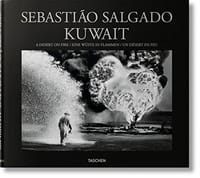
Sebastião Salgado began his career as a professional photographer in Paris in 1973 and subsequently worked with the photo agencies Sygma, Gamma, and Magnum Photos. In 1994, he and his wife Lélia Wanick Salgado created Amazonas Images, which is today their studio, and exclusively handles his work. Salgado’s photographic projects have been featured in many exhibitions as well as books, including Sahel. L’Homme en détresse (1986), Other Americas (1986), Workers (1993), Terra (1997), Migrations (2000), The Children (2000), Africa (2007), Genesis (2013), The Scent of a Dream (2015), Kuwait. A Desert on Fire (2016), and Gold (2019).
Lélia Wanick Salgado studied architecture and urban planning in Paris. Her interest in photography started in 1970. In the 1980s, she began to conceive and design the majority of Sebastião Salgado’s photography books and all of the exhibitions of his work. Since 1994, Lélia Wanick Salgado has been the director of Amazonas Images (until 2017) and their Paris studio.
AI导读
编辑书评
- 《Exodus》的真正价值不在于展示苦难本身,而在于通过极致的视觉修辞,将抽象的统计数据还原为具体的人的尊严。萨尔加多巧妙地将新闻摄影的即时性与古典绘画的庄严感结合,使每一张面孔都成为对抗遗忘的纪念碑。尽管存在构图略显粗糙、主题分散的争议,但这恰恰反映了流离失所现场的无序本质。相较于同类纪实摄影集,它胜在宏大的全球视野与深刻的人文悲悯,是一部兼具社会学文献价值与艺术感染力的杰作,值得反复咀嚼。
- 然而,本书也暴露了“灾难色情”(Disaster Pornography)的潜在风险。当苦难被过度美学化,观者容易陷入一种安全的旁观者姿态,用审美快感替代行动意愿。部分读者提到的“惧怕凝视”正源于此伦理困境。因此,阅读此书不应止于感动,更需反思图像消费背后的权力关系。它适合在具备一定社会阅历和心理韧性的前提下阅读,作为激发良知而非满足猎奇的媒介。若缺乏批判性思考,极易沦为浅层的视觉刺激。
核心看点
- 本书是塞巴斯蒂昂·萨尔加多历时六年、跨越35个国家的史诗级纪实摄影巨著,聚焦全球难民与移民危机。作者以极具震撼力的高反差黑白影像,记录了从卢旺达丛林到地中海偷渡船上的流离失所者,不仅呈现了人类迁徙的宏大尺度,更捕捉了个体在绝境中尊严的渺小与伟大,将新闻摄影提升到了人文关怀的艺术高度。
- 作品超越了单纯的社会记录,通过“出埃及记”这一宗教隐喻,赋予现代移民悲剧以神话般的庄严感。萨尔加多镜头下的面孔被读者形容为“上帝或佛主的脸”,这种视觉语言迫使观者直面苦难的本质。尽管部分评论指出其构图有时显得匆忙,但整体而言,它成功地将分散的全球冲突串联成一幅关于人类共同命运的完整拼图。
- 作为《劳动者》和《创世纪》之外的另一座高峰,本书展现了萨尔加多对“人”的主题的极致探索。虽然主题宽泛导致集中性略逊于前作,但其全球化视野更为全面。书中最后一张1998年的东方明珠照片,象征着旧世界与新世界的交汇,暗示了移民潮背后深刻的经济与社会变迁,使整部画册在悲悯之外增添了历史纵深感。
读者共识
- 读者普遍被照片带来的巨大震撼力所折服,高频词汇包括“沉重”、“史诗般”、“speechless”。许多人表示,面对照片中难民直视镜头的目光,会产生强烈的道德拷问和自我投射,意识到“我也是他们”,从而引发深层的存在主义焦虑与共情。
- 关于艺术性与真实性的讨论较为两极。一方面,大量读者赞叹其高反差技法在新闻摄影中的惊人效果,认为每一张脸都充满神性;另一方面,也有资深摄影爱好者批评部分照片构图仓促、像“浮光掠影的快照”,认为其主题过于宽泛导致集中度不如《劳动者》,且新版品质略逊于早期版本。
- 情感共鸣远超理性分析。多数短评集中在个人感受上,如“好沉重”、“越看越恐惧”、“处处悲悯”。读者倾向于将这本书视为一面镜子,映照出人类社会的冷漠与个体的脆弱。尽管有人指出亚洲篇生活气息浓但主题弱,但整体共识是:这是一本让人无法忽视、必须正视的人类苦难档案。
用户评论
很纪实了。
史诗般的波澜壮阔。人类尊严的渺小和伟大
以后补短评。
记录世界各地的难民和流民,有个骨瘦如柴的非洲难民戴着一副十字架,他爱不爱上帝不知道,上帝一定不爱他……
处处悲悯
震撼!speechless!
沒想到薩爾加多的高反差在這種新聞攝影也有驚人的效果。雖然我更喜歡他後期平靜自然的風格,但不得不承認這裡的照片非常有意義。
成都方所。
比Genesis更加震撼。
要如何相对?当他们的目光抵达我们自身,当他们的目光越过我们,越过我们身后的社会。