
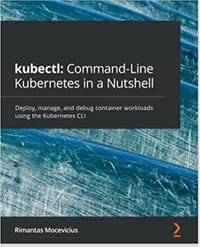
Book Description
The kubectl command line tool lets you control Kubernetes clusters to manage nodes in the cluster and perform all types of Kubernetes operations. This introductory guide will get you up to speed with kubectl in no time.
The book is divided into four parts, touching base on the installation and providing a general overview of kubectl in the first part. The second part introduces you to managing Kubernetes clusters and working with nodes. In the third part, you'll be taken through the different ways in which you can manage Kubernetes applications, covering how to create, update, delete, view, and debug applications. The last part of the book focuses on various Kubernetes plugins and commands. You'll get to grips with using Kustomize and discover Helm, a Kubernetes package manager. In addition to this, you'll explore how you can use equivalent Docker commands in kubectl.
By the end of this book, you'll have learned how to install and update an application on Kubernetes, view its logs, and inspect clusters effectively.
What you will learn
Get to grips with the basic kubectl commands
Delve into different cluster nodes and their resource usages
Understand the most essential features of kubectl
Discover how to patch Kubernetes deployments with Kustomize
Find out ways to extend kubectl tools with their own plugins
Explore how to use Helm as an advanced tool for deploying apps
Rimantas Mocevicius is an IT professional with over 25 years' experience in DevOps, which includes Linux, containers, Kubernetes, and cloud-native technologies. He is also co-founded Helm - the Kubernetes package manager.
Since 2018 he has worked at JFrog Ltd (Nasdaq: FROG) as a senior software engineer in the Community Engineering team, which supports community-related centers...
显示全部