
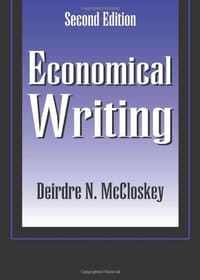
AI导读
核心看点
- 本书核心主张写作是经济学家的首要技能,糟糕的文笔比错误的统计或研究更致命。作者强调清晰是最高准则,要求读者不仅不能误解,更要能顺畅理解。书中严厉批评学术黑话和冗余修饰,提倡用简单词汇表达复杂思想,反对用晦涩术语掩盖空洞内容。
- 提供具体且严格的写作技术规范,包括标点符号的正确使用、主动语态的优先性、避免形容词和副词的堆砌。作者要求句子必须完整,严禁使用‘优雅变体’造成概念混淆。强调写作需经过反复修改,去除所有陷阱和丑陋之处,直至达到流畅且无歧义的状态。
- 强调写作的社会责任与道德约束,要求作者控制语调,塑造读者可容忍的作者形象。书中指出脚注应处于从属地位,严禁成为卖弄学识的工具。同时强调逻辑连贯性,要求文章各部分紧密衔接,每句话都要回答‘那又怎样’这一核心问题,确保内容具有实质价值。
适合谁读
- 适合社会科学领域的研究生及青年学者,特别是需要撰写英文学术论文的经济学家。本书针对学术写作中的常见弊病提供纠偏方案,帮助研究者摆脱晦涩难懂的表达习惯,提升论文的可读性与传播力,避免因文笔拙劣导致研究成果被忽视。
- 适合希望提升英文写作规范性的非母语写作者。书中对语法细节、标点规范及句式结构的严格要求,为中文母语者提供了清晰的英文写作边界。虽然部分观点可能显得严苛,但对于纠正中式英语思维、建立严谨的学术表达习惯具有极高的参考价值。
- 适合对《风格的要素》等经典写作指南感兴趣,并寻求更具体、更具批判性写作建议的读者。本书虽短小精悍,但观点尖锐,适合那些愿意反思自身写作习惯、追求极致清晰与简洁表达的专业人士。不适合寻求轻松阅读或娱乐性内容的普通大众读者。
读前提醒
- 阅读时需明确本书的特定语境,即学术写作规范。作者对‘黑话’的批判并非否定专业术语,而是反对用复杂词汇掩盖简单思想。读者应区分学术严谨性与故弄玄虚的界限,理解作者旨在消除沟通障碍,而非降低学术标准。切勿将书中建议机械套用于非学术场景。
- 书中部分标点规范(如句号后空两格)可能与现代排版标准不符,读者应结合当前出版规范灵活处理。作者对语法的极端严格要求可能显得偏执,读者应取其‘清晰、准确、简洁’的精神内核,而非拘泥于过时的格式细节。重点学习其逻辑构建与句式精简的方法。
- 本书观点与奥威尔等作家有重叠,但作者以经济学家身份提供独特视角。读者应警惕书中可能存在的偏见,如过度贬低数学模型在经济学中的价值。建议结合其他写作指南对照阅读,全面理解学术伦理与表达规范,避免陷入非黑即白的极端思维。
读者共识
- 读者普遍认为本书短小精悍、观点犀利,对纠正学术写作中的浮夸风气有显著效果。尽管部分读者认为其内容杂乱、缺乏系统性,且对数学表达的排斥值得商榷,但多数读者认可其在提升写作清晰度方面的价值。书中对‘那又怎样’的强调被广泛视为提升研究质量的关键指引。
- 许多读者指出,虽然书中建议看似简单,但实际执行难度极大,需要长期刻意练习。部分读者批评作者态度傲慢,认为其忽视了学术沟通的复杂性,且书中存在事实错误(如引用来源错误)。然而,仍有大量读者认为其坦诚亲和的风格极具启发性,值得反复研读。
- 共识认为本书不适合初学者作为唯一写作指南,因其缺乏基础语法教学,且部分内容与主流规范冲突。但作为《风格的要素》的补充或批判性反思材料,它具有独特价值。读者建议将其视为一种写作伦理的警示,而非操作手册,重点吸收其反对冗余、追求实质内容的核心精神。
本导读基于书籍简介、目录、原文摘录、短评和书评生成,不等同于全文精读。
精彩摘录
- "1. Writing is the Economist's Trade Rotten writing causes more papers and reports to fail than do rotten statistics or rotten research. You have to be read to be listened to. Bad writing is not read, even by professors or bosses paid to read it....the hard business of economic thinking is getting th"
- "4. Be Thou Clear; But for lord's Sake Have Fun, Too "Therefore one ought to take care to write not merely so that the reader can understand but so that he CANNOT possibly MISUNDERSTAND." Clarity is a social matter, not something to be decided unilaterally by the writer. The reader like the consumer "
- "7. Fluency Can be Achieved by Grit [Style] begins with mere fluency, getting the stuff down on paper. And it ends with revising again and again, until you've removed all the traps and ugliness. The trouble with developing good taste in writing, which is the point of studying books like this one, is "
- "10. Keep Your Spirits Up, Forge Ahead If you can't think of anything to say, you might well read more, calculate more, and in general research more. Most research, however, turns out to be irrelevant to the paper you finally write, which another reason to mix writing with the researching. The writin"
- "13. Control Your Tone The successful piece will have an author the reader can tolerate. Writing is a little drama in which the writer chooces the roles. You cannot abstain as a writer from making a choice.... Writing, like teaching or social life, is a performance, ajob of acting. NO!!! "due to", "p"
- "16. Footnotes Are Nests for Pedants A footnote should be subordinate. 17.Make Your Writing Cohere It's the Rule of Coherence: making writing hang togerther. The reader can understand writing that hang together, from phrases up to entire books. Economists would call it "transitive" writing. To di it "
- "19. Write in Complete Sentences 20. Avoid Elegant Variation The first duty in writing a sentence is to make it clear. A way to make it clear is to use one word to mean one thing. Get tour words and things lined up and keep them that way. The positive rule is Strunk and White's "Express parallel idea"
- "22. Watch Punctuation After a comma(,), semicolon (;), or colon (:), put ONE space before you start something new. After a period (.), question mark (?), or exclamation point (!), put TWO spaces. AVOID THE DREADED COMMA SPLICE!!!!!!!!!!!!!!!!!!!!!!!!!!!!!!!! 23. The Order Around Switch Until It Good"
用户评论
太讽刺了,还是喜欢Shleifer/Varian温柔而话痨的小幽默。作者吐槽Jargon,哎,其实真不是经济学家要装逼,有时候用数学符号真的简单清楚很多,只要你多看上两眼,写两段的东西就写两行。而且paper本来就不是厕所读物,想plain English写plain English是有成本的好么。虽然过度装逼定然不好,但对jargon也不能一棒子打死。最近觉得Myerson是GT大牛中写得最好的。
Some suggestions are well-known, while others (e.g. no need for a comma before "the") are pretty useful.
很有意思的小册子
短小精悍。The element of style是一本面向大众的写作指南,而McCloskey的这本更有针对性,适合社科研究者参考。
作者是个奇人,写得也很不错,我觉得汪丁丁应该读一下。。
继Element of Style,Style: Toward Clarity and Grace读的第三本写作书,观点有很大重叠,但胜在以身作则: 全文通篇就是由洗练连贯的短句构成的精美散文。一大特色是作者时不时以幽默的笔触,向读者演示如果违背写作的原则将会产生怎样荒谬和混乱的效果。作为一名经济学者,他认为写作(而非数学与统计)才是同业者的老本行,是和公众沟通建立社会共识的主要方式,也是回报率最高的环节(writing is the economist‘s trade),那些在学科历史中留下姓名的经济学家——凯恩斯、熊彼得、哈耶克——莫不是精于此道。在多数时候,文字比形式逻辑更能触达人心。写作贵在真诚:你是否真的想让你的读者读懂你的文字。大部分时候,学术圈滥用术语只是在掩饰思想的贫乏。
Marvelous
本学期课程的参考读物。但我真的有个问题哈,作者是不是厌女啊,所有坏事反例都用she,是我没读懂吗
特别好,可以反复读
哈佛大学论文指导推荐的书,读完觉得emmm,是写这类书的人不多所以矮子里挑高个了吗?作者很多给出的建议自己都没做到,显示偏好怎么说来着,做的比说的更有说服力。而且读的时候很费力,有的句子看不懂,不知道是我的问题还是作者的问题,按本书对辣鸡写作的批评,那应该是作者的问题。骂完了还是得夸一句,该好的地方是很好的,建议很周到,推荐的作家工具辞典之类的都有很详细的说明,三星给这个。
收藏