
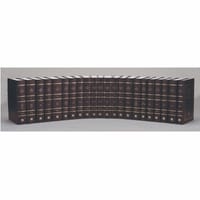
书籍介绍
Book 1: Tract Sabbath
Book 2: Tracts Erubin, Shekalim, Rosh Hashana
Book 3: Tracts Pesachim, Yomah and Hagiga
Book 4: Tracts Betzh, Succah, Moed Katan, Taanith, Megilla and Ebel Rabbathi or Semahoth
Book 5: Tracts Aboth, Derech Eretz-Rabba, Derech Eretz-Zuta, and Baba Kama (First Gate)
Book 6: Tract Baba Kama (First Gate), Part II and Tract Baba Metzia (Middle Gate)
Book 7: Tract Baba Bathra (Last Gate)
Book 8: Tract Sanhedrin: Section Jurisprudence (Damages)
Book 9: Tracts Maccoth, Shebuoth, Eduyoth, Abuda Zara, and Horioth
Book 10: History of the Talmud
Book 1: Tract Sabbath
This book contains Tract Sabbath, which discusses what can and cannot be done on the Jewish Holy day. This tract has a wealth of information on everyday Jewish life in late Classical times, including, for some reason, a great number of medical recipies. Because almost everything is done differently on the Sabbath, this contains an incredible level of ethnographic detail about a wide range of household activities including livestock, clothing, meals, horticulture, hunting, and other more obscure topics, such as fire-fighting and feminine hygene.
Rodkinson makes the point in an appendix that many of the Talmundic regulations which seem to be arbitrary were developed as a response to political persecution. He also includes a prayer which is offered upon the conclusion of studying any tract.
Book 2: Tracts Erubin, Shekalim, Rosh Hashana
This book contains tracts from section Moed (Festivals). Tract Erubin deals with regulations concerning travel on the Sabbath, and the proper construction of "Erub", propitiatory offerings for transgressions of these rules, usually, but not always, constructed of food. Tract Shekalim deals with tithes. Tract Rosh Hashana discusses the Jewish New Year, a floating holiday tied to lunar observations.
Book 3: Tracts Pesachim, Yomah and Hagiga
This book also contains tracts from section Moed (Festivals), primarily discussions of the rituals to be performed on important holy days: principally Passover and the Day of Atonement. The short third tract, Hagiga, discusses the Holocaust ceremony, (meaning a burnt-offering), which today has come into use as a term for the Nazi genocide. Among other points of interest is description of the ritual of the scapegoat in Chapter VI. of Tract Yomah; and Chapter II. of Tract Hagiga has a notable digression on a variety of subjects, including the cryptic Chariot of God, and the names and characteristics of the seven heavens.
Book 4: Tracts Betzh, Succah, Moed Katan, Taanith, Megilla and Ebel Rabbathi or Semahoth
This rounds out the Festivals portion of Rodkinson"s Talmud translation. Tract Betzah details regulations about cooking, fishing, hunting and other activities on feast days. Tract Succah discusses the Festival of the Tabernacles, particularly the construction and use of the Succah, or booth. Moed Katan is about miscellaneous laws about some minor festivals, for instance activites which are permissible during intercalendary periods. Taanith has discussions about the beginning of the rains, including a sequence of folktales about rainmaking Rabbis. Megilla is about Purim, particularly about the public reading of the book of Esther during that festival. Ebel Rabbath is about mourning and other funerary activities.
Book 5: Tracts Aboth, Derech Eretz-Rabba, Derech Eretz-Zuta, and Baba Kama (First Gate)
This book starts out with three tracts on ethics, including the lucid and moving Pirqe Aboth (Sayings of the Fathers), (also available at sacred-texts in a translation by Taylor). This edition of Aboth comes with extensive commentary. The Baba Kama is the first section of a three-part opening arc of the Jurisprudence section. To the modern reader it is of interest because of the unintentional and (sometimes pungent) atmospheric details of everyday life in first century Israel. Many of the Baba Kama cases start when "an ox gores" someone or something; the modern equivalent would probably be automobile moving violations. The debates are notable because they are based equally on scripture and appeals to an emerging standard of common-sense justice and human rights.
Book 6: Tract Baba Kama (First Gate), Part II and Tract Baba Metzia (Middle Gate)
This book contains the conclusion of Baba Kama, the First Gate, and Baba Metzia, the Middle Gate. The second half of Baba Kama continues with cases involving stolen items. Baba Metzia continues with civil law, particularly cases involving damages: among the topics are found and loaned articles, real estate, loans, titles, what constitutes usury and fraud, and labor law. Many of the cases in Baba Metzia are extremely convoluted, more so than usual. There are a few scattered legends about the life and death of the principal authors of the Talmud, and some notable passages, mostly in Chapter IV.
Book 7: Tract Baba Bathra (Last Gate)
This, the third part of the "Gate" sequence of tracts, deals with issues of civil law regarding property, incl
Routledge的其他书籍查看全部
 Globalizing the Soybean
 Pragmatics Online
 China during the Tang-Song Interregnum, 878–978
 Places, Affordances, Atmospheres: A Pathic Aesthetics
 Bombs in the Consulting Room
 Marketing Channel Strategy
求书
收藏