
书籍介绍
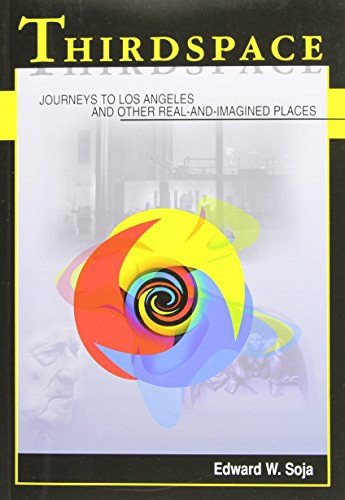
Contemporary critical studies have recently experienced a significant spatial turn. In what may eventually be seen as one of the most important intellectual and political developments in the late twentieth century, scholars have begun to interpret space and the embracing spatiality of human life with the same critical insight and emphasis that has traditionally been given to time and history on the one hand, and social relations and society on the other. Thirdspace is both an enquiry into the origins and impact of the spatial turn and an attempt to expand the scope and practical relevance of how we think about space and such related concepts as place, location, landscape, architecture, environment, home, city, region, territory, and geography. The book's central argument is that spatial thinking, or what has been called the geographical or spatial imagination, has tended to be bicameral, or confined to two approaches. Spatiality is either seen as concrete material forms to be mapped, analyzed, and explained; or as mental constructs, ideas about and representations of space and its social significance. Edward Soja critically re-evaluates this dualism to create an alternative approach, one that comprehends both the material and mental dimensions of spatiality but also extends beyond them to new and different modes of spatial thinking. Thirdspace is composed as a sequence of intellectual and empirical journeys, beginning with a spatial biography of Henri Lefebvre and his adventurous conceptualization of social space as simultaneously perceived, conceived, and lived. The author draws on Lefebvre to describe a trialectics of spatiality that threads though all subsequent journeys, reappearing in many new forms in bell hooks evocative exploration of the margins as a space of radical openness; in post-modern spatial feminist interpretations of the interplay of race, class, and gender; in the postcolonial critique and the new cultural politics of difference and identity; in Michel Foucault's heterotopologies and trialectics of space, knowledge, and power; and in interpretative tours of the Citadel of downtown Los Angeles, the Exopolis of Orange County, and the Centrum of Amsterdam.
用户评论
??????????????
简略翻阅。结合的列斐伏尔与福柯,理论与抽象色彩强,不知third-space这种in-between的后现代状态,在多大程度上辩证思维抑的遗留产物。
第一遍
“空间的”面向和历史唯物主义的“历史”“社会”观接合成为现代的三元本体论。精辟地指出很多以“后”学冠名的理论家所谓的“空间观念”不过是逢场作戏,终究还是讨好历史主义的。后半部书作对L.A.的探访当作爽文看,文化研究或许会关注经济政治对具体阶级、社群的影响,但Soja却驾车从高速路上绕过去了。比小说精彩。
太玄了感觉。其实作为工具只要粗略了解就行?第三空间当然也不是空间。只是一个建立在第一空间,也即实体空间,以及第二空间,也即通过想象的空间性表述实体空间的视角,这二者的基础上的,具有他者化或者提供An-other 方式来理解空间的一个可能性。这是什么意思呢?具体来说,就是,我不告诉你。
Z-Library