
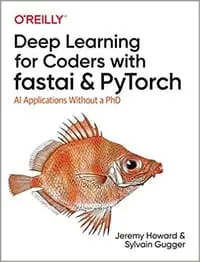
Deep Learning for Coders with fastai and PyTorch
出版时间
2020-02-03
ISBN
9781492045526
评分
Deep learning has the reputation as an exclusive domain for math PhDs. Not so. With this book, programmers comfortable with Python will learn how to get started with deep learning right away.
Using PyTorch and the fastai deep learning library, you’ll learn how to train a model to accomplish a wide range of tasks—including computer vision, natural language processing, tabular data, and generative networks. At the same time, you’ll dig progressively into deep learning theory so that by the end of the book you’ll have a complete understanding of the math behind the library’s functions.
Jeremy Howard is an entrepreneur, business strategist, developer, and educator. Jeremy is a founding researcher at fast.ai, a research institute dedicated to making deep learning more accessible. He is also a Distinguished Research Scientist at the University of San Francisco, a faculty member at Singularity University, and a Young Global Leader with the World Economic Forum.
J...
- 本书的真正价值在于重构了深度学习的认知路径,将“数学前置”转变为“实践驱动”。它精准击中了程序员转型 AI 时的痛点——即对抽象理论的恐惧和对即时反馈的需求。通过与同类经典教材(如《深度学习》花书)相比,本书牺牲了部分理论的完备性,换取了极高的可操作性。其局限性在于对非标准场景的覆盖不足,且高度绑定 fastai 生态,可能导致读者迁移到其他框架时产生适应成本。但它无疑是目前市面上最懂“工程师思维”的 DL 入门书,值得所有想动手做项目的开发者精读。
- 作为编辑,我认为这本书更适合“边做边学”的场景,而非案头参考。它像是一本详细的实验手册,要求读者必须打开电脑跟随操作。如果你寻求的是面试用的八股文知识体系,或者希望彻底搞懂每一个梯度下降的数学变体,这本书会让你失望。但如果你有一个具体的图像分类或 NLP 想法想要落地,它能让你在几天内看到成果。其独到之处在于揭示了现代深度学习“站在巨人肩膀上”的本质——即善用预训练与高层 API,而非重复造轮子。这是一本教你“如何聪明地偷懒”并依然做出好产品的实战指南。
- 本书打破了深度学习是数学博士专属领域的刻板印象,采用“自顶向下”的教学策略。读者无需先啃完线性代数或概率论,即可通过 fastai 库快速构建并训练模型,处理计算机视觉、NLP 等实际任务。这种从应用入手再逐步深入底层原理的路径,极大降低了编程背景读者的入门门槛,让理论服务于实践而非成为阻碍。
- 内容架构强调工程落地与全链路能力。除了模型训练,书中专门探讨了从模型到生产环境的部署、数据伦理以及使用 PyTorch 和 fastai 进行高效的数据清洗(Data Munging)。它不仅教如何调参,更教如何理解预训练模型的微调机制,展示了在有限算力和数据条件下实现高性能的务实方法,填补了纯学术教材与工业界需求之间的空白。
- 独特的“黑盒拆解”教学法是其核心亮点。作者不满足于 API 调用,而是引导读者从零开始重写 fastai 的核心组件,如 Learner、CNN 架构及训练循环。通过对比高层 API 与底层手写代码的差异,读者能深刻理解抽象背后的逻辑。这种由浅入深、最终回归基础数学推导的结构,确保了读者既能快速上手,又能具备调试和优化底层算法的能力。
- 读者普遍认可 fastai 库的务实性与高效性,认为其“怎么快捷就怎么来”的风格非常适合工业界快速迭代。许多评论指出,通过对预训练模型进行微调,即使算力有限也能取得不错效果,这极大地增强了初学者的成就感。然而,也有声音批评其封装过于“暴力”,导致部分用户难以理解底层控制,一旦脱离标准流程便束手无策。
- 关于文档质量的争议较为集中。多位读者反映 fastai 的官方文档编写不够友好,结构松散且示例不足,迫使学习者不得不频繁查阅源代码才能解决问题。尽管有人认为看源码更能加深理解,但对于新手而言,这一额外的认知负荷构成了显著的学习障碍。相比之下,书中的讲解被认为比文档更为详尽和连贯,是弥补官方资料短板的重要资源。
- 评价呈现两极分化:初学者视其为完美的入门指南,而资深人士或学术导向者则认为后半部分内容略显粗糙。有评论指出,随着章节深入,讲解逐渐偏向幻灯片式的要点罗列,缺乏教科书应有的严密推导,需要读者具备一定的积累才能补全逻辑链条。总体而言,它被公认为优秀的“桥梁书”,连接了应用开发与理论深度,但在纯粹的理论严谨性上有所妥协。
显示全部
 Developing Apps with GPT-4 and ChatGPT
 Building Knowledge Graphs
 Essential Math for AI
 Running Lean (3/e)
 Quarkus Cookbook
 Learning React 2nd ed.