
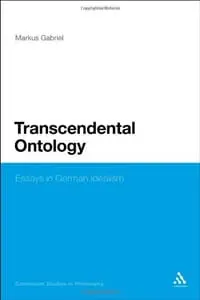
内容简介
这本书最引争议之处,在于它并非一部忠实的哲学史著作,而是借谢林与黑格尔做一场关于
AI 导读
核心看点
- 重构德国古典哲学先验本体论
- 解析谢林与黑格尔的本体论实验
- 探讨模态地位与逻辑空间关系
读者共识
- 视野开阔具启发性
- 对黑格尔解读存在争议
- 偏爱谢林立场明显
精彩摘录
- "the necessity of the necessario existens is itself contingent, because it depends on the existence of chance, the being-there of contingency, such that it can be determined over against contingency in the first place as necessity as such. For the necessario existens is necessary properly speaking on"
- "Thus the necessity of the origin is contingent because it depends on the existence of a contingent being, which cannot be ruled out a priori. Whatever originates from the origin must be compatible with the origin: thus the contingency and necessity of the origin must both be possible."
- "“Actuality” (νέργεια) must necessarily be antecedent to “possibility” (δύναμις), for otherwise nothing actual would take place. If, ultimately, possibility were antecedent to actuality, an initial and initiating act would be needed to lead possibility over into actuality. This initiating act, howeve"
- "The possibility of any determinate arrangement of things, elements, or states of affairs, and in this sense the possibility of the world, cannot be anticipated a priori, before it has become actual. Any world is in this sense an original, something that has an origin (origo) to which it refers and w"
- "Yet, the network of the modalities is only retroactively established, once conditions for consistency can be retrojected out of a determinate field of sense. Retroactively, the conditions for consistency of a given field of sense are necessary for the field to be consistent. Consider Kant’s version "
- "The “lord of being” is Schelling’s name for the event’s manifestation as the contingency of any ontology. Once the event will have taken place, it will be the case that everything turns out to be contingent, and therefore subject to change. As Wittgenstein puts it from the vantage of the event: “Eve"
- "When we judge that F(x), G(y), and so on, we produce a distance between us and something and so presuppose the dimension of distinctions."
- "God is not only necessity, but rather also possibility. This otherness, as it were, cannot be excluded, for if there were only the One, there would be nothing: for what could this One, related to nothing, not even to itself, be?"
目录
Acknowledgments viii
Introduction ix
Chapter 1: The Ontology of Knowledge 1
I Schelling, Hegel, and the Metaphysical Truth of Skepticism 2
II Absolute Identity and Refl ection: Kant, Hegel, McDowell 34
显示全部
读者评论
von Seinsüberschuss zu Weltüberschuss ...
蛮好蛮好, 解观念论的毒
值得关注的是,Gabriel如何以观念论的资源来反思当代知识论和自然主义,他对反思模型的分析更像是为了确立一种属于“知识”的本体论。
我看到最后一个section之前都对他满怀信心,结果最后来了一句典型的Hegel’s necessity is only contingently necessary 把我气得想撕书….有种最后几页智商骤降的感觉。这么聪明的Gabriel怎么会忽然忘记,他对黑格尔的批判本身也是建立在黑格尔的资源之上的,本身也是反思的逻辑。不可预思之有本身就是反思的产物,那这….为什么是黑格尔的blind spot?
概念不清,无关康德,谢林诈尸。
叹为观止!
guidebook
一般棒。看起来比通常对德古的释经念咒好多了。加布里尔真的很适合去编辑相关教材。顾加布里尔仅用一本书就对后康德观念论进行了一种简洁明了的综叙,了不得。
The dialectic of the absolute。Gab对绝对知识的解读太炸裂了,真心有几分天才。虽然他是谢林主义(我是黑格尔主义立场),但这本书的视野绝对是一流的,而且这也是做哲学最需要具备的素质。他认为《逻辑学》的整个事业可以被理解为一种规定绝对者的尝试,一种不能从开始即确保成功的尝试,因此将绝对的缺席转化为诸显现在各种化装中的在场(绝对理念在绝对精神中敞开自身,它并非一种赋有全知能力的超级心灵。而绝对精神是具体的、实现了的对绝对理念在其实在性中的自我意识,即哲学)。但这本书也不是没有缺点,譬如认为黑格尔根本上还在做反思哲学 ,但是这实际上意味着忽视反射的外部性;而且和亨利希一样将黑的整个出发点理解成了本质论,忽视了概念论。这某种意义上也重复着谢林对黑格尔的批评,因此扣一星。